I'm convinced that the most important skill in purchasing is knowing what you don't know. It sounds simple, but I've watched otherwise smart people waste money because they assumed a generalist could handle everything. I've also made that mistake myself. When I took over safety supplies purchasing in 2020, I thought my job was to find the cheapest product that did the job. After five years and a few expensive lessons, I now think the job is to know the boundary between what I can confidently order and what I should send to a specialist.
I'm an office administrator for a 300-person construction services company. I manage roughly $90,000 in annual purchases across safety equipment, facility supplies, and PPE. I report to both operations and finance. And no, I'm not a safety engineer. That's exactly the point.
Why the Bullard 502 Hard Hat Is Not an Impulse Buy
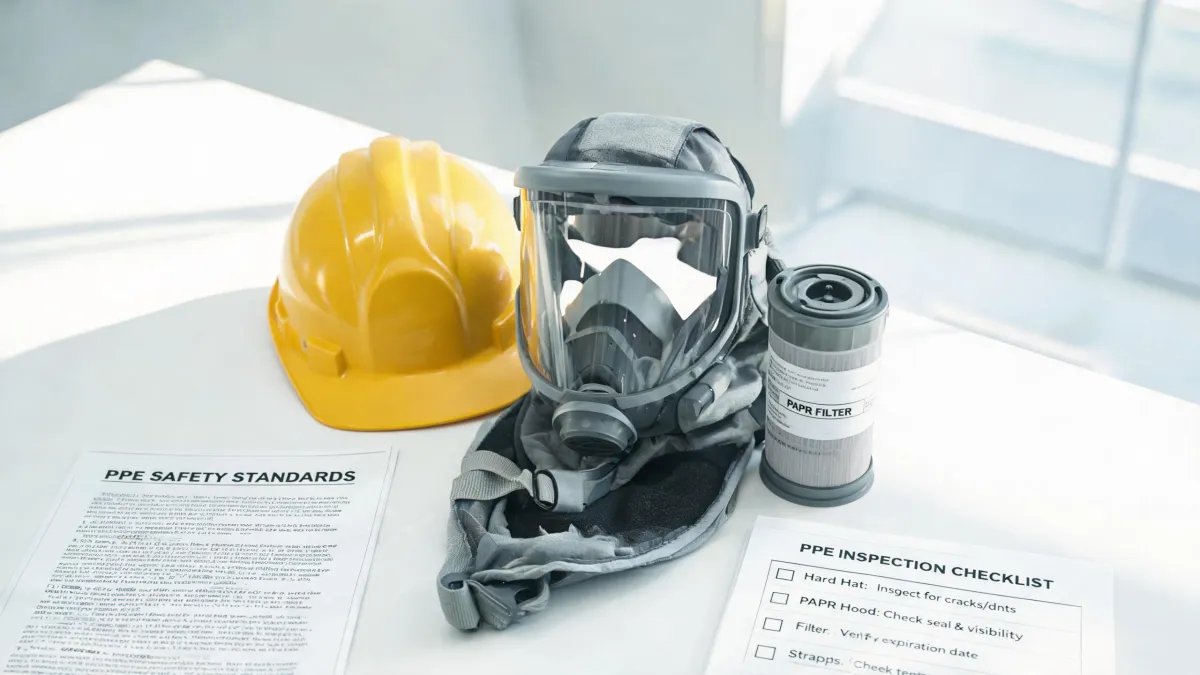
The first thing people ask is why I order Bullard instead of just "a hard hat." The answer is in the details. Head protection has more specifications than most people realize: Type I vs Type II, ANSI Z89.1-2019 compliance, suspension style, and shell accessories. The Bullard 502 hard hat we use is ordered because it fits our team's need for consistent sizing and accessory integration—not because it's the cheapest thing in the catalog.
Could a generalist supplier sell me a hard hat? Sure. But a generalist may not ask whether the crew needs electrical-rated head protection. They may not ask about the type of work, the voltage environment, or whether the suspension will work with earmuffs and face shields. When I order the Bullard 502 hard hat, I know exactly what I'm getting. That's the value of a specialist's catalog.
I don't have hard data on how many companies buy the wrong hard hat on the first order. But based on my own experience, I'd guess it's about one in three if you're buying from a one-size-fits-all distributor. The spec sheet is right there, but nobody reads it until there's a problem.
The Bullard 41 AF Filter Cartridge Is a System, Not a Spare Part
Respiratory protection is where I take this boundary even more seriously. Under OSHA's respiratory protection standard (29 CFR 1910.134), a respirator has to be selected based on exposure, fit-tested, and maintained according to the manufacturer's instructions. I am not the person who makes that call. I'm the person who makes sure the right equipment is in the building.
For our crew, that means using Bullard PAPR systems and ordering the Bullard 41 AF filter cartridge only after our safety manager confirms the model and application. I don't substitute. I don't buy "compatible" filters from a different brand. The cartridge is part of an engineered system, and the NIOSH approval matters because it's tied to how that system performs. Cutting corners here is not a purchasing win; it's a liability that no quick savings justifies.
Once, under time pressure (which, honestly, is the worst time to make equipment decisions), I was tempted to buy a universal filter to make a deadline. I didn't. Looking back, I should have pushed the timetable earlier in the week. But the lesson stuck: if you cannot verify compatibility, you don't guess. You ask.
This is also where I've learned to say "I need to check" rather than "I think." My earlier self would have tried to sound useful. Now I'd rather sound cautious and get it right.
The Pool Fence, the Fence Stain, and the Fire Alarm Test
The counterintuitive part is that the same boundary applies outside safety equipment. The more people trust you with one category, the more they'll expect you to know every category. Last summer, someone asked me to recommend an aluminum pool fence. Another colleague asked what kind of fence stain could handle pine boards in our area. Another time—after a long day—a neighbor asked, "why did my fire alarm go off for no reason?"
For each of those, my first instinct was to give an answer. I've bought enough things that I can sound knowledgeable about most home improvement topics. But I learned the hard way that sounding knowledgeable and being knowledgeable are different.
An aluminum pool fence has different requirements from a wood pool fence: spacing, gate latching, local code, and corrosion resistance. A fence stain has to match the wood type and the exposure conditions. And a fire alarm that's beeping for "no reason" might have a dying battery, a dust issue, a steam false alarm, or a real wiring problem. The NFPA 72 standard is about proper notification, not about guessing from a search engine. I'm not qualified to diagnose a wired alarm system. I'm not even qualified to recommend a specific fence stain for someone else's deck.
So I did what I'd do with a respirator question: I sent them to the right people. One got a fencing contractor. One got a paint and deck specialist. One got a local electrician who does fire alarm maintenance. It took me an extra ten minutes. It saved them from bad advice.
That is the counterintuitive lesson: saying "I don't know" makes your other recommendations more valuable, not less. When someone asks about an aluminum pool fence and I say "that's not my lane," they know that when I do recommend a Bullard product, it's because I actually know what I'm talking about.
What About One-Stop Shops?
I can already hear the objection: "Aren't you supposed to consolidate vendors and save time?" Yes, in theory. But there's a difference between a vendor that offers multiple categories and a vendor that genuinely has expertise in each category. I'd rather work with a specialist who knows their limits than a generalist who overpromises.
The vendor who said "this isn't our strength—here's who does it better" earned my trust for everything else. The vendor who said "we can supply that too" without any detail lost credibility. My experience is based on about 300 orders across eight vendors over five years. If you work in a different industry, your specifics might vary. But the principle doesn't.
This is why I appreciate that Bullard focuses on what it makes. I don't expect a hard hat company to sell me an aluminum pool fence, and I don't ask them to. I expect them to know head protection and respiratory protection deeply. That focus is exactly what makes their products predictable for my safety manager.
My Final Position
I do not believe that being a helpful buyer means having an answer for everything. It means knowing where to find the right answer. When I order a Bullard 502 hard hat, I know the type, the suspension, and the standard behind it. When I order a Bullard 41 AF filter cartridge, I verify the PAPR model and the NIOSH approval. And when someone asks me for an aluminum pool fence, a fence stain recommendation, or why their fire alarm went off for no reason, I tell them honestly: that's outside my expertise.
Specialists over generalists. Boundaries over bluffing. If you ask me, that's the most important purchase you can make.