-
Stop Buying Safety Gear Like Office Supplies
-
Evidence 1: Hard Hats Have a Shelf Life—and Bullard Hard Hat Expiration Is Real
-
Evidence 2: Fire Extinguisher Inspection Tags Are Not Just Paperwork
-
Evidence 3: Expandable Privacy Fence Is Safety Equipment, Not Just Privacy
-
What I'm Not Saying
-
My Rebuttal to the Obvious Objection
Stop Buying Safety Gear Like Office Supplies
If you're still buying safety gear the way you bought office chairs in 2019, you're probably creating compliance risk—and you won't see it until an audit, an incident, or a very inconvenient 2 a.m. fire alarm.
I run purchasing for a 140-person company with a warehouse, two office floors, and a field crew. I manage roughly $180,000 a year across 14 vendors in facility and safety spend. I report to both operations and finance. I'm not an HSE specialist. I'm the person who gets the requisition, finds three quotes, and tries to keep everyone happy. But after five years of managing these purchases, I've changed how I buy.
My argument: safety equipment isn't a commodity purchase anymore. The old approach—buy the lowest upfront price hard hat, reorder extinguisher tags when someone notices they're missing, and treat barriers as optional—doesn't hold up. What was best practice in 2020 may not apply in 2025. The fundamentals haven't changed. The execution has.
Evidence 1: Hard Hats Have a Shelf Life—and Bullard Hard Hat Expiration Is Real
I used to think hard hats lasted until they cracked. Then we had a mock OSHA audit. The inspector picked up a hard hat from our maintenance shop and asked for the manufacture date. I didn't know where to find it. That was embarrassing.
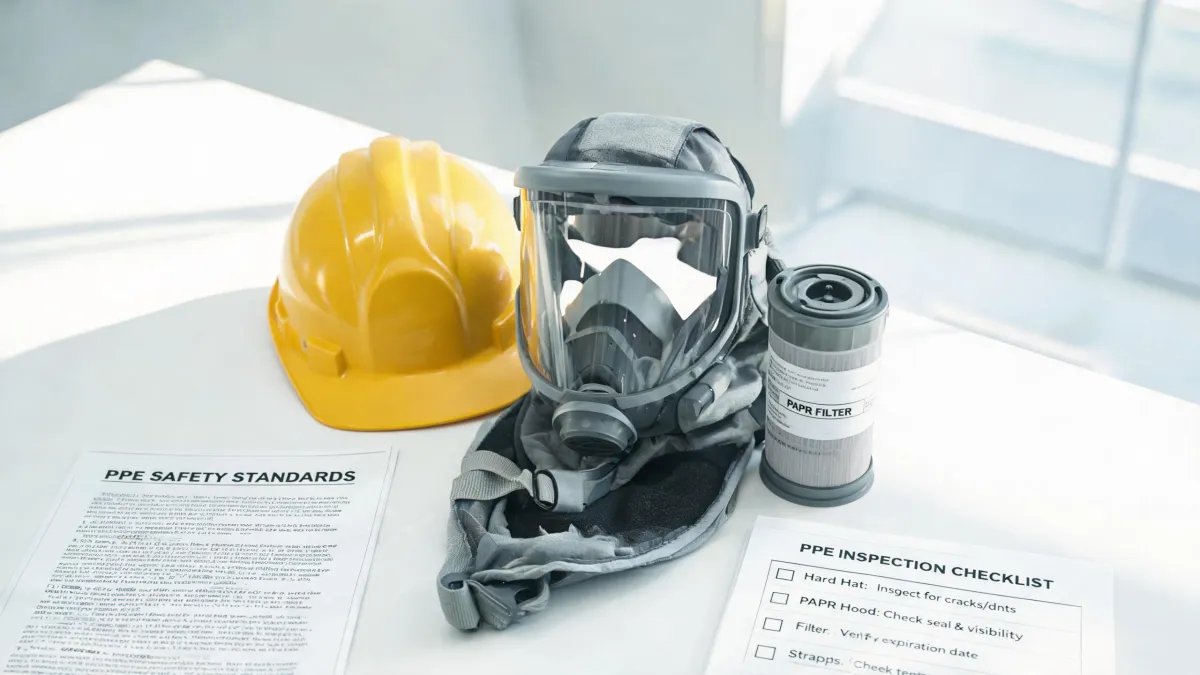
Here's what I learned: hard hats aren't just plastic shells. They have suspension systems, sweatbands, and materials that degrade. OSHA 1910.135 points to ANSI/ISEA Z89.1 for head protection, but the replacement schedule often comes from the manufacturer. For many Bullard hard hats, that means paying attention to the date code and service life. A Bullard hard hat expiration isn't a money grab. It's a documented safety limit.
We replaced our old mix of mismatched hats with the Bullard 502 hard hat for the field crew. I'm not saying it's the only option. I'm saying that when I compared models, I could actually find the manufacturer's instructions, date codes, and replacement guidance. That mattered more than a few dollars per unit.
My overconfidence mistake: I knew I should have logged manufacture dates when the hats arrived. But I thought, 'what are the odds an inspector checks?' The odds caught up with me. Now every hard hat gets a label with the in-service date, and we review suspensions annually.
To be fair, not every office needs a hard hat lifecycle program. But if you have a warehouse, a field team, or contractors on site, you do.
Evidence 2: Fire Extinguisher Inspection Tags Are Not Just Paperwork
Fire extinguisher inspection tags used to be a nuisance. I'd order a box, the maintenance guy would sign them, and we'd file them. Then our insurance renewal asked for documentation.
NFPA 10 covers portable fire extinguishers. The tag is part of the record: monthly visual inspections, annual maintenance, and hydrostatic testing when required. If the tag is missing or incomplete, you can't prove you did the work. That can affect citations, insurance, and liability.
I also learned that the tag isn't the whole system. We had a fire alarm that kept going off randomly. 'Why does my fire alarm randomly go off?' became my search history for a week. The causes ranged from dust in a detector to a low battery in a remote annunciator to humidity in a warehouse corridor. The fix wasn't a new panel. It was a maintenance schedule and better communication with our alarm vendor.
The connection? Both are documentation and lifecycle problems. You can't manage what you don't track. A fire extinguisher tag with a blank date is as useful as no tag at all.
Evidence 3: Expandable Privacy Fence Is Safety Equipment, Not Just Privacy
This one surprised me. We ordered an expandable privacy fence for a temporary construction project near our loading dock. I thought it was a nice-to-have. The safety manager called it a control measure.
An expandable privacy fence can create a visual and physical barrier between the public and a work zone. It doesn't replace hard hats or fall protection. But it can reduce unauthorized access, keep pedestrians out of swing-radius areas, and make the site look controlled rather than chaotic. In a world where OSHA and insurers ask about site controls, that matters.
The risk weighing: The upside was better security and fewer interruptions. The risk was spending a few thousand dollars on a fence that might sit unused. I kept asking myself: is a controlled perimeter worth potentially wasting budget? Then a delivery driver walked through our active unloading zone because there was no clear barrier. Nobody got hurt. That was luck.
Now I treat barriers as part of the safety budget, not a facilities afterthought.
What I'm Not Saying
I'm not saying you should buy the most expensive option every time. I'm not saying every small office needs a full PPE lifecycle database. And I'm not attacking any brand. I've used different suppliers. Some are better at price. Some are better at documentation. Some are better at rush orders.
But if your purchasing process for safety gear is the same as your process for printer paper, you're probably missing something. The questions I ask now are different: Can I find the manufacture date? Does the supplier provide the current instructions? Do the tags match the standards? Is there a replacement schedule?
That's the industry evolution. The old way was 'buy it and forget it.' The new way is 'buy it, document it, and schedule its replacement.' The fundamentals haven't changed—people still need protection. But the execution has transformed.
My Rebuttal to the Obvious Objection
I get why people default to the lowest upfront price. Budgets are real. Finance wants numbers. Nobody gets praised for spending more on hard hats. But the hidden costs add up: audit findings, failed insurance inspections, rushed replacements, and the time you spend explaining why the fire extinguisher tag is expired.
Granted, this requires more upfront work. But it saves time later. I'd rather spend an hour setting up a lifecycle spreadsheet than a week cleaning up an audit finding.
So here's my position: stop buying safety gear like office supplies. Treat it like compliance equipment. The price tag is not the total cost. The paperwork is not optional. And the expiration date is not a suggestion.