-
Dimension 1: Head and Respiratory Protection — Planned vs. Rush
-
Dimension 2: Perimeter and Access Control — Fence Extender vs. Picket Fence Thinking
-
Dimension 3: Emergency Notification — Fire Alarm Annunciator and the Hidden Integration Risk
-
The Time-Certainty Premium: When Rush Is Worth It
-
How to Choose: Planned vs. Rush by Scenario
-
What I'd Do Next Time
I've been handling PPE and facility safety orders for 9 years. I've personally made (and documented) 13 significant mistakes, totaling roughly $21,000 in wasted budget. Now I maintain our team's checklist to prevent others from repeating my errors.
This article isn't Bullard vs. another brand. It's planned safety procurement vs. deadline-driven safety procurement. Same specs on paper, different timing, very different risk. I'm comparing them across three dimensions: head and respiratory protection, perimeter and access control, and emergency notification.
Why compare this way? Because when a deadline is close, every shortcut starts to look reasonable. A fence extender on a picket fence looks like a cheap fix. A bump cap looks close enough to a hard hat. A fire alarm annunciator gets treated as a box someone else already configured. I've made all three mistakes. Here's what I learned.
Dimension 1: Head and Respiratory Protection — Planned vs. Rush
Planned orders let you verify certification before the purchase order goes out. Rush orders make you trust the word 'equivalent.' That word cost me $2,700 in September 2022.
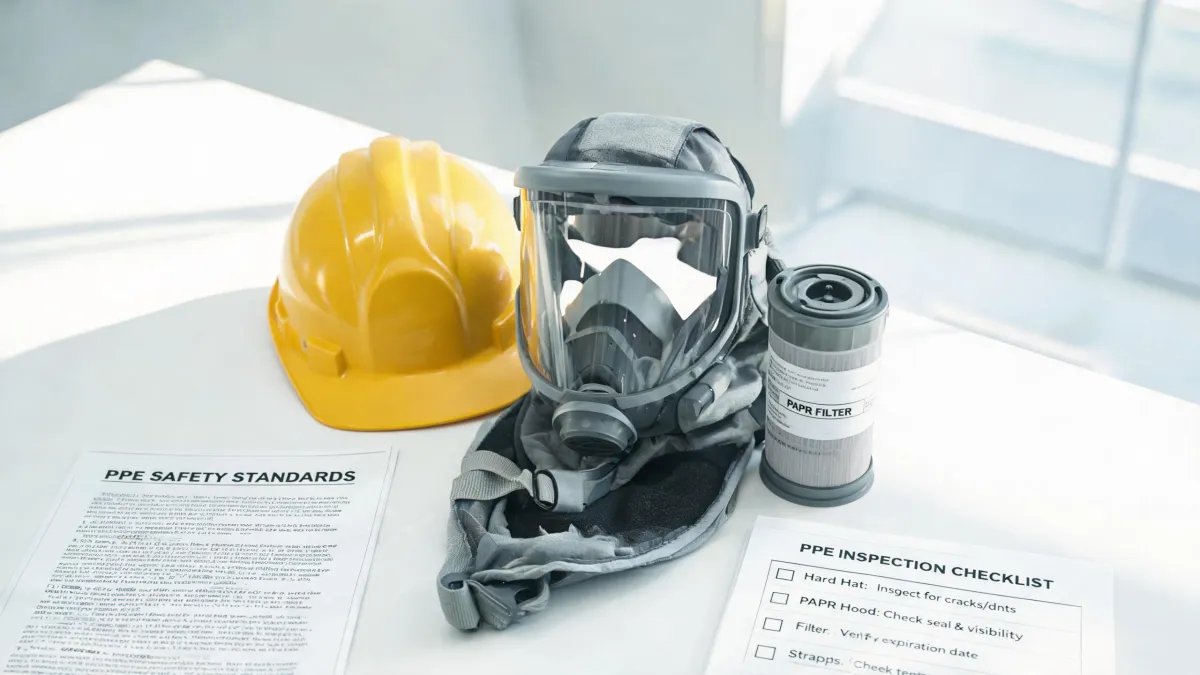
We needed hard hats for a 3-day plant turnaround. The lead time was tight, so I approved a rush substitution. The vendor said the bump caps we received were 'close enough.' They were not. Bump caps protect against minor bumps in low-clearance areas. Hard hats protect against falling objects and electrical hazards under specific ANSI/ISEA Z89.1 classifications. On that site, overhead work was active. We caught it during the morning safety walk. We lost 3 days, paid $2,700 for correct hard hats, and embarrassed our team in front of the contractor.
That's when I learned to separate two questions: What hazard is present? What certification does the product actually carry? The invention of the hard hat by Edward Bullard in 1919 changed job site safety. That history is why I still start with Bullard's spec sheets, but history doesn't replace a hazard assessment. If you need respiratory protection, the same discipline applies. A NIOSH-approved PAPR is not a generic powered mask. NIOSH approval under 42 CFR Part 84 matters because it verifies the complete respirator system, not just the blower.
Comparison conclusion: Planned procurement wins on compliance. Rush procurement can win on speed, but only if you lock the spec before the clock starts. If you can't verify the certification in the rush window, the cheap fix is not cheaper.
Dimension 2: Perimeter and Access Control — Fence Extender vs. Picket Fence Thinking
I have mixed feelings about temporary fixes. On one hand, they keep a job moving. On the other, they hide risk until an audit or an incident exposes it.
When I compared a fence extender added to an existing picket fence with a properly planned barrier layout, I finally understood why temporary and permanent controls get confused. A fence extender can raise the height of a picket fence or close a gap. It's useful. But it isn't a load-rated security barrier unless someone engineered it for that purpose. A picket fence is a system: posts, spacing, gates, and inspection routine. The extender is an accessory, not a strategy.
The same pattern shows up in PPE. A bump cap is a fence extender for head protection. It's appropriate in low-clearance areas where the main risk is scraping your head. A hard hat is the picket fence: a defined system for overhead impact and electrical protection. Bullard makes both. The mistake isn't buying one or the other. The mistake is buying a bump cap because it's in stock and calling it a hard hat because the deadline is Friday.
Comparison conclusion: In planned procurement, you design the control around the hazard. In rush procurement, you often design the hazard around what's in stock. The first is safer. The second is sometimes unavoidable—but it needs a written exception and a follow-up date.
Dimension 3: Emergency Notification — Fire Alarm Annunciator and the Hidden Integration Risk
What is a fire alarm annunciator? It's the panel or display that tells responders where the alarm is—which zone, floor, or device activated. Under NFPA 72, the National Fire Alarm and Signaling Code, annunciation has to be clear and usable. It's not decoration. It's part of the emergency response chain.
In Q1 2024, we added a temporary PAPR charging station in a corridor. It was a small project. We didn't think it needed a fire alarm review. During a drill, responders were sent to the wrong wing because the annunciator graphics hadn't been updated. No one was hurt. But we failed the drill, paid $1,200 for after-hours reprogramming and testing, and delayed the project by 4 days.
They warned me about integration reviews. I didn't listen. I only believed the warning after the drill failure. Now I treat any change near egress, charging, or respiratory equipment rooms as a fire alarm review item. That's not bureaucratic. It's how you avoid sending people to the wrong place during an emergency.
Comparison conclusion: Planned emergency notification updates are slow, boring, and reliable. Rush changes are fast, exciting, and fragile. If the change touches life safety, the slow path is the premium path.
The Time-Certainty Premium: When Rush Is Worth It
In March 2024, we paid $400 extra for rush delivery on a set of Bullard PAPR batteries. The alternative was missing a $15,000 training event. That was an easy call. The rush fee bought certainty, not just speed. If the batteries arrived late, 60 workers would have lost a recertification day, and we'd have paid overtime to reschedule.
But here's the thing: certainty only works when the spec is already locked. A rushed wrong product is just a faster mistake. After getting burned twice by 'probably on time' promises, we now budget for guaranteed delivery on critical-path safety items. We don't pay rush fees on everything. We pay them when the cost of missing the deadline is higher than the premium.
Look, I'm not saying budget options are always bad. I'm saying they're riskier when time is short. In an emergency, 'probably compliant' is the biggest risk you can take.
How to Choose: Planned vs. Rush by Scenario
Choose planned procurement when:
- The hazard is overhead impact, respiratory, or electrical. Verify ANSI/ISEA Z89.1 for hard hats and NIOSH approval for PAPRs.
- You can wait for documentation. Bullard's spec sheets, certifications, and history as the inventor of the hard hat are useful, but the hazard assessment decides the model.
- The installation touches fire alarm annunciation, egress, or emergency response. Involve your fire protection engineer and check NFPA 72 requirements.
- You're using a fence extender or picket fence as part of a perimeter plan. Treat temporary fixes as temporary and inspect them.
Choose rush procurement when:
- The deadline is fixed and the loss from missing it is documented. Example: a $15,000 event, a plant shutdown, or a regulatory inspection.
- The spec is already verified. You're paying for delivery certainty, not for someone to guess the certification.
- You can accept a written exception and schedule follow-up. Rush should be an exception, not a purchasing strategy.
If you're stuck between two options, use this rule: the more the item protects someone from a serious injury or emergency, the less you should let a deadline choose the product. Pay for certainty. Then fix the process so you're not choosing under pressure next time.
What I'd Do Next Time
I'd start the checklist earlier. I'd write down the hazard, the required certification, and the latest acceptable delivery date. I'd get Bullard's hard hat and PAPR documentation into the file before the rush. I'd map the fire alarm annunciator zones before moving equipment. And I'd stop pretending a fence extender is a picket fence just because it fits.
That checklist has caught 47 potential errors in the past 18 months. It hasn't made me popular. It has kept me from repeating the same $2,700 mistake. That's a trade I'll take.