
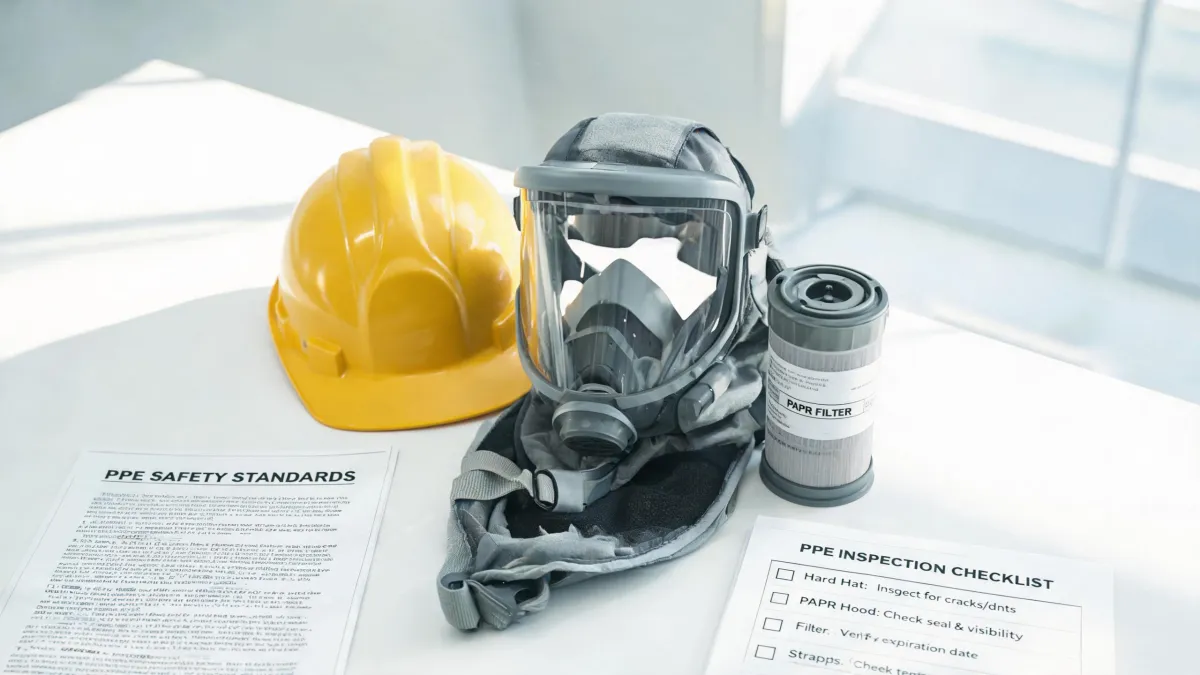
The call that started it
At 4:17 p.m. on a Thursday last March, my phone rang. On the other end was the operations manager for an energy services company — let's call him Dan — and he had that tone I've learned to recognize. Not panic. Worse. The calm voice of someone who just realized how bad things are.
"We've got a site audit Saturday morning," he said. "Eight a.m. Corporate, plus the client's safety team. I need six FR sweatshirts, twelve pairs of work boots, and PPE for a crew of twenty by Friday night."
I pulled up the order history. Dan's company had been with us for two years, mostly standard reorders, nothing weird. Their project was one of those upscale residential builds — the kind with black aluminum fence along the perimeter and a landscaping contract bigger than my mortgage. The audit wasn't a checkbox. It was tied to a $15,000 performance clause in their contract.
Normal turnaround for that order? Five to seven business days. Dan had roughly 32 hours if I counted the Friday delivery window.
My first bad assumption
Here's the thing: when I started handling rush orders, I assumed the cheapest supplier with stock was always the right call. Price mattered, speed mattered, and if the product was the same, who cared where it came from? Three budget overruns later, I learned that's not how this works (more on that in a minute).
My initial plan for Dan was simple: pull the FR apparel from our primary distributor — they listed the ariat fr sweatshirt in the right colorway and size range — and source the boots locally. Ballpark, I figured we could have everything on a truck by Friday noon. Easy.
The distributor's rep confirmed stock Thursday at 5:02 p.m. Then she called back at 5:48.
"About the sweatshirts," she said. "We've got four of the six. The other two sizes show in the warehouse but they're allocated to an existing order. Best case, they free up Monday."
Monday. That's a deal-breaker when the audit is Saturday.
The boot problem nobody flagged
While I was chasing the FR order, Dan sent over the PPE list. Twelve pairs of boots — and his note said, "Whatever's closest to what we had last time."
Last time, they'd ordered ariat western work boots for the field crew and caterpillar work boots for the shop guys. Both are solid; Ariat's got the fit and the brand recognition their foremen like, Caterpillar's the workhorse budget option. I asked Dan which crew this was for.
"Field," he said. "Why?"
Field crew meant they'd be walking the perimeter and the utility areas. That meant I needed to ask a question most buyers skip: steel toe or metatarsal?
"I thought steel toe was standard," Dan said.
It is, usually. But here's the metatarsal boots vs steel toe distinction that trips up a lot of procurement folks: steel toe protects the toes from impact and compression. Metatarsal boots protect the top of the foot — the metatarsal bones — from drop hazards. On a site with heavy pipe, concrete forms, and equipment moving around, ASTM F2413 metatarsal protection isn't optional in some hazard zones. It depends on the site's assessment, not the buyer's assumption.
I don't usually assume. That's what I told myself after a screw-up in 2022 where I shipped 40 pairs of standard steel-toe boots to a job site that required metatarsal. The return shipping alone cost $600 (note to self: always ask for the hazard assessment).
This time, I asked Dan to forward the site's assessment. He did, twenty minutes later. Two zones required metatarsal protection. The rest were fine with steel toe.
That changed the order. Four pairs of metatarsal, eight pairs of standard. And the metatarsal stock was thinner than I wanted.
The $200 "saving"
This is where I almost made the same mistake I'd made before.
I found a supplier with metatarsal boots at $50 less per pair than our usual vendor — $200 saved on four pairs, which felt like real money at the time. The cheaper vendor promised Friday delivery. "Probably morning," the rep said. "Should be fine."
Should be fine. I've learned to treat that phrase like a red flag. In my second year on this desk, I lost a $9,000 contract because a vendor told me an order would "probably" arrive and it didn't. We ate the expedite cost to fix it, and I spent the next two weeks apologizing to a client who's never fully trusted us since.
This time I called our usual vendor back. They had four pairs of metatarsal boots in stock, but they were in a warehouse two states away. Ground shipping: three days. USPS Priority Mail Express: per USPS (usps.com), delivery is guaranteed by 6 p.m. to most addresses, next day, with a money-back guarantee if they miss the window. Cost: $200 more than the cheaper option.
I paid it.
Bottom line: that extra $200 bought a tracking number, a delivery guarantee, and a claim process if USPS missed the window. The cheaper vendor was offering a promise with no teeth behind it. Trust me on this one — in a rush, the guarantee is worth more than the discount.
Chasing certainty on the FR side
Meanwhile, the ariat fr sweatshirt situation needed a second call. The distributor couldn't free up the two allocated sizes. So I did what I should have done first (ugh): I checked our secondary sources.
One of them, a regional workwear supplier I'd used for years, had two of the exact sweatshirts in stock. Not the colorway Dan wanted — navy instead of gray — but the FR rating and sizing were identical.
I sent Dan a photo at 8:40 a.m. Friday. "Will this work?"
"Does it meet the same standard?" he asked.
Good question. Per FTC guidelines (ftc.gov), any claim that a product meets a safety standard — like NFPA 2112 for FR clothing — has to be substantiated with evidence. I pulled the product spec sheet and the manufacturer's test certificate, screenshotted both, and sent them over.
Dan approved in four minutes.
How it ended
Everything landed by Friday at 4:30 p.m. The metatarsal boots arrived via the guaranteed express route at 2:15. The FR sweatshirts came in on a second truck at 3:50. The standard boots and PPE had been in stock locally from the jump.
Saturday's audit passed without a PPE finding. Dan called Monday to say thanks and to ask about setting up a standing quarterly order so this didn't happen again.
Total cost: about $2,900, with roughly $400 in expedited shipping and sourcing premiums tacked on.
Cost of using the cheaper vendor and missing the deadline? $15,000 contract penalty, plus the kind of reputational hit it's hard to price.
What I actually learned
I've been doing this for eight years, and I still catch myself thinking the cheapest option is the smart one. It's a hard habit to break. But the math from this order is pretty simple.
The premium for certainty — the extra $400 — came to about 2.6% of total order value. The downside risk it covered was roughly 5x the order value.
If you've ever had a "should be fine" delivery miss a deadline, you know the difference between paying for speed and paying for a guarantee. Speed is a promise. A guarantee has a claim process attached.
Here's what you need to know: when the deadline matters, stop shopping price. Shop certainty. Ask for tracking. Get delivery windows in writing. Ask what happens if the shipment misses. The cheapest option in a rush is the one that actually shows up.