-
Why I'm Comparing These at All
-
Type 1 vs Type 2 Hard Hats: The Comparison That Should Be First
-
Welding Gloves: What the Spec Sheet Won't Tell You
-
Honeywell Four-in-One Gas Detector vs. Single-Gas Setups
-
Honeywell PAPR vs. Negative-Pressure Respirators: When the Premium Is Worth It
-
What I'd Choose — and What I'd Skip
Why I'm Comparing These at All
I've been handling safety equipment orders for 12 years. In my first year alone I made the classic error of assuming "hard hat is a hard hat" and approved a bulk order of Type 1 shells for crews working near overhead electrical hazards. Nobody got hurt, but the compliance review flagged it, and I still think about the $1,200 we ate to replace 60 units before the audit a month later.
Since then I've tracked 12 significant mistakes across our safety budget — roughly $24,000 in waste between wrong specs, rush replacements, and returns that cost more in shipping than they were worth. Now I keep a comparison checklist for every PPE purchase, and the questions below are the ones I go through every time. This is that checklist, mostly applied to the comparisons that actually matter: Type 1 vs Type 2 hard hats, welding gloves, gas detection setups, and tough-call decisions on PAPR systems.
Fair warning: on a couple of these, the conventional wisdom turned out wrong for us. I'll flag where.
Type 1 vs Type 2 Hard Hats: The Comparison That Should Be First
Here's the short version that took me a full year to internalize: Type 1 protects the top of the head. Type 2 also protects the front, back, and sides from lateral impact. That's it. Everything else — comfort, weight, price — is secondary.
ANSI Z89.1 is the standard, and the distinction matters most when workers are pulling, working near exposed edges, or around falling debris that doesn't fall straight down. If your team is doing maintenance under a mezzanine or working with others above them, Type 2 isn't a luxury. It's the right spec.
Which sounds obvious until you look at the price difference. In 2022 I tried to save about $6 per helmet by keeping our long-term crew on Type 1 shells. Six months later one of those shells cracked near the brim from a glancing hit off a forklift mast that a Type 2 would have handled. No injury, thankfully. But we went back to Type 2 on that crew, and the savings never justified the conversation I had to have with our safety director.
What the spec sheets won't tell you: Type 2 shells are a bit heavier. Most people stop noticing after a week. That's my honest read after five years with both on the floor.
So — Type 1 if the hazard is strictly overhead and budget is tight. Type 2 for anything involving lateral impact risk. Done. Not a popular opinion in the procurement spreadsheet, but that's where I land.
Welding Gloves: What the Spec Sheet Won't Tell You
I have mixed feelings about the premium welding glove market. On one hand, the leather is better cut — seams sit flatter, heat rating actually matches the label. On the other hand, we had crews running cheap cowhide gloves for years without burns under normal production welding.
Where the premium stuff earns its keep is overhead welding and anything where the worker's wrist gets exposed. Cheaper gloves ride up at the cuff, which is where I've seen most minor burns happen — and where the safety reviews on our floor show most of our incidents. In 2023 I switched our overhead-welding team from a budget glove to a mid-range option, and their minor hand-injury count dropped from 4 logged incidents in a year to zero.
We sort them in labeled PPE transmission pans by size and heat rating now — cheap fix, but it stopped the "grab whatever's on the shelf" habit that put a TIG glove on a stick-welding job more than once.
The conventional wisdom says always buy the best glove you can afford. My experience says match the glove to the weld position — and buy a mid-range glove with a long cuff for overhead work instead of a premium glove that still rides up.
Honeywell Four-in-One Gas Detector vs. Single-Gas Setups
This comparison saved us real money, so I'll write it up honestly. For years we ran separate single-gas monitors for oxygen, carbon monoxide, and hydrogen sulfide, with a handheld combustible-gas meter brought in only during confined-space entries. Three devices, three calibration cycles, three pockets full of gear.
We tested the Honeywell four-in-one gas detector in Q3 2024 across three of our confined-space crews. The real advantage wasn't the sensor count — it was that every crew member could walk in with one clipped device and a single calibration dock. Calibration scheduling dropped from about 6 hours a month to under 2. That's the number that justified the switch, not the spec sheet.
Here's the surprise: single-gas monitors are still right for fixed-post monitoring. If you're watching a single known hazard at a workstation, the four-in-one is overkill and the calibration cost per sensor is worse. The Honeywell four-in-one is the right call for mobile crews and confined-space entry. For fixed posts, stick with single-sensor units and don't let the sales conversation talk you out of it.
Honeywell PAPR vs. Negative-Pressure Respirators: When the Premium Is Worth It
I'll be direct: for the first two years, I resisted PAPR budgets. Negative-pressure respirators are cheaper, lighter, and the fit-testing process is well-worn. Part of me still thinks that's the right default for short-duration tasks. Another part has watched what a tight-fitting respirator does to a worker after hour three of a hot, dusty grind-and-weld shift.
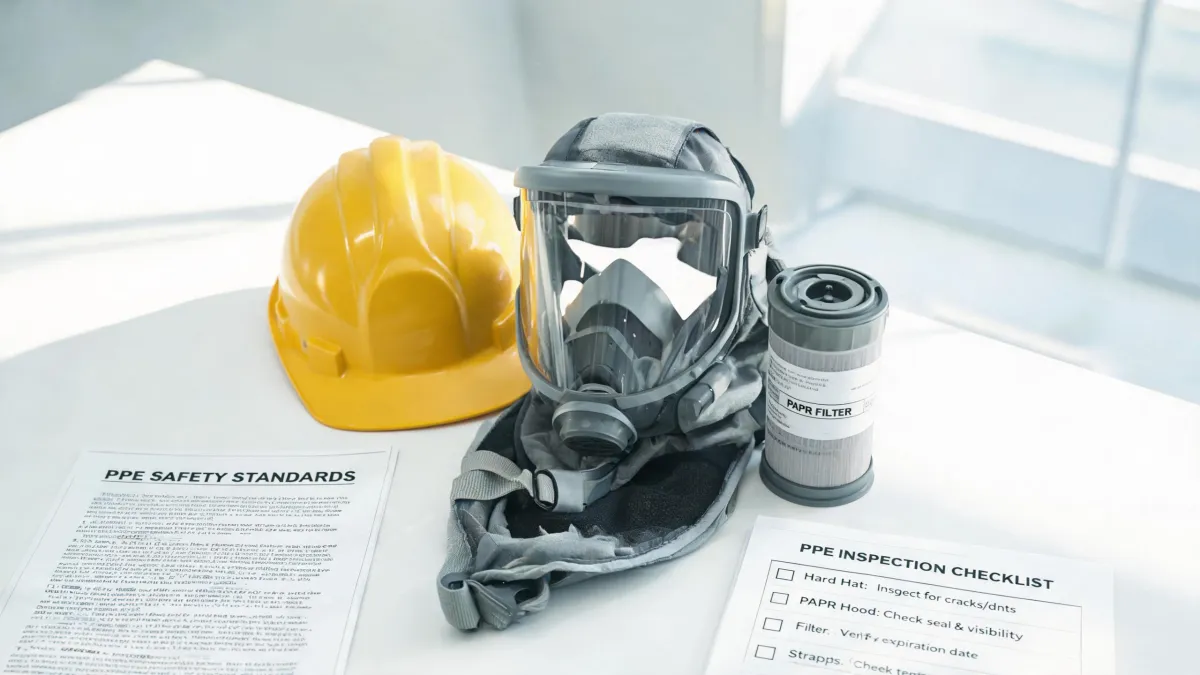
The Honeywell PAPR earned its budget line when we compared measured protection levels on a specific job: an 8-hour grind-and-weld operation with moderate particulate exposure. Workers wearing tight-fitting half-masks passed the qualitative fit test but showed inconsistent wear time — one guy had the mask off 40% of the shift, mostly during the hottest part of the day. The PAPR, once we got the loose-fitting headpiece sized right, ran the full shift because the breathing resistance was lower and the face didn't get as hot.
Real talk: the PAPR costs roughly 4x the negative-pressure setup per unit, and you have batteries and spare filters to manage. If your workers can tolerate a half-mask for the shift, the cheaper option may genuinely be better. If you're seeing discomfort-driven compliance gaps — mask off when it should be on — the PAPR pays for itself in actual protective-time, not just spec compliance.
That's a slower, less flattering argument than "buy the premium system." But it's the one I made to our finance team, and it worked.
What I'd Choose — and What I'd Skip
Here's how I'd map it if I were starting fresh:
- Hard hats: Type 2 across the board unless the crew is strictly performing overhead-only hazard exposure with no lateral impact risk. The price gap doesn't hold up against the compliance downside.
- Welding gloves: Mid-range with long cuffs for any overhead or wrist-exposed welding. Budget cowhide is fine for flat-position production work.
- Gas detection: Honeywell four-in-one gas detectors for mobile crews and confined-space entry. Single-gas monitors for fixed-post monitoring.
- Respirators: Negative-pressure as the default. PAPR where real-world wear time matters more than spec-sheet fit factors.
None of these are universal answers — they're the answers that fit our operation after 12 documented mistakes and a lot of expensive returns. The one thing I'd tell any new safety buyer: stop shopping on unit price first. Shop on protective time, then reconcile the budget. The cheaper item that doesn't get worn isn't the cheaper item.