Why I ran this comparison in the first place
I've managed our PPE and safety equipment budget ($310,000 annually) for six years as a procurement manager at a 240-person industrial contractor. I've negotiated with 14+ vendors and documented every order in our cost tracking system. In that time I've bought — and returned — more head protection than I want to admit: bump caps, Type 2 hard hats, and one Bullard EVA PAPR system that quietly changed how I budget for respiratory protection.
Here's the thing, though. Most teams treat these as three options on the same menu. They're not (I'll get to why). A bump cap, a Type 2 hard hat, and a Bullard PAPR hood solve three different problems, and comparing them on unit price alone is how you end up with a $4,100 redo.
So let me do the comparison I wish someone had handed me in 2021 — across protection scope, total cost of ownership, compliance, and delivery certainty.
Protection scope: what each one actually does
Bump caps — top-only, limited by design
A bump cap (the usual standard is EN 812) protects your head from bumping into stationary objects. That's kind of it. No top-impact rating, no lateral-impact rating, no electrical protection. It's basically a hard shell inside a baseball cap. If you've ever Googled what is a bump cap and gotten a catalog page instead of an answer, the short version is: low-hazard tool, not a hard hat substitute.
Type 2 hard hats — top and lateral impact
ANSI/ISEA Z89.1 splits hard hats into Type 1 (top impact only) and Type 2 (top and lateral impact). A type 2 hard hat protects from off-center and side impacts, which is the reality on most industrial sites. Big difference — and one people miss constantly, myself included.
Bullard PAPR hoods — sealed breathing zone plus head protection
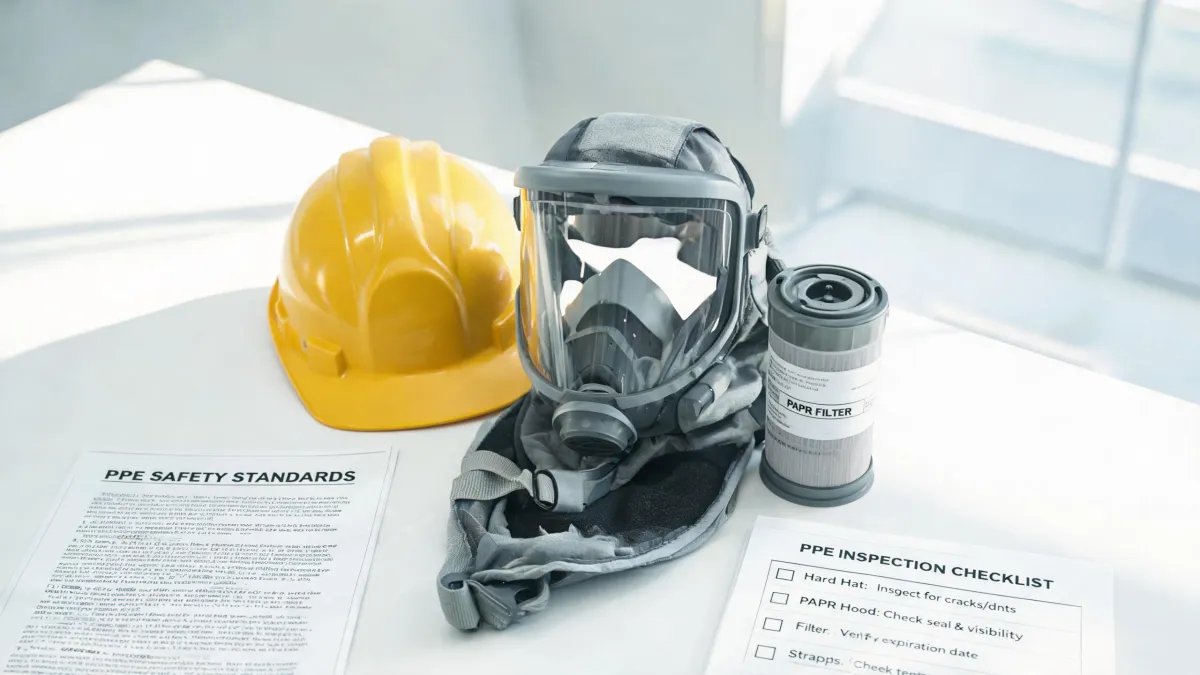
The Bullard EVA PAPR system is a different category entirely. It's a NIOSH-approved powered air-purifying respirator (per 42 CFR Part 84) with a hood that seals the breathing zone and integrates with head protection. Bullard's PAPR hoods are built for painting, welding, pharmaceutical, and asbestos work — environments where you can't rely on a half-mask fit factor to hold up for a full shift. And for what it's worth, this is the inventor-of-the-hard-hat company (Edward Bullard, 1919), so the head protection heritage isn't a tagline recycled from a brochure.
Total cost of ownership: where the math surprises people
Unit prices lie. Here's the rough shape of it:
- Bump cap: $12–$22 per unit
- Type 2 hard hat: $25–$60 (Bullard, MSA, Honeywell — all commodity-priced at the low end)
- Bullard EVA PAPR system: $1,500–$2,500+ per unit, plus filters
On sticker price, the PAPR is 100x a bump cap. But the comparison most buyers get wrong is the middle tier — bump cap vs. Type 2. And it's a mistake I made myself.
Like most beginners, I approved a 400-unit hard hat order based on a spec sheet that said "Type 1." I assumed Type 1 covered lateral impact too. It doesn't. We had to swap them for Type 2 at a 22% premium with rush shipping — about $4,100 in unplanned spend.
That was my rookie mistake, and honestly it's the same trap I still see other procurement teams fall into. They compare bump caps ($15) to Type 2 hard hats ($40) and pick the bump cap to save money — without realizing the bump cap doesn't satisfy the ANSI requirement their insurer actually cares about. That's not a savings. That's a claim waiting to happen.
Where the PAPR starts to pay back is on the respiratory side. Run the traditional stack: half-mask respirator (~$85), cartridge replacements (~$40 quarterly), hard hat (~$40), face shield (~$25), plus fit-test labor at ~$45 per person twice a year. On a 12-person painting crew over three years, that traditional stack runs roughly $14,000–$16,000 in consumables and labor alone. The Bullard EVA PAPR at $1,800 per unit plus filters lands in a similar range — but with a guaranteed sealed breathing zone, which matters when the work involves isocyanates (and it always does on those jobs).
It took me four years and about 900 purchase orders to understand that "cheapest compliant option" and "cheapest total cost option" are almost never the same thing.
Compliance and audit exposure
OSHA 1910.134 covers respiratory protection — medical evaluation, fit testing, training, and program administration. A half-mask respirator is compliant, but every one of those requirements is on you, per wearer, forever.
A NIOSH-approved PAPR like the Bullard EVA shifts some of that burden. Loose-fitting hoods (per OSHA's assigned protection factor tables) generally don't require annual fit testing, which quietly removes a recurring labor cost and a recurring audit finding (thankfully). That's not a sales pitch — it's a spreadsheet line.
The hard hat side is simpler. If your hazard assessment calls for ANSI Z89.1 Type 2, a bump cap won't pass, and you'll find out the hard way during an audit or an incident. If the hazard is genuinely bump-only, a Type 2 hard hat is over-spec'd — and $25 more expensive per unit, times however many heads you're covering. Match the rating to the hazard, not to the catalog page.
Delivery certainty — the premium I'll pay every time
Here's where I get opinionated.
In March 2024, one of our sites needed 60 Type 2 hard hats before a client-mandated shutdown protocol kicked in. Our usual distributor quoted $2,900 with a three-week lead time. Bullard's distribution network had stock and quoted $3,340 with a guaranteed five-day delivery. I paid the $440 premium without hesitating. The shutdown penalty on that job was running about $18,000 per day. The "cheap" option wasn't cheap — it was a bet I couldn't afford to lose.
After getting burned twice by "probably on time" promises from low-cost distributors, I now budget for guaranteed delivery on anything tied to a compliance deadline. The rush premium isn't buying speed. It's buying certainty. And in an environment where the fine for a single non-compliant crew can exceed the entire order value, certainty is the boring, correct line item.
The same logic applies to fire extinguisher service. When I searched fire extinguisher service near me last year for a satellite site, the local option with a guaranteed 24-hour response window cost about 18% more than the regional one. I took the local contract. Same reason. Bullard makes fire extinguisher training equipment, so it's a category I already track with them — no conflict of interest, just an observation from someone who's watched "we'll get to it next week" turn into a citation.
So which one do you actually buy?
Depends on the hazard and the consequence. Here's how I decide now:
- Bump cap — low-hazard environments (warehouse, light assembly), high-turnover workforce, no lateral impact risk, no ANSI Z89.1 requirement from insurance or clients. Fine tool. Wrong tool for a construction site.
- Type 2 hard hat — construction, utilities, electrical (with the appropriate dielectric class), any site where the hazard assessment or the client spec calls for ANSI/ISEA Z89.1 Type 2. This is the default for most industrial crews, and it's also where specs get sloppiest — read the label, not the SKU description.
- Bullard PAPR hood system — any environment with airborne contaminants (painting, welding, pharma, asbestos remediation), a repeated fit-test liability, or workers who can't reliably seal a half-mask. The Bullard EVA PAPR is not the cheap option. It's the option that removes an entire category of risk from your annual audit.
One last process note. We didn't have a formal spec verification step for head protection. Cost us twice before I built a one-page approval checklist — standard, rating, class, and delivery deadline, signed off by two people. Should have done it after the first time. That checklist has caught three mismatches in the last 18 months, saving roughly $6,000 in avoided swaps and rush replacements.
None of this is complicated. It's just not cheap. And if you're comparing bump caps, Type 2 hard hats, and PAPR hoods on unit price alone, you're already behind.