-
1. Hard Hats: Certification Compliant vs. Actually Worn
-
2. Respiratory Protection: "Box of N95s" vs. NIOSH-Approved Systems
-
3. Fire Extinguishers: Memorized Classes vs. Reading the Canister
-
4. Emergency Response: Bare Hands vs. A CPR Face Shield
-
5. Smoke Detectors: Yanked Off the Ceiling vs. Removed the Right Way
-
So: Which Approach Should You Use?
I'm a safety coordinator, and I've been handling PPE procurement for seven years. I've personally made—and documented—14 significant mistakes, totaling roughly $32,000 in wasted budget. Now I maintain our team's pre-purchase checklist so nobody else repeats them.
What follows is a comparison between the old way I used to buy safety equipment and the way I buy it now. Same budget, same industry, completely different decisions. If you're responsible for hard hats, respirators, or emergency response gear, this is the comparison I wish someone had walked me through in 2018.
What was best practice in 2018 may not apply in 2025. The fundamentals haven't changed—equipment needs certification, correct use, and actual wear—but the execution has transformed.
1. Hard Hats: Certification Compliant vs. Actually Worn
The old thinking: The hard hat passes ANSI Z89.1, so the decision is made. Buy the lowest-cost compliant option, stock it, move on.
The new thinking: The shell gets the certification. The liner earns the 8-hour shift. If the liner doesn't fit properly, the hard hat doesn't get worn—and a hard hat that sits on a shelf protects no one.
In my first year (2018), I made the classic mistake: I ordered 300 hard hats with standard webbing suspension because it was the lowest-cost option. Thirty-eight workers reported pressure points within a week. Six physically refused to wear them. We spent $4,200 on replacement liners and a week of uncomfortable "please wear your hard hat" speeches.
Most buyers focus on the shell and completely miss the liner. The question everyone asks is "Does it meet ANSI Z89.1?" The question they should ask is "Will someone wear this for 10 hours straight?"
This is where the Bullard hard hat liner deserves a closer look. Bullard invented the hard hat in 1919—they've had a century to refine the part that touches your head. Their liner systems distribute weight evenly and adjust without tools. Comparing a standard webbing suspension to a Bullard liner side by side, the difference doesn't look dramatic on paper. It becomes dramatic at hour seven of a workday.
The conclusion I landed on: compliance is the floor, not the ceiling. If you're buying hard hats for people who wear them all day, the liner is where your budget should go.
2. Respiratory Protection: "Box of N95s" vs. NIOSH-Approved Systems
The old thinking: An N95 respirator is an N95 respirator. Buy a box, hand it out, check the box.
The new thinking: A respirator is only as good as its seal. A seal is only as good as the fit test. If you aren't fit-testing, you're guessing.
The mistake: in Q1 2022, I ordered 500 N95s for a sanding project. At the first fit-test session, 31 of 51 workers failed—a 61% failure rate. The unopened boxes got absorbed by other projects eventually. The opened ones went nowhere. $390 wasted, plus a three-day production delay.
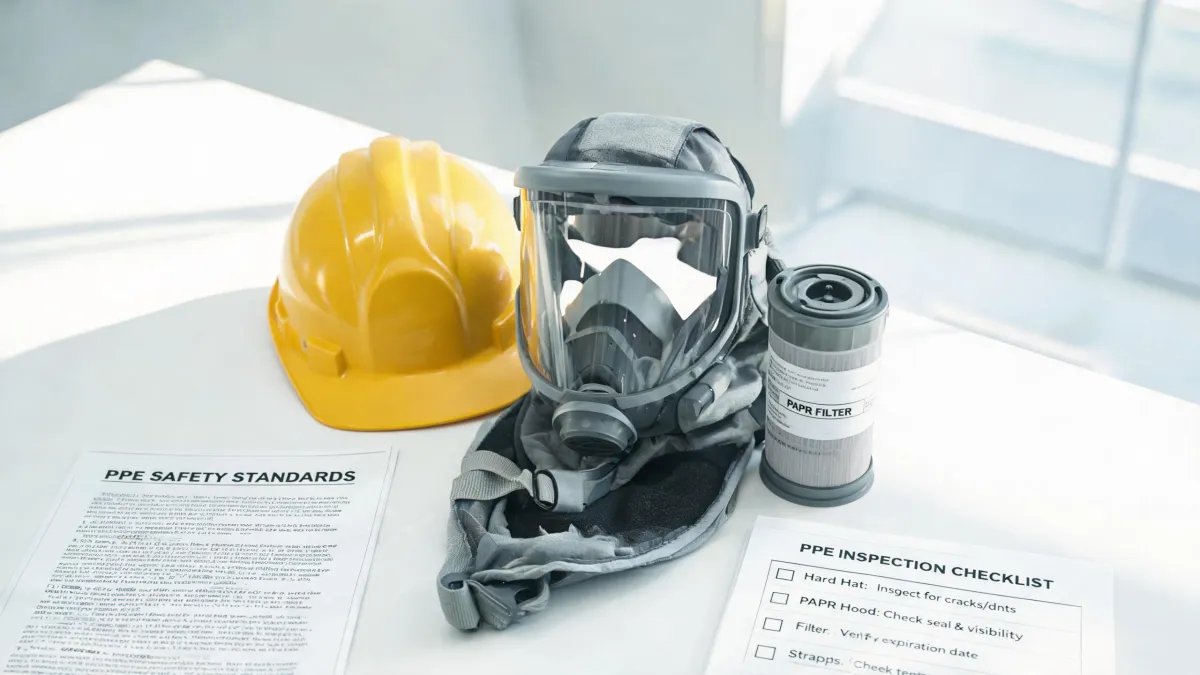
That experience pushed me to compare disposable negative-pressure respirators against powered air-purifying respirator (PAPR) systems, the kind Bullard makes under NIOSH approval. Here's the difference that matters: a disposable N95 relies on a tight seal against the face. Every face is different, which is why fit-testing exists. A PAPR uses a battery-powered blower to pull air through filters and deliver it under positive pressure into a hood or helmet. Because the pressure inside is higher than the ambient air, contaminants are pushed out rather than pulled in. Loose-fitting PAPR hoods don't rely on the same seal, which changes the fit-testing math entirely.
I'm not going to quote specific PAPR pricing here—as of January 2025, pricing varies too much by configuration and supplier to be useful without a quote. What I can tell you from the comparison: the upfront cost of a PAPR program is higher, but the compliance is measurable in a way it never is with a box of disposables. When I ran the numbers on fit-test failures, retests, and hours lost to mask compatibility problems, the gap closed a lot faster than I expected.
Here's the thing: if you're buying respirators and you don't know your crew's fit-test pass rate, you don't have a respiratory protection program. You have inventory.
3. Fire Extinguishers: Memorized Classes vs. Reading the Canister
I used to believe I had fire safety handled because I could recite the extinguisher classes in my sleep. Class A: ordinary combustibles. Class B: flammable liquids. Class C: energized electrical equipment. Then September 2022 happened.
An electrical fire broke out in our maintenance bay. A coworker grabbed the nearest extinguisher and was about to discharge it at the electrical panel. I stopped him. He was holding a water-based Class A unit. A live electrical panel. We were seconds away from a serious incident.
The most frustrating part: this man had passed our same training. But under stress, his brain locked onto the big letter "A" on the label and completely missed the pictogram showing an electrical plug with a red slash through it. That's when I got honest about the difference between teaching letters and teaching recognition.
What do the symbols on a fire extinguisher indicate? The pictograms show which fire classes the extinguisher is rated for: a trash can with flames = Class A (ordinary combustibles), a gasoline can with flames = Class B (flammable liquids), an electrical plug with flames = Class C (energized electrical equipment). A red slash crosses out the classes it must NOT be used on. These pictograms follow NFPA 10 labeling requirements.
People assume their annual fire-safety slideshow is enough. What they don't see is that symbol recognition degrades fast when it's not practiced. Memory fails under stress. Symbols are designed to be processed instantly—the whole point of a pictogram is that you don't need to recall a letter system under pressure.
The lesson captured in a single sentence: train your people to read the symbols before they ever need to touch the canister.
4. Emergency Response: Bare Hands vs. A CPR Face Shield
I have mixed feelings about "pocket protection" gear. On one hand, a lot of it is gadgety. On the other, the CPR face shield is the piece of gear that changed how I think about bystander response.
During my recertification in 2023, I practiced rescue breathing on a mannequin without a barrier and noticed something uncomfortable: I paused. A beat of hesitation. Not because I didn't know the sequence—I've trained it dozens of times—but because the intimacy of direct mouth-to-mouth triggered an instinctive reluctance.
Now compare that to what happens in real emergencies. Bystander CPR rates are low, and one of the most common reasons people hesitate is exactly that reluctance. Not fear of doing it wrong. That specific hesitation around rescue breathing.
A CPR face shield is a small, flat piece of plastic with a one-way valve that can live on a keychain. Its whole purpose is removing that hesitation. When I compare practicing with the shield vs. without it side by side, the difference isn't the barrier—the difference is that I stop deliberating and start doing.
Real talk: I'm not suggesting every worker needs to carry a full med kit. I'm saying a $3 shield is the difference between standing by and acting.
5. Smoke Detectors: Yanked Off the Ceiling vs. Removed the Right Way
The most common question I get from coworkers isn't about hard hats. It's: "How do I remove a First Alert smoke detector?" Usually because a unit started chirping at 2 AM and they want it silent.
Here's the straightforward answer for most First Alert models: place one hand on the detector, rotate it counterclockwise to release it from the mounting bracket, and pull it straight down. If it's hardwired, unclip the wire harness connector by pressing the small tab. Then slide the battery drawer out and replace the 9V battery.
Take this with a grain of salt: model designs vary. Check the model number on the back of your unit. And if it's a sealed 10-year model, the same rotation and removal applies—except the whole unit gets replaced rather than re-batteried. Don't hold me to this, but that's how most of the current generation works.
Why does this belong in an article about safety equipment? In 2024, I made this exact mistake in my own home office. I couldn't get the rotation direction right from memory, so I yanked. The detector came off its base hard enough to pop the locking mechanism. It went back on, but the mount never sat flush again.
The old thinking: "It's a plastic disc. Pull it, replace the battery, push it back."
The new thinking: these devices have a specific removal sequence for a reason. Tamper-resistant locking tabs exist so detectors don't end up on the floor. When you break the sequence, you compromise the mount. If the detector falls off the ceiling—or hangs by one tab—it's no longer doing its job.
Learn the removal sequence before the 2 AM chirp, not during it.
So: Which Approach Should You Use?
I'm not going to tell you that all old safety thinking is wrong. ANSI Z89.1, NIOSH approval, and NFPA 10 compliance are still the floor, and they aren't going away.
The changes I'm describing are about how we execute on those fundamentals:
- Hard hats for full-shift workers: put your budget into the liner, not just the shell. The Bullard hard hat liner exists because comfort drives compliance.
- Respirators for anything beyond dust: build fit-testing into your purchasing process, not after you've opened the boxes. A NIOSH-approved system like a Bullard respirator is an investment in measurable protection, not a discretionary upgrade.
- Fire extinguisher training: drill on symbol recognition. If nobody in your crew can tell you what the symbols on a fire extinguisher indicate without looking at the wall chart, your training hasn't landed.
- Emergency kits: include a CPR face shield in every first aid station, and let people take one home. The cost is tiny; the hesitation it removes isn't.
- Smoke detectors: put the correct removal instructions on your maintenance checklist, right next to the battery replacement date. It's a five-minute lesson that prevents a 2 AM emergency.
The industry has evolved over the seven years I've been doing this. The fundamentals haven't changed—they've just gotten more honest. Equipment only works when it's worn, used, and understood. Everything else is just inventory.