I'm the office administrator for a 120-person industrial contracting company. I order most of the PPE—about $40,000 a year across five vendors—and I'm also the person who gets called when something in the building chirps at 2 a.m. This FAQ is a mix of the safety equipment questions I hear from our crews and the facility questions our PMs ask me. If you're here because you looked up "Bullard safety helmet" or "why is the fire alarm beeping," you're in the right place.
Is a Bullard Safety Helmet Worth It?
Honestly? It depends on what you're used to. If you've been wearing whatever hard hat was sitting in the company trailer, a Bullard safety helmet is a noticeable step up. Bullard invented the hard hat in 1919, so they've been at this a while. The suspension feels more balanced, and the accessory slots make it easier to add a face shield or hearing protection without a bunch of jury-rigging.
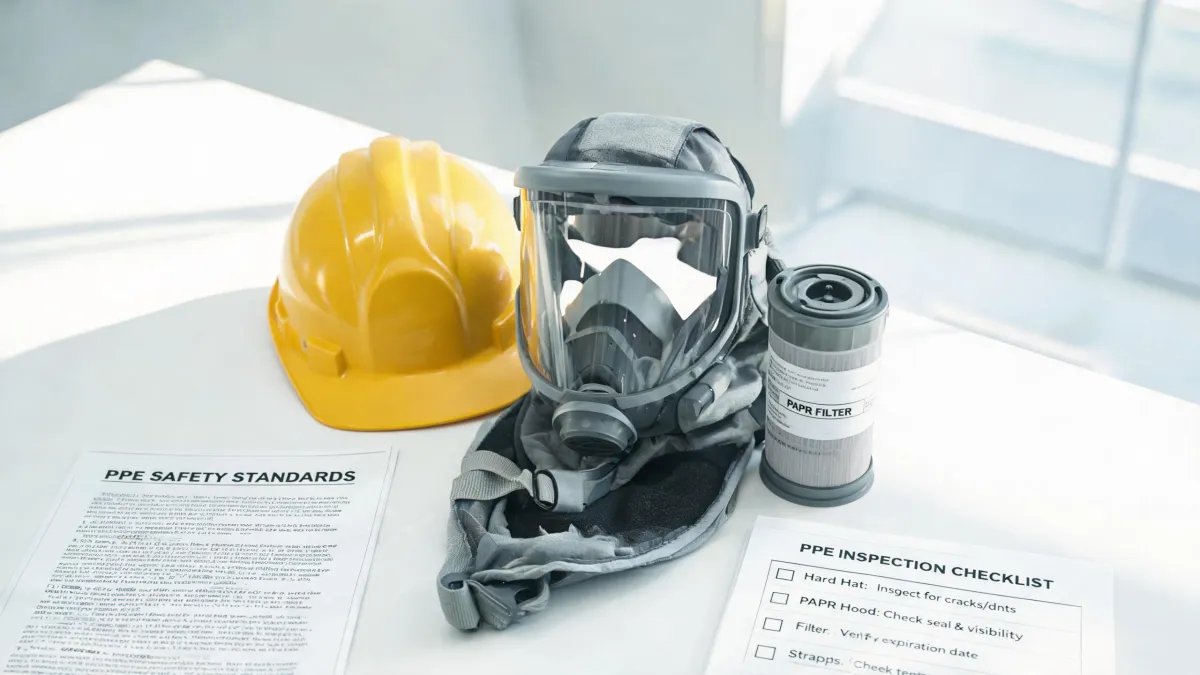
For our crews, I order Bullard hard hats for tasks where impact and electrical protection matter. Make sure the model is marked ANSI Z89.1 if you're in the U.S. I don't have hard data on exactly how many years the average helmet lasts in the field, but Bullard's guidance is to replace after impact or if you see cracks, dents, or sun damage. I also replace suspension yearly for guys who wear them daily—that's cheaper than replacing a helmet.
What Is a Bullard PAPR Hood?
A Bullard PAPR hood is the loose-fitting hood that connects to a powered air-purifying respirator, or PAPR. A battery-powered blower pulls air through a filter and pushes it into the hood. You get a constant flow of filtered air instead of pulling air through a tight-fitting mask.
The big advantage for our crews is comfort: a PAPR hood works with safety glasses, and it doesn't need the same face-to-mask seal as an N95 or half-mask. That's a big deal for anyone with a beard. But it's not "put on hood, get clean air, done." You need a blower and filter set that's NIOSH-approved for the contaminant you're concerned about—silica, paint mist, welding fume, whatever. A "Bullard PAPR hood" is just the hood; the whole system matters.
Why Is the Fire Alarm Beeping?
If you hear a single chirp rather than a full alarm, it's usually the battery. Smoke detectors chirp every 30–60 seconds when the backup battery is low. The fix is normally a fresh 9V battery. But if it keeps chirping after a battery change, the unit itself may be past its end of life.
NFPA recommends replacing smoke alarms every 10 years. I didn't know that until our maintenance guy showed me the date stamp on the back of one. We had three units in a supply closet from 2012, all chirping. Replacing them fixed the issue.
If it's a hardwired fire alarm system, don't just silence it. Check the panel for a fault or low battery, and call your fire alarm contractor if you're not sure. A beeping alarm is usually a maintenance clue, not a false alarm.
What Privacy Fence Ideas Work for a Worksite?
If you're looking at privacy fence ideas for a construction yard or plant, the first question is: do you want actual privacy, site security, or both? That changes the product completely.
- Metal privacy panels—sheet steel or corrugated panels bolted to posts. Strong, fire-resistant, high security, but not cheap.
- Chain-link with privacy slats—cost-effective and fast. Slats control sight lines and wind, but they won't stop a determined person.
- Fabric screens on a pipe frame—good for temporary sites. Shade cloth or branded mesh can block visibility while keeping the install simple.
Are Pipe Fences a Good Option for Perimeter Control?
A pipe fence is one of the strongest things you can put up. It's pretty much what ranches and industrial lots use when they need a boundary that won't get knocked over. The downside is that a bare pipe fence does not give you privacy. You can see right through it.
But pipe fence plus a privacy screen? That combination works. We've used steel pipe posts with tensioned cable in one area and then clipped shade fabric to it for a temporary event area. It looked intentional and didn't need concrete footings. For a permanent option, schedule 40 pipe with corrugated metal panels is a solid setup.
One thing I learned the hard way: never assume "pipe fence" means the same thing to everyone. It can mean ranch pipe, steel handrail pipe, or scaffolding pipe. Verify the outside diameter and wall thickness before you order, especially if you're matching an existing fence.
How Do I Check Whether a Bullard PAPR Hood Fits Our Existing System?
Here's what you need to know: not every PAPR hood fits every blower. I almost made this mistake last year. I assumed the part number on a replacement Bullard PAPR hood was identical to what we already had because it looked the same in the photo. Didn't verify. It arrived, and the hose connection was different.
Now I use a five-minute compatibility check:
- Confirm the hood part number and the blower appear on the same approved system list.
- Check the NIOSH Certified Equipment List for the blower, hood, and filter combination.
- Order from a supplier who can verify compatibility before shipping.
It took one returned order to teach me that. A five-minute check is cheaper than a week of waiting on a replacement.