When I first started managing PPE procurement for our facility, I thought I had it figured out. Find the cheapest hard hat that meets ANSI standards. Buy in bulk. Done. Three quarters into my first year, I realized I was wrong.
Let me walk you through what I've learned managing our safety equipment budget (over $180,000 across 6 years at last count). Maybe it'll save you some of the headaches — and expenses — I ran into.
The Problem You Think You Have
If you're a safety manager or procurement professional, you probably think your PPE spending problem is simple: workers lose hard hats, supervisors buy whatever's cheapest, and the budget bleeds out in a thousand small transactions. I used to think that too.
But the real issue runs deeper. When I audited our 2023 spending, I found that over 40% of our PPE budget overruns weren't from carelessness or cheap purchases. They came from compatibility failures, retraining costs, and premature replacement cycles. The hard hats themselves were fine. It was everything around them that was bleeding money.
What I Actually Found: The Deep Cost Layers
Here's where it gets interesting (and expensive). After tracking every PPE order from 2020 to 2024, I identified three cost layers most procurement teams miss:
Layer 1: The Compatibility Tax
This one hurt. We switched to a lower-cost bump cap for one department. Saved $4 per unit. Felt smart. Then we discovered it wasn't compatible with the ear muffs our team used on the plant floor. That meant new muffs for 30 people. Then we found the face shield mount didn't fit either. Suddenly that $4 savings per cap turned into an $1,800 retrofitting expense.
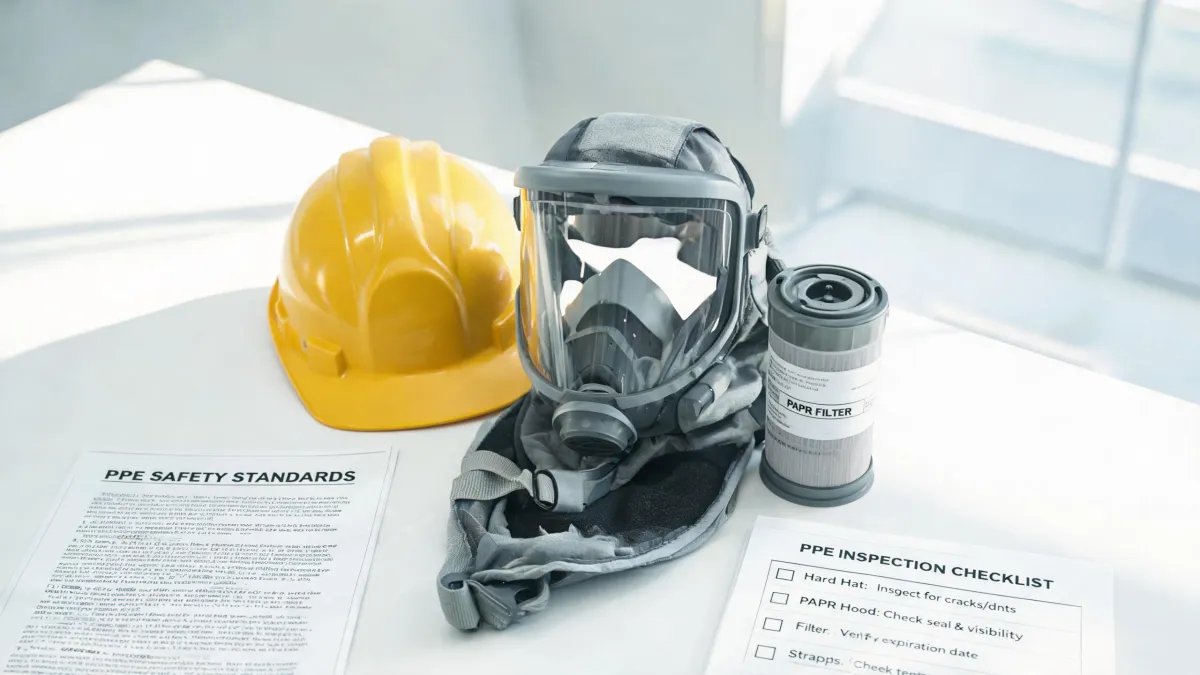
Here's the rule I now enforce: Before any hard hat or bump cap purchase, verify compatibility with your existing accessories. Visors, earmuffs, brims, and especially PAPR hood mounting hardware (we use Bullard PAPR systems in several areas — their hoods have specific fitting requirements). It takes 15 minutes. It saves thousands.
Layer 2: The Training Tax on Product Switches
I assumed 'same specifications' meant identical performance across vendors. Didn't verify. Turned out each brand has slightly different sizing, weight distribution, and adjustment mechanisms. When we switched from one hard hat model to another (a budget move), we found ourselves spending three months retraining crews on proper donning and adjustment. Every switch costs 20–40 minutes of training time per worker. For a 200-person site at an average loaded rate of $45/hour? That is not trivial.
(Note to self: always calculate the transition cost before switching vendors. It's rarely zero.)
Layer 3: The 'Fire Alarm' Cost You Never Budget For
Here's a cost I never expected. When a fire alarm goes off (which happens more often than you think — drills, false alarms, actual events), the procedure changes depending on your respiratory protection setup. If you're using a Bullard PAPR hood, the evacuation protocol is different than for half-face respirators. Workers need to know: do I stay in the hood? Do I remove it? How do I transition to the escape hood (if applicable)?
We had one incident where a fire alarm chirp started (you know, that sound that makes you want to figure out how to make a fire alarm stop chirping), and the team wasn't trained on the PAPR evacuation protocol. The result? Confusion. Delayed evacuation. A near-miss report. And a $2,500 root-cause investigation plus retraining.
The Hidden Costs of 'Cheaper' Choices
I've kept a spreadsheet of every significant PPE decision we've made. Some of my favorite (and most painful) entries:
- The 'inexpensive' hard hat that didn't fit our Bullard face shields. Saved $6 each. Cost $1,200 in adapter kits and replacement shields.
- The bargain PAPR hood that didn't seal on 30% of our crew. Returned 40 units. Cost $800 in testing, shipping, and lost time.
- The cut-rate bump cap with no accessory slots. Fine for basic use. But our maintenance team needed visors. Had to buy new caps.
In every case, the purchase decision looked smart on paper. But the hidden costs — compatibility, retraining, replacement — turned a 'savings' into a net loss. The pattern is clear: when you skip the evaluation step, you pay for it later.
What Changed: My Procurement Protocol
After getting burned (badly) on that first bump cap switch, I implemented a simple three-step protocol:
- Compatibility matrix. Before any new PPE purchase, I check compatibility with our existing inventory. For hard hats, that means visors, earmuffs, and lights. For PAPR hoods? It means checking the blower unit (we use Bullard models), fit testing, and battery life requirements. (Also worth noting: some 'pool fence ideas' for job site safety barriers came from our temp barrier solutions needing hard hat compatibility — not a problem I expected, but one that had cost implications.)
- Total cost projection. This includes unit price + training time + accessories + estimated first-year replacement rate. I built this calculator after my second 'budget mistake' — it's saved us roughly 12% annually on PPE spending.
- Three-year procurement horizon. Not one quarter. Not one year. Three years. Because right now, the 502 Bullard hard hat we use in the field has at least a 2-year lifecycle before replacement. The Bullard PAPR hood? 3–5 years with proper care. Buying for what you'll need in 2027 prevents those awkward 'we have 50 expired hoods' moments.
Is this overkill for a $15 hard hat? Maybe. But for a $25,000 annual PPE budget that often crept to $30,000, it paid for itself in six months.
The Bottom Line (From Someone Who's Done the Math)
The hard hat market has evolved. What was best practice in 2020 — buy the cheapest approved hat — may not apply in 2025. Today, a good Bullard hard hat (the 502 model comes to mind) or a Bullard PAPR hood is an investment in system compatibility, crew safety, and long-term cost control. The fundamentals haven't changed: you still need ANSI certification, a reputable brand, and proper fit. But the execution? It's now about the ecosystem, not just the cap.
Next time you're looking at quotes, ask yourself: what does the total cost landscape look like? Because that $4 savings today might be the start of a very expensive lesson tomorrow. (Trust me — I've got the spreadsheet to prove it.)