Buying safety equipment on price alone is a mistake. I’ll go further: if the first question about a hard hat is “what does it cost?”, you’ve already started in the wrong place.
When someone asks me “why is the fire alarm beeping?”, the answer is usually a low battery. The alarm isn’t failing. It’s asking for attention. Safety gear works the same way. A hard hat shell, a PAPR battery, a chin strap — they all tell you when something needs maintenance. The problem is when you buy something so cheap that you can’t get parts for it, or so uncomfortable that nobody wants to wear it.
I’m the office administrator who manages PPE ordering for a 140-person industrial company. That’s about 60–80 orders a year, across three locations, for hard hats, respirators, face shields, and accessories. I report to operations and finance. One side wants equipment that works. The other wants numbers that make sense. Both land in my inbox by Friday.
The first mistake I made
In 2022, with budget pressure, I switched to a lower-priced hard hat. It had the same ANSI rating on paper. I felt good about the savings. Four months later, I didn’t.
The shell was fine, but the liner didn’t fit right. Workers complained within the first week. A crew lead bought better liners out of his project budget and asked me to reimburse him. I did. Then I ordered more replacements for the rest of the site. The “savings” from the original switch disappeared.
I only believed the advice about checking the suspension system after I ignored it once. Now the first thing I look at is not the shell. It’s the liner.
Why Bullard became our default for hard hats
Bullard isn’t a new name for us. The company is credited with the first commercial hard hat in 1919. That history doesn’t make every product perfect. It does mean the company treats head protection as a system, not just a shell.
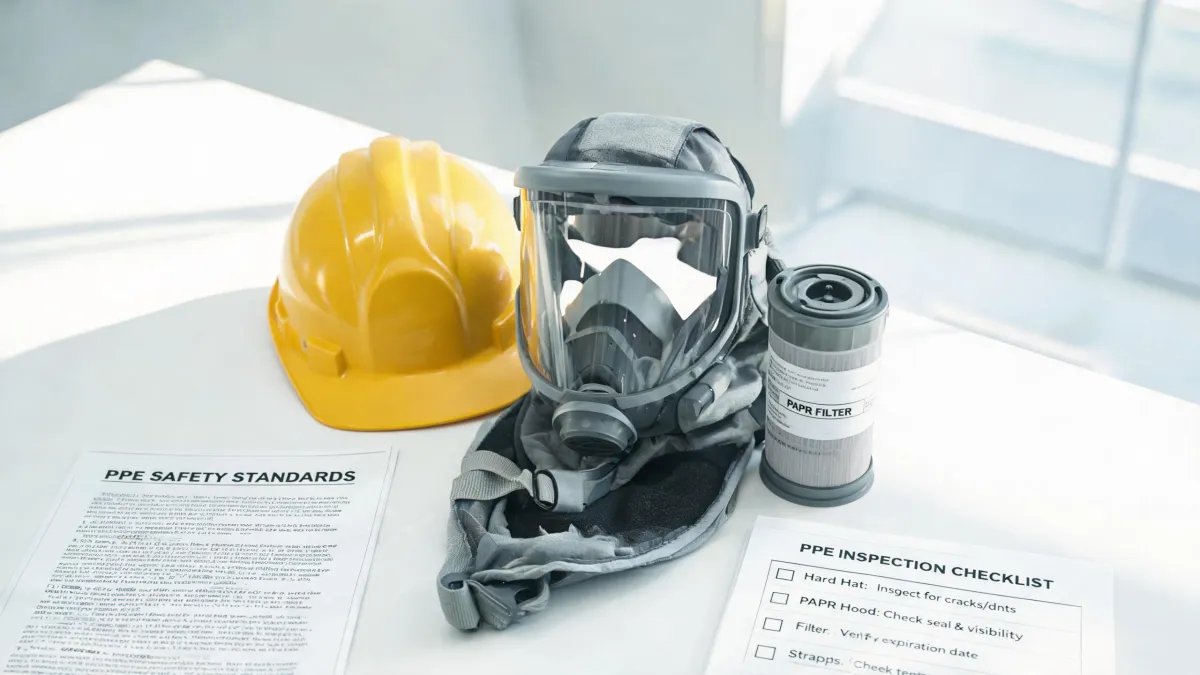
Take the Bullard 502 hard hat liner. That’s the replacement liner inside the shell. I can order it without replacing the whole helmet. For our crew, that means a hard hat doesn’t retire when the suspension wears out. It gets a replacement part and goes back to work. Cheaper hats often don’t have that option. You either buy a whole new hat or you gamble on a liner that might fit today and loosen up tomorrow.
That’s the kind of hidden cost that never shows up on the quote.
The Bullard PAPR respirator decision
The clearest example was our paint-spray operation. We needed a powered air-purifying respirator, or PAPR. The first quote I got was lower. Significantly lower. The spreadsheet said pick it. My gut said don’t.
Why? The cheaper unit had acceptable airflow numbers, but the headtop felt unbalanced and the vendor couldn’t promise filter availability beyond the next year. I didn’t want to buy a system that becomes a shelf ornament after the first filter change. We went with Bullard.
The Bullard PAPR respirator is NIOSH-approved. According to NIOSH (cdc.gov/niosh/npptl), PAPRs must meet requirements under 42 CFR Part 84. I don’t have to interpret every airflow chart myself. I can look for that approval. More importantly, our team wears it. A respirator that sits in a cabinet because it’s uncomfortable offers zero protection.
Hard hat chin straps: the small thing that isn’t small
A hard hat chin strap is a small item. On paper, it’s the easiest accessory to skip. But if a worker leans over a rail, a hard hat without a chin strap doesn’t stay on. It becomes a falling object. I buy Bullard hard hat chin straps in bulk now.
We tested one very cheap strap once. It lasted about two months. The replacement cost, plus the time spent distributing new straps, made the cheap strap expensive. A strap is one of those parts where “good enough” isn’t good enough.
Think about the question “why is the fire alarm beeping?” In our office, that usually means a low battery. The beep is annoying, but it’s the alarm doing its job. PPE is the same. A chin strap that frays, a liner that feels loose, a PAPR battery that drains fast — those are warnings. If you bought equipment with no replacement path, you can’t act on the warning. You just replace the whole thing.
Total cost, not ticket price
Here’s an analogy I use with our accounting team: a concrete fence post costs more than a wooden one. If you’re setting a gate that has to stay square for twenty years, you don’t buy the wooden post and hope it holds. You buy the concrete post. The ticket price is higher. The life-cycle cost is lower.
PPE isn’t a fence, but the principle is the same. I keep a simple spreadsheet: initial price, replacement parts, labor, and the cost of downtime if equipment fails. When I ran that math in 2024, the cheapest options almost always lost. The cheaper hard hats needed more frequent liner replacements. The cheaper respirator had an uncertain filter supply. The cheaper chin strap didn’t last long enough to be called cheap.
I’m not saying every Bullard product is the right choice for every job. I’m saying the right choice is the one that works over the life of the product.
But what if the budget is tight?
I hear that. I’ve been in budget meetings where the assignment was “cut 10%.” My answer isn’t “spend more.” It’s “spend smarter.” If a cheaper product can do the same job for the same service life, buy it. But “same job” means same fit, same replacement parts, same support. Not just the same rating on a spec sheet.
In 2022, one reorder of 30 hard hat liners wiped out the savings from our first switch. I do not think that was an exception. It’s what happens when you optimize for purchase price and ignore everything after it.
Bottom line
My opinion hasn’t changed: value beats price. Price is what you pay at the start. Value is what the product costs—or saves—across its whole life. I’d rather explain a reasonable invoice to finance than explain a second purchase for the same job.
That’s why Bullard is our default for head protection and respiratory protection. Not because it’s the most expensive brand. Not because it’s the cheapest. Because the system works: hard hats with replacement parts like the 502 liner, Bullard hard hat chin straps that keep them on, and a PAPR that people actually wear.
And next time someone asks me why the fire alarm is beeping, I’ll check the battery. The same goes for every piece of safety equipment in the building. When it tells you something is wrong, listen.
Prices and product availability change. This is based on what I’ve ordered and maintained through Q1 2025, so verify current specs and rates before you buy.