It was 8:47 AM on a Tuesday when the fire alarm went off. Then it stopped. Then it went off again eleven minutes later. Then it stopped again.
I'm the procurement manager at a construction company with about 140 employees. For the past six years, I've managed our safety equipment budget—roughly $180,000 in cumulative spending on hard hats, face shields, respirators, and everything else our crews wear. I've negotiated with more vendors than I care to count, and I've documented every order in our cost tracking system.
So when I tell you why we still buy Bullard C33 hard hats, know that it's not brand loyalty. It's math. Math and one very annoying Tuesday.
How a 5% Budget Squeeze Turned Into a 32% Hard Hat Quote
In early 2024, one of our general contractors asked for a 5% reduction across all line items. That's not unusual—GCs ask all the time. But this time, the request landed directly on our safety budget, and I had to find savings somewhere.
So I started shopping. A new supplier came in with a quote 32% below what we pay for Bullard C33 hard hats. Same quantity. Same delivery window. The spec sheets looked identical. Honestly, at first glance, I couldn't tell the difference.
I ordered two dozen samples and ran a 90-day field test with our crews. That's company policy now—we learned that lesson in 2021 after a glove supplier switch went sideways. The test helmets performed... okay. Not great, not terrible. Serviceable. The suspension wore a bit faster than the C33s, but nothing that screamed "run away."
I was this close to signing the purchase order.
Then the alarm went off. Three times in one morning.
The Morning Nobody Knew Where the Extinguisher Was
We had a crew installing a perimeter fence on the east side of the project that week. Cutting steel posts with an angle grinder, setting them in concrete. Normal work. But the metal dust from those cuts drifted into the building's dust detector, and the alarm started screaming.
Nobody knew what was happening. The client was livid. Workers were confused. One guy actually Googled "why would fire alarm go off randomly" on his phone, which is exactly how real emergencies are handled, apparently.
Then came the question that stopped me cold.
"Where's the fire extinguisher?"
Nobody knew. One worker ran toward the break room because he thought there was one there. There wasn't. Someone else typed "fire extinguisher near me" into their phone on the way to the lobby, which is not a plan. It took us seven minutes to locate the nearest unit. It was in an unmarked cabinet near the back door.
Seven minutes. It doesn't sound like a lot, until you picture an actual fire.
That morning cost us two hours of downtime and one very angry client. But it also taught me something about the difference between buying equipment and building a system.
The alarm itself was a simple fix. Most random industrial false alarms come down to a short list of causes:
- Dust from cutting, grinding, or sanding—our case, and the fence line was the culprit
- Steam or humidity near detectors
- Aging sensors or low batteries
- Faulty wiring
- And sometimes it's an actual fire, which is exactly why you don't ignore a "random" alarm
We cleaned the ducts and replaced two detectors near the west bay. The false alarms stopped. One day of work.
But the extinguisher gap stuck with me. And it made me look at our hard hat decision with a much more suspicious eye.
The Assumption That Almost Cost Us $28,400
When I compared the cheaper helmets to Bullard C33s, I made an assumption: "same specifications" meant interchangeable equipment.
I didn't verify it.
It wasn't until after the alarm incident that I checked the accessory compatibility. And that's when the whole thing fell apart.
Our face shields, earmuff attachments, and chin straps are all built for the Bullard mounting system. The cheaper helmets used a different rail design. Switching hard hats meant replacing every accessory we already owned. Every one.
Here's something vendors won't tell you: the first quote is never the final cost for a system change. There's always a second wave—accessories, training, replacement parts, the "oops, we ordered the wrong generation" line item. Always.
That was my 2021 lesson, and I almost made the same mistake again.
The Actual Math, From My April 2024 Spreadsheet
Let me show you the numbers that settled it. We buy roughly 350 hard hats a year across all crews, spares, and replacements. At 32% lower per unit, the cheap helmets projected an annual saving of about $4,368. That was the only number the vendor wanted me to see.
Here's what it really cost:
- Replacing face shields and mounting accessories for the whole crew: $11,700
- Retraining workers on the new mounting system: 420 hours at $35/hour loaded cost = $14,700
- Premature suspension wear measured in the field test, projected to a full year: $3,400
- Field test samples, shipping, and inspection labor: $1,000
- Transition friction—mismatched inventory, wrong reorders, lost pieces: $2,000
Total first-year cost of switching: about $32,800. Total first-year savings: $4,368. Net loss: roughly $28,400.
Period.
The cheap option wasn't cheaper. It was just cheaper per unit. There's a difference, and that difference determines whether your budget survives the year.
Why Bullard Products Stay in the Budget
Look, I'm not going to tell you Bullard is the only decent PPE manufacturer out there. To be fair, other brands make genuinely good equipment, and I'd spec some of them for specific roles.
But for us, three things matter more than the per-unit price:
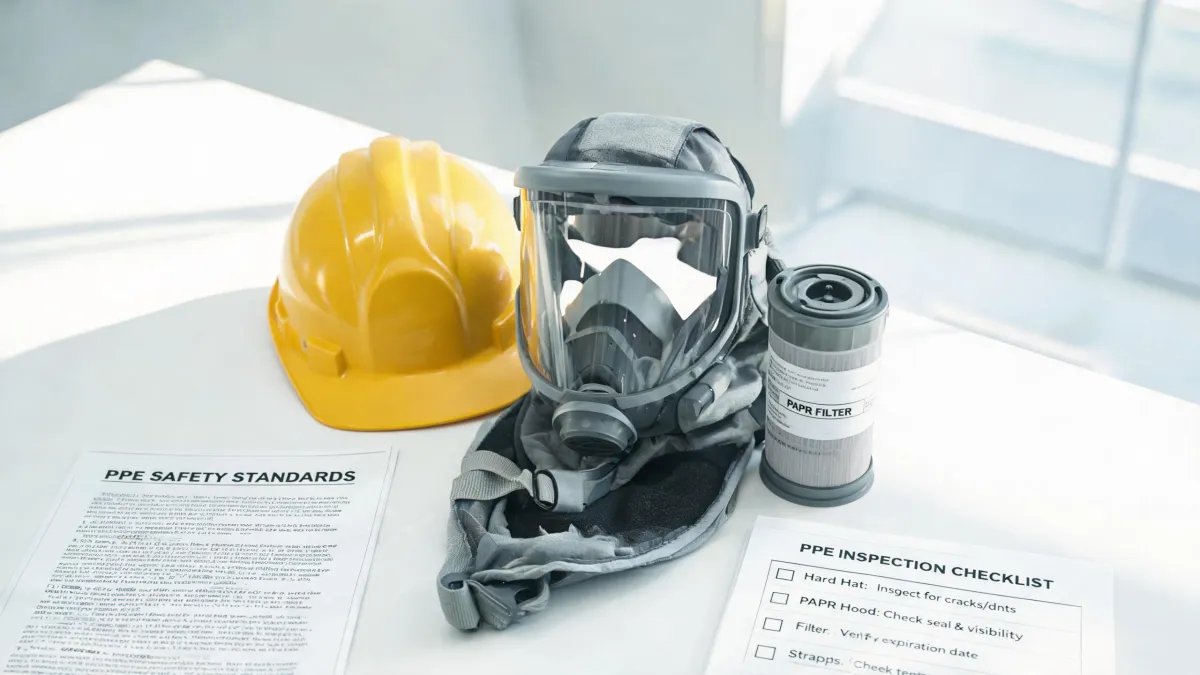
1. The ecosystem. Bullard products—hard hats, bump caps, face shields, and NIOSH-approved PAPR systems—are designed to work together. We have 23 workers doing abrasive blasting and painting. They wear Bullard powered air-purifying respirators. Those respirators mount to the same platform as the C33. If I switched hard hats, I'd break that compatibility. Those 23 blasters would suddenly need two helmets: one for regular work, one for blasting. Workers hate carrying two helmets. They lose stuff. They skip steps. That's a hidden cost nobody puts in the quote.
2. The standard. Bullard invented the hard hat in 1919. Edward Bullard's original "Hard Boiled" hat started the entire category. The C33 carries that lineage and meets ANSI/ISEA Z89.1 standards for industrial head protection. That's a verifiable requirement, not a marketing claim.
3. The history. We've used Bullard products since before I started here. Every worker knows the fit. Every foreman knows the suspension adjustment. When I asked our superintendents whether they wanted to trial the cheap helmets, the answer was a unanimous "why?" That institutional familiarity is worth something, even if it's hard to put in a spreadsheet.
Granted, the C33 costs more upfront. But when I run total cost of ownership—accessories, training, compatibility, and the cost of breaking a system that works—Bullard is the value play. It's not even close. Verify current pricing with your distributor before you run your own numbers; rates move with material costs.
What We Actually Changed
We kept the Bullard C33 hard hats. That decision took about fifteen minutes once the spreadsheet was done.
Then we fixed the stuff the alarm incident exposed:
- Posted fire extinguisher locations at every site and in every trailer.
- Added extinguisher location checks to the pre-job safety briefing. Every crew, every day.
- Bought a Bullard fire extinguisher trainer for hands-on practice. The digital prop simulates a real discharge without the mess, and it's been worth every penny.
- Cleaned the ducts and replaced the two sensors that caused the false alarms.
- Made TCO analysis mandatory for any safety equipment purchase above $5,000.
- Stopped assuming "same specs" means "same system." We field-test before switching. Always.
It's been over a year since that morning. No false alarms. No missing extinguishers. And no $28,000 mistake.
If you're in the middle of a budget review right now, or if a cheap hard hat quote is sitting on your desk, I'll say it one more time: run the total cost, not the unit price.
And next time a fire alarm goes off randomly, don't assume it's nothing. Dust, steam, dead batteries, bad wiring—it could be any of those. Or it could be the real thing.
Check it. Every time.
That's the kind of item that never makes it onto a spreadsheet. Until it does.