The cheapest hard hat I ever bought cost $2,800. The unit price was fine. The problem was everything after it: replacement visors, suspension clips, shipping delays, invoicing headaches, and a near-miss that made me rethink the whole way we buy PPE.
I took over purchasing in 2020 for a 400-person industrial contractor with three locations. I manage about 60-80 orders a year across eight vendor relationships. I report to operations and finance, and those two departments might as well speak different languages. Operations cares about getting the right gear to the right job. Finance cares about the number on the purchase order.
I learned to care about both. But the number on the PO is only the beginning.
What the $600 savings really cost
In 2021, I bought 100 low-priced hard hats instead of Bullard. On the spreadsheet, I saved about $600. Honestly, I felt a little proud of it. Did I mention it was a mistake? It was a mistake.
Within four months, 23 visor brackets cracked. The visors themselves scratched after light use. We had stock sitting in a cabinet but no reliable replacement parts. The vendor sent a handwritten invoice. Finance rejected it. I spent two weeks explaining what should have been a simple purchase.
That $600 savings disappeared fast. In the end, I had to eat about $2,400 in rejected expenses and wasted labor. I still kick myself for not adding up the lifecycle cost before making that order.
The only honest way to compare PPE is total cost
I don't use unit price to compare safety products anymore. I use total cost of ownership, or TCO. TCO sounds like a finance textbook term, but it is basically: what does this product cost us over its whole service life?
Here's what I include in a TCO calculation:
- Unit price, shipping, and minimum order fees
- Replacement parts and consumables over the expected service life
- Time spent verifying fit, compatibility, and approval status
- Administrative costs like invoice errors, returns, and rejected expense reports
- Risk costs if the product fails or creates a safety gap
Notice what is not on the list? Sticker price. Sticker price is a starting point, not an answer.
Why I keep coming back to Bullard
Bullard is not the least expensive brand on the market. I know, because I have priced the alternatives. But Bullard makes a few things easy: replacement parts, visor compatibility, and clear approvals.
The Bullard hard hat visor is a good example. When we need face protection, I can order a visor that clicks onto the Bullard shell without guessing. I don't need to measure, return test pieces, or second-guess whether it fits. That sounds boring. It isn't. In a 60-80 order year, boring compatibility saves real hours.
I have learned to factor in my own time. If a purchase forces me to spend two extra hours checking fit and chasing paperwork, that is a cost even if it doesn't appear on the quote.
Type 2 hard hats changed our default
One moment changed how I viewed hard hats. A worker was hit on the side of the head by a wooden dog ear fence panel that swung loose during loading. He was wearing a hard hat. It was not a Type 2 hard hat. That kind of impact is exactly what Type 2 is tested against.
A Type 2 hard hat protects against lateral impact, not just top impact. ANSI Z89.1 gives us two types, but a lot of buyers don't get past price. After that near-miss, I switched our default to Type 2 Bullard hard hats. The extra cost turned out to be small. The protection difference is not.
Would the Type 2 hat have completely prevented injury? I can't say that. No one can promise that. But I would rather explain the cost of a Type 2 hard hat than the alternative.
PAPR is where a low quote becomes dangerous
The same logic applies to respiratory protection, maybe even more. In 2023, we added a small welding and grinding area. When I priced powered air-purifying respirators, I expected to buy the cheapest unit that met the spec. Then I realized the spec itself depends on the complete system.
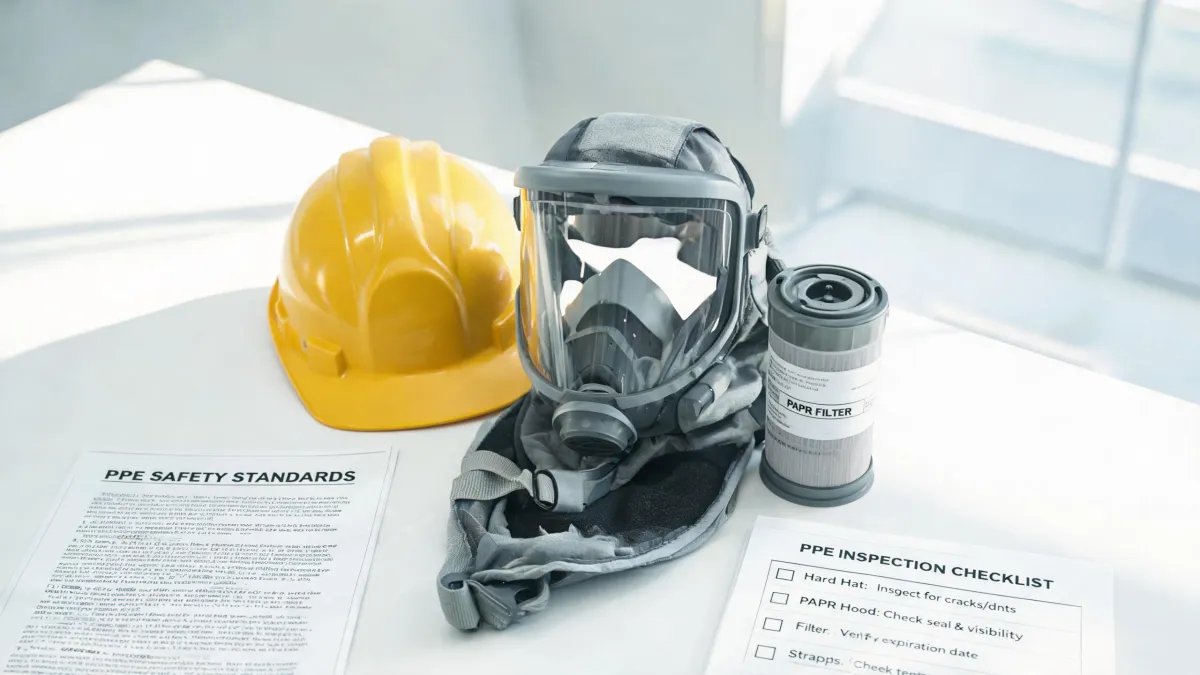
The Bullard EVA PAPR system was not the cheapest quote we received. But the Bullard quote included the blower, helmet, breathing tube, battery, and filters. One lower quote excluded half of those components. It was not a fair comparison. It never would have been a fair comparison.
I am not a safety engineer, so I lean on approvals. According to NIOSH, a PAPR's approval number applies to the complete respirator assembly, not just the filter or blower. I verify each model at cdc.gov/niosh before I put it in a quote comparison. As of January 2025, the Bullard EVA PAPR systems we use are listed with NIOSH approval numbers. Check the current list before you buy. Approvals can change, models get discontinued, and sales reps sometimes overstate compatibility.
If a supplier says a respirator is 'compatible with standard filters,' ask for the NIOSH approval number. If it doesn't have one, it is not an approved assembly. This is not a paperwork hurdle. It's a safety feature.
So glad I double-checked the NIOSH listing before ordering. I was one click away from buying a blower that had no approval number on the main unit.
The fire alarm lesson
My job is not always about PPE catalogs. Sometimes it is about the building. Last month I had to figure out how to reset a fire alarm after a contractor set it off during hot work. Everyone wanted to silence the panel. The harder question was why the alarm tripped in the first place.
The same thing happens in purchasing. A low price silences the budget alarm temporarily. But if you don't find the root cause, missing certifications, high replacement cost, unverifiable compatibility, the alarm will go off again. That is why I now check invoices, approval numbers, and lifecycle costs before I buy anything with a safety function.
What about a tight budget?
Some people will say, 'Not every safety manager has a Bullard budget.' Fair enough. I buy generic shop towels and generic trash bags. This isn't about being anti-budget. It's about being honest about what the budget includes.
If a cheaper hard hat meets ANSI Z89.1 and comes from a supplier that can prove it with test reports, run a TCO. It may look cheaper and end up actually costing less. That's fine. I don't have brand loyalty. I have process loyalty.
But if the only advantage is the sticker price, and you can't confirm replacement parts, approval status, or paperwork, then the sticker price is an illusion.
The question isn't 'Which one is cheaper?' It's 'Which one is cheaper to own?'
The short version
The cheapest hard hat I ever bought cost $2,800. The Bullard hard hats we use today cost more upfront and less over time. The Bullard EVA PAPR system costs more upfront and less over time. The Bullard hard hat visor costs about the same as any other visor, except I know it fits.
I'm not trying to sell you anything. I'm an administrator who buys things for a living. I just learned that safety equipment is not a commodity. The price on the box is not the price you pay.
I'm not loyal to any brand. I'm loyal to the system that works. Period.