The most expensive safety equipment is the piece you buy after the accident. I've managed procurement for a 140-person metal fabrication company for six years. Our safety budget is roughly $120,000 a year, and I've negotiated with more vendors than I can count. So when I say that, I'm not repeating a slogan. I'm looking at my own invoices.
Most safety budgets are built backwards. We wait until a welder complains, an inspector flags something, or a near-miss happens. Then we spend top dollar on rush orders, expedited shipping, and "make it compliant now" purchases. I'd rather spend the same money—usually less—on the right equipment before we need it. That's why I pushed to standardize on Bullard PAPR respirators in our welding bays, and why I refuse to cut fire extinguisher training from the budget.
Why a Bullard PAPR Respirator Earned a Spot in Our Budget
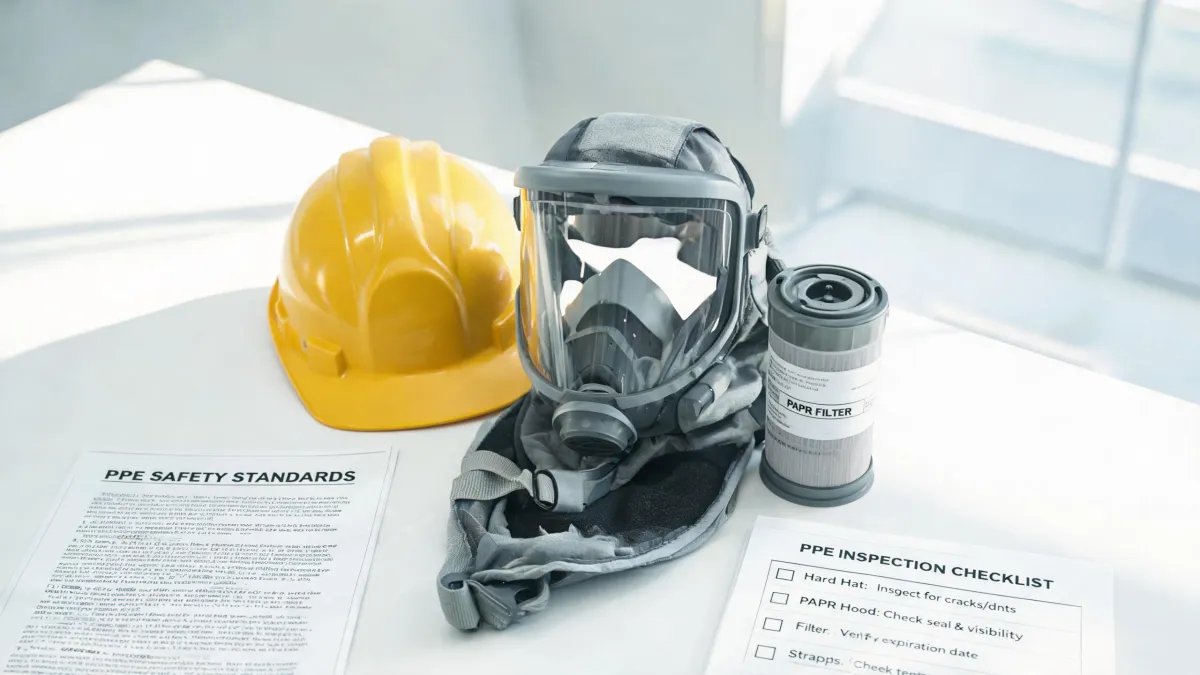
When someone asks me what welding respirator to buy, I tell them to start with the hazard. Welding fume is not just dust. It can contain manganese, hexavalent chromium, nickel, and other metals that nobody should be breathing on a regular basis. I am not an industrial hygienist, and I won't pretend to be. But I know enough to know that a box of disposable masks is not the same as a properly selected, NIOSH-approved powered air-purifying respirator for high-exposure work.
Before we bought the first six Bullard PAPR units, I spent three months comparing vendors. I didn't just look at the sticker price. I built a total cost of ownership spreadsheet that included replacement filters, battery life, comfort, downtime, and support from the distributor. The specific Bullard PAPR NIOSH approved models we selected checked out against the NIOSH Certified Equipment List, not just against a marketing brochure. NIOSH approval under 42 CFR Part 84 is not a marketing badge; it means a respirator was evaluated against specific performance criteria.
Here's what actually sold me on the Bullard PAPR respirator: it solves the number-one reason welders don't wear respiratory protection. It's hot. A loose-fitting PAPR moves filtered air across the face and head, and that makes a real difference in a fab shop in July. If it's comfortable, people wear it. A respirator that sits on a shelf because it's too hot is not a respirator. It's a decoration.
Even after I signed the purchase order, I kept second-guessing. What if the welders thought the units were too bulky? The two weeks between ordering and delivery were stressful. Then one of our most experienced welders said it was the first respirator he could wear through a full shift without feeling like he was sucking air through a wet towel. After that, the conversation changed.
We also ordered the wrong filters in 2023, paid rush shipping to fix it, and logged a $900 mistake in my spreadsheet. That's why I built a PPE cost calculator. It's also why I now check approval numbers before I put anything on the approved vendor list.
What Is the Correct Way to Use a Fire Extinguisher? Pull, Aim, Squeeze, Sweep
Fire extinguishers are a procurement decision, not just a maintenance item. In my experience, extinguishers get bought because the fire marshal says they need them, then forgotten until a fire happens. But an extinguisher is not useful until someone can grab it, aim it, and use it in the first few seconds. That only happens with practice.
In Q2 2024, a new guy asked me, "what is the correct way to use a fire extinguisher?" The honest answer isn't "read the label." It's "practice until it's automatic." We train on the PASS method:
- Pull the pin.
- Aim at the base of the fire, not the flames.
- Squeeze the handle.
- Sweep from side to side.
We use a Bullard fire extinguisher trainer during our annual sessions. It lets people practice the correct technique on a simulated flame without filling the shop with dry chemical powder. That trainer is not a replacement for inspecting real extinguishers—NFPA 10 still sets the inspection baseline—but it replaces the video-watching version of training that doesn't stick.
One thing I always emphasize is choosing the right extinguisher for the fire. A water fire extinguisher is a Class A tool. It's meant for ordinary combustibles like paper, wood, and cloth. Put water on a grease fire or an electrical fire, and you've just turned a small problem into a bigger one. That distinction is not a trivia question. It's the difference between containing a spill and feeding it.
I'm not an OSHA attorney, so don't quote me on legal fine points. But the plain language of 29 CFR 1910.157(g) says that employees who are expected to use portable fire extinguishers should get training when they are hired and at least annually afterward. If your training date isn't already on the calendar, that's a compliance risk sitting next to your fire extinguisher.
The "We Can't Afford It" Argument Is a Budget Challenge, Not a Safety Argument
I hear "we can't afford Bullard PAPRs for every welder" a lot. It's fair. Our budget is not unlimited, and I do not think every operation needs a full fleet of PAPRs tomorrow. But the decision should be based on risk and total cost, not the upfront price.
This approach worked for us because we're a 140-person shop with a handful of dedicated welding bays and predictable schedules. If you're a one-person mobile welding rig doing occasional outdoor work, a full PAPR system might be overkill. I can only speak to my own context. Your mileage may vary if your conditions are different.
Honestly, I'm not sure why so many safety budgets treat annual fire extinguisher training as optional while funding equipment that never gets used. My best guess is that equipment is easier to quantify than training. You can put a unit price on a PAPR. Try putting a dollar figure on a skill that might stop a fire in the first 30 seconds.
If your budget is tight, buy two Bullard PAPR units for the highest-exposure welders first, then add more as the budget allows. And don't cut training. A training session that teaches someone not to use a water fire extinguisher on a grease fire is worth more than an extinguisher that nobody knows how to use.
Build the Budget Around the Worst Case
Let me be clear: I do not mean every accident is preventable. Some things genuinely come out of nowhere. But the ones caused by skipped maintenance, panic buying, or a fire extinguisher nobody knows how to use are different. Those are the ones I can budget away.
In Q2 2024, I almost cut the annual extinguisher training line item to cover a budget overrun. I didn't. A week later, a mechanic knocked over a solvent can near a hot surface. He grabbed an extinguisher, pulled the pin, aimed at the base, and swept until it was out. No fire, no damage, no injury. I cannot prove that training is why he reacted that way. But I know I don't want to find out what happens without it.
So glad we kept that line item. The near-miss was a reminder that prevention is not an abstract value. It's a line item.
The Bullard company invented the hard hat in 1919. That history does not make any product automatically perfect, but it made me willing to look closer. The products we use work because they are specified for the hazard, approved by NIOSH, and supported by a real procurement process. Not because they are magic.
If you're building next year's safety budget, build it around the question "what will we need when something goes wrong?" not "what did we get away with last year?" Buy the Bullard PAPR before you need it. Train on the fire extinguisher before the fire. Five minutes of verification beats five days of correction. That's not just a safety saying. It's a procurement principle.