I've spent 11 years as an emergency logistics specialist for a safety equipment distributor. If a worksite needs gear in 36 hours, I'm usually the one on the phone at 9 p.m. In March 2024, a client called me two days before a planned maintenance shutdown. They needed 12 Bullard EVA PAPR systems after their usual supplier missed a delivery. We found the units in another state, paid $750 in overnight freight—on top of the base cost—and got them on site with eight hours to spare. The client's alternative was delaying a shutdown that would have cost them far more than the freight.
I've coordinated over 200 rush orders in that decade, and one lesson stays with me: the safety product that works best is the one that matches the actual hazard, not the one with the most impressive brochure. That's why I want to compare the Bullard EVA PAPR system against the standard hard hats you'll see on competitive comparison pages—Pyramex hard hats and Milwaukee hard hats. They're not in the same category. A PAPR is respiratory protection. A hard hat is head impact protection. But in many industrial and construction jobs, you have to choose how to handle both hazards together.
What We're Actually Comparing
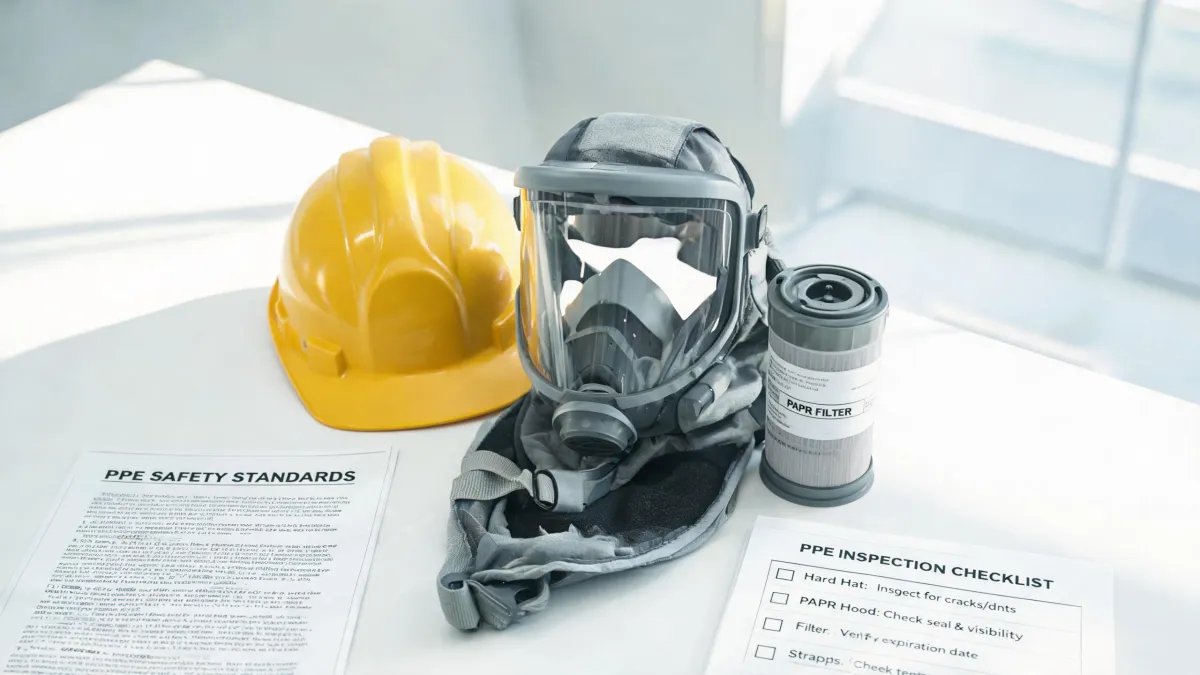
On one side, the Bullard EVA PAPR system. A powered air-purifying respirator with a blower, filters/cartridges, a battery, and a facepiece or headgear. NIOSH-approved systems are tested under 42 CFR Part 84 as a complete unit—meaning you can't just swap in any random filter and expect the same protection. This matters when people search "bullard papr healthcare" and see these units in hospital settings. I'm not a healthcare respiratory specialist, so I won't pretend to advise hospitals on fit-testing policies. What I can tell you is that the EVA platform is used in healthcare, and any healthcare decision should go through the facility's industrial hygienist or occupational health team.
On the other side: a regular hard hat. Pyramex makes lightweight, budget-friendly hard hats that spec easily in the safety channel. Milwaukee hard hats are often sold alongside power tools at retail stores, which makes them convenient for small crews and DIY users. These are impact and penetration protection. They have no respiratory component.
Whichever hard hat you choose—Pyramex, Milwaukee, or another brand—check the label for ANSI/ISEA Z89.1-2014. That's the consensus standard for industrial head protection in the U.S. Type I covers top impact; Type II adds lateral impact protection. Don't buy a hat without that marking.
Dimension 1: Integrated Protection vs. Build-Your-Own
When you buy a Bullard EVA PAPR system, you're buying an engineered combination. The headgear/helmet integrates with the respiratory system. That makes it easier for a worker to carry the weight, and harder to lose or misalign a piece. For someone grinding concrete, sanding composites, or working in dust for a full shift, the powered airflow is a huge comfort improvement over an N95 taped under a hard hat—yes, I've seen that.
But here's the part that surprised me: integrated protection only works if it gets used. I've been on sites where a $3,000 PAPR sat in the bed of a pickup all day because the battery wasn't charged and nobody wanted to be the person who admits it. A $25 Pyramex hard hat won't collect dust because it's easy. Same for a Milwaukee hard hat—crew members wear them without thinking about it. The most protective respirator in the world protects nobody in a cooler.
Verdict on this dimension: if the respiratory hazard is continuous and serious, the integrated Bullard EVA PAPR system is the better engineering control. If respiratory exposure is occasional, a properly selected hard hat plus a respirator is more likely to be worn, and that means more protection in practice.
Dimension 2: Sticker Price vs. Lifetime Cost
Let's talk money. A Pyramex hard hat is in the $15 to $30 range, depending on suspension and accessories. A Milwaukee hard hat is typically $30 to $60. A Bullard EVA PAPR system is a capital purchase—you're looking at a few thousand dollars, and filters, cartridges, and battery replacements add recurring costs. I don't want to quote exact current prices from memory, because they vary by configuration and distributor, but the hard hats win on sticker price every time.
Now the frustrating part. Some safety distributors won't take a small order for a PAPR seriously. They have big-client processes, and a two-unit request feels like a nuisance. That's a business model I understand, but it's also short-sighted. I've seen vendors dismiss a small contractor's $400 order, and that same contractor is now spending $20,000 a year with a distributor who answered the phone. When I started, I made the beginner mistake of assuming that small equals low effort. It cost me a relationship. Now, if I get a call for two Bullard EVA systems, I treat it like a Fortune 500 order.
For total cost of ownership (i.e., not just purchase price but training, maintenance, and compliance), the calculation flips. If your crew runs a PAPR system for hours every day, the per-hour cost is very reasonable. If you use it twice a month, the cost of training and battery management might not make sense.
Verdict: if budget is the main hurdle, a hard hat plus a disposable respirator is the practical choice. If your workers are in respiratory protection every day, a full PAPR system is worth the money—especially if you buy from a supplier that supports small orders.
Small doesn't mean unimportant—it means potential. I've seen that proven by a 10-person crew that grew into a national account.
Dimension 3: Usability, Training, and the 10-Minute Rule
I've had a lot of 6 a.m. calls. When a crew is standing in the parking lot waiting for gear, they don't have 30 minutes to read a manual. That's where quick wins matter.
A hard hat is obvious. Put it on, adjust the ratchet, done. A PAPR system requires battery checks, filter seals, airflow checks, and the user knows how to clean and store it. That's not a reason to avoid it—it's a reason to plan. I remember a foreman who spent five minutes trying to find a battery light on a Bullard EVA before realizing it was on the side. We had to train him twice. Not because the system is bad, but because nobody had time to do the training before the rush order.
To be fair, if a worker wears the same PAPR every day, the 10-minute check becomes second nature. But if you're a small contractor who rents gear for a big project, the training burden is real. You have to factor that into your schedule, or the gear won't be used correctly.
Verdict: for daily wear, the Bullard EVA PAPR system is manageable. For occasional wear, a simple hard hat and a standard respirator will probably have better compliance.
What Does "How to Make a Fence" Have to Do With Safety Gear?
If you landed here searching "how to make a fence," you're probably wondering whether any of this applies to you. It does, but maybe not the way you expected.
You don't need a PAPR system to build a fence. You do need a hard hat if you're working under overhead loads or doing work that could involve falling objects. Something like a Milwaukee hard hat is the kind of thing a DIY fence builder can find at a home center. If you're cutting pressure-treated lumber, a NIOSH-approved filtering facepiece—N95 or P95—will handle a lot of the dust. If you're staining or painting outdoor wood, use the right organic vapor cartridge if the label calls for it.
And if you're doing this on a weekend for your backyard, don't let anyone upsell you into a multi-thousand-dollar respirator system. Small doesn't mean stupid. Small means smart about scope.
Which Should You Choose?
There's no single winner. Anyone who says otherwise is selling something. Here's the practical shortcut:
- If your crew works in hazardous dusts, smoke, or chemicals for hours every day: evaluate the Bullard EVA PAPR system. It's NIOSH-approved, integrated, and backed by a company with a long history—Bullard invented the modern hard hat in 1919, so they understand head protection.
- If you're a hospital safety professional looking at the Bullard PAPR healthcare option: work through your respiratory protection program under OSHA 29 CFR 1910.134. Don't shortcut fit testing or medical clearance.
- If you're a small contractor or a homeowner: buy a well-made hard hat—Pyramex and Milwaukee are solid options—and match the respirator to the actual exposure. Keep it simple.
One more note from an emergency specialist: don't wait until 36 hours before the deadline. I love rush orders—they're my job—but the best safety program has a buffer. As of mid-2025, lead times for configured PAPR systems fluctuate. Give yourself at least two weeks. You'll pay less, stress less, and your workers might actually get the training time they deserve.