-
The Surface Problem: You’re Asking for the Wrong Kind of Gear
-
The Deeper Problem: You’re Choosing a Product Before You’ve Identified the Hazard
-
The Hidden Danger: Old Materials and Outdated Assumptions
-
The Cost: When You Get It Wrong, “Cheap” Becomes Expensive
-
A Better Approach: Let Value and Standards Guide You
-
The Bottom Line
Last March, a safety manager sent me a photo of a worker wearing a 1960s Bullard hard hat on a construction site. The hat had that classic, worn-in look. The worker said it belonged to his grandfather. The manager asked, “Is this okay?” I answered: “No, and you need to replace it before someone gets hurt.”
I’m not saying that to be dramatic. I’ve spent six years coordinating safety equipment orders for industrial clients, and I’ve handled more than 200 rush orders in that time — including same-day turnarounds for plants facing shutdown deadlines. In my role, I’ve learned that most safety mistakes aren’t caused by people who don’t care. They’re caused by people asking the wrong kind of question.
The Surface Problem: You’re Asking for the Wrong Kind of Gear
When someone asks me about a “vintage Bullard hard hat,” I know they’re trying to make the right call. Bullard invented the hard hat in 1919, and the original “hard boiled hat” made from canvas, glue, and paint is an iconic piece of industrial history. I have mixed feelings about the vintage trend. On one hand, it proves Bullard’s legacy matters. On the other hand, a vintage hard hat is a collectible, not a safety device. The materials were never designed to last sixty years, and the shell or suspension may be dangerously brittle after decades of UV exposure and temperature swings.
Then there’s the “bump helmet vs ballistic helmet” conversation. This one tells me the person doesn’t yet know what hazard they’re protecting against. A bump helmet is for low-impact bumps and scrapes. A ballistic helmet is for shrapnel and projectiles. Neither one automatically meets the industrial head protection standard you need on a typical work site. If you’re on the fence between those two, you might be standing on the wrong fence altogether.
Put another way: these questions treat safety gear as a product category comparison or a style choice. It’s not. The right starting point is the hazard, not the helmet.
The Deeper Problem: You’re Choosing a Product Before You’ve Identified the Hazard
Here’s what I see over and over: teams pick a helmet because it looks right, or because someone used a buzzword, or because they’re trying to save money. Then they’re surprised when an inspector flags it. The real problem is that safety decisions get made in reverse.
The correct sequence should be: first identify the hazard, then find the standard that addresses it, then select equipment that meets that standard, and finally train people to use and maintain it.
Let me give you a different example. A client once called me in a panic because their kitchen staff needed fire extinguisher training. They asked about Class K fire extinguishers. But what they really needed was a safe way to train people — not just a row of live extinguishers. We set them up with a Bullard fire extinguisher trainer, which can simulate a Class K fire without the danger or the cleanup. That’s a smarter solution. Same principle applies to head protection: the solution depends on the scenario, not just the product name.
The Hidden Danger: Old Materials and Outdated Assumptions
Old hard hats have another problem: the misconception that they’re “broken in” or “built to last forever.” That thinking comes from an era before hard hats were replaced on a regular schedule. Today, any hard hat that has been impacted, subjected to extreme conditions, or used for years should be replaced — even if it looks fine. UV radiation and chemical exposure degrade the shell over time. That vintage crackling isn’t patina; it’s a warning sign.
Honestly, I’m not sure why anyone would trust a 60-year-old hard hat over a new one. My best guess is nostalgia outweighs risk in the moment. But if the gear fails at the wrong time, nostalgia won't protect anyone.
The Cost: When You Get It Wrong, “Cheap” Becomes Expensive
Let me walk through what’s at stake. A non-certified or old hard hat can fail when a tool drops from height. The resulting injury can mean hospital bills, lost time, higher insurance premiums, and an OSHA citation. In my experience, the lowest-price option has cost companies more in both money and morale.
Here’s a concrete example from my own orders. Last October, a maintenance manager called at 3:30 PM. He needed 40 hard hats by the next morning for a plant shutdown. Normal lead time was four days. We had 40 certified Bullard hard hats in stock, paid $140 in overnight freight, and delivered them by 8 AM. The client’s alternative was starting a $400,000 shutdown without head protection — which would have triggered a stop-work order and risked a serious injury. So glad we pushed the rush shipment. We almost went standard to save $140.
My experience is based on about 200 industrial orders over six years, from $500 bump cap requests to $15,000 PAPR systems. If you’re working in a low-risk, non-regulated environment, your experience might differ. But the principle remains: the cost of waiting is usually higher than the cost of acting.
And if you’re on the fence about what to buy — that phrase means you’re undecided, by the way — it’s okay to pause. But don’t let indecision keep an unsafe helmet in rotation. I’ve seen a $15 price difference turn into a $1,500 problem after an inspector caught a non-certified helmet on site. That’s the real math.
If you’re on the fence between a bump helmet and a ballistic helmet, you’re probably asking the wrong question.
A Better Approach: Let Value and Standards Guide You
Here’s how I help clients work through the decision.
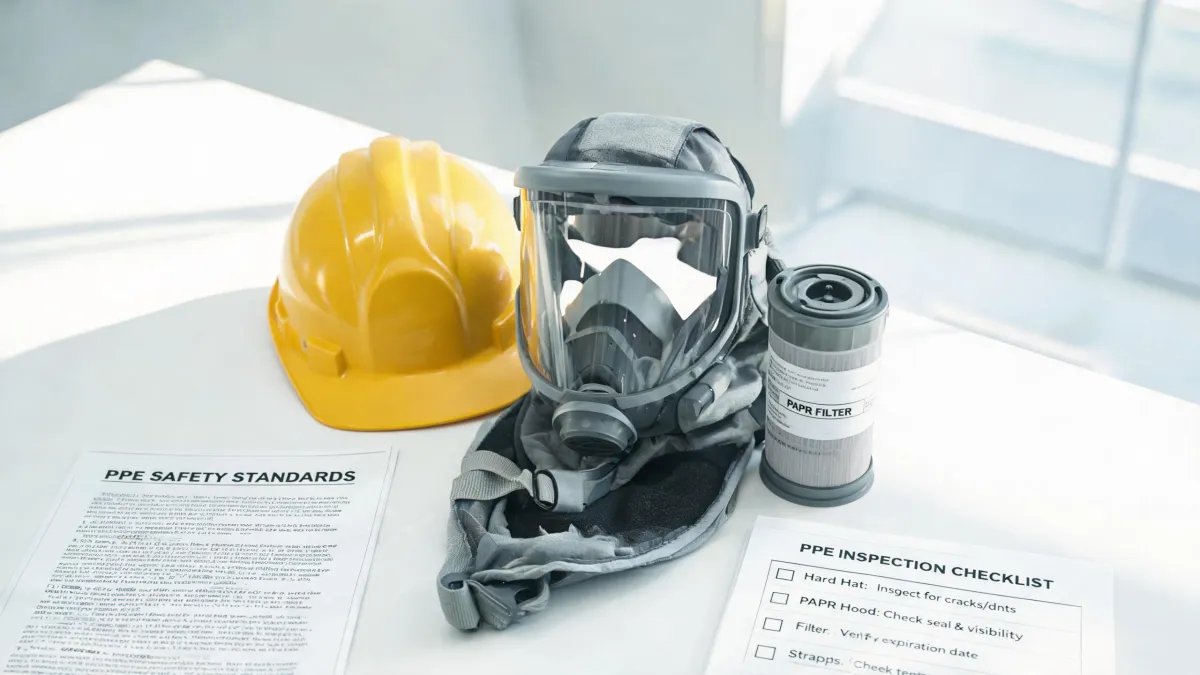
First, define the hazard. Is there a falling-object risk? Then you need a Type I or Type II industrial hard hat, not a bump cap or a ballistic helmet. Do workers need protection under low overhead obstructions? A bump cap might be appropriate. If they also need respiratory protection, look for a system that integrates — like a Bullard PAPR with a face shield.
Second, verify certification. Bullard safety equipment carries the labels that matter: ANSI/ISEA Z89.1 for hard hats, NIOSH approval for respirators. These are verifiable marks. If a product doesn’t have them, it doesn’t matter how good it looks.
Third, think total cost, not unit price. A slightly higher upfront cost that includes comfort, durability, and compatibility with other PPE can reduce turnover and increase compliance. That’s not a cliché — that’s a calculation. Value over price doesn’t mean spending more for no reason. It means measuring what you actually get: certified protection, less downtime, fewer inspection failures, and a workforce that goes home safe.
The Bottom Line
A vintage Bullard hard hat belongs in a showcase, not on a job site. The way to honor a 100-year safety legacy is to use the modern equipment that keeps people safe today. So if you’re on the fence about what to buy, get off the fence and get the facts. Ask about standards, ask about your hazards, and choose the solution that protects your people without breaking your business.