I’ll say it plainly: most safety equipment failures happen because someone skipped the verification step, not because the product was faulty. In my experience as a safety manager handling PPE orders for seven years, I’ve personally made (and documented) four significant mistakes – totaling roughly $12,000 in wasted budget. Now I maintain a 12-point pre-order checklist that has saved us an estimated $8,000 in potential rework. But I didn’t start out that way.
The First Mistake: Aluminum Hard Hats and the Spec I Glossed Over
Back in 2018, I was tasked with outfitting a new aluminum fence installation crew. The foreman wanted Bullard aluminum hard hats – lightweight, high-heat resistant, classic look. I ordered 30 units without double-checking the suspension system compatibility (note to self: never assume stock suspensions fit all head shapes). The hats arrived, the crew tried them on, and within a week five guys complained they couldn’t wear them for a full shift. The ratchet suspension had a known fit issue with certain head contours – a detail buried on page 7 of the spec sheet I didn’t read.
The result? $890 in return shipping, a two-week delay, and damaged credibility with the crew. I ended up buying different suspension inserts and swapping them manually – which cost another $340 in labor. If I’d spent 15 minutes on Bullard’s compatibility matrix before ordering, the whole problem would have been avoided. (As of 2025, Bullard’s online tool makes this easier, but the lesson stuck.)
The Second Mistake: Wet Chemical Fire Extinguisher Training – Real vs. Simulator
A year later, our facility needed annual wet chemical fire extinguisher training for the kitchen staff. I priced out a live-agent training session using real extinguishers – cheaper on paper than buying a Bullard Fire Extinguisher Trainer. Everyone told me the simulator was overpriced. I didn’t listen. What happened? The live session used two actual extinguishers (each about $150), plus a recharge cost of $85 per unit. Total: $470 for that single session. And because we were discharging real agent, we had to evacuate the area for cleanup – lost production time estimated at $1,200.
On top of that, the trainer noted that using live extinguishers for practice violates NFPA 10’s recommendation for training props – a detail I’d overlooked. I only believed the simulator was worth it after ignoring that advice and eating the cost. Now our department owns a Bullard wet chemical trainer prop, and our annual training costs dropped to zero (after the initial investment). In my opinion, that’s the definition of prevention over cure.
The Third Mistake: Aluminum Welding Without Proper Respiratory Protection
Last year, we started a new aluminum fence fabrication line. The welding station emitted fine aluminum oxide particles – a known respiratory hazard. I ordered Bullard’s standard half-mask respirators with P100 filters because they were cheaper than a PAPR system. But I didn’t account for the heat and long shifts: workers complained about breathing resistance after two hours, and one guy had to stop early due to dizziness. The safety officer flagged it as a near-miss.
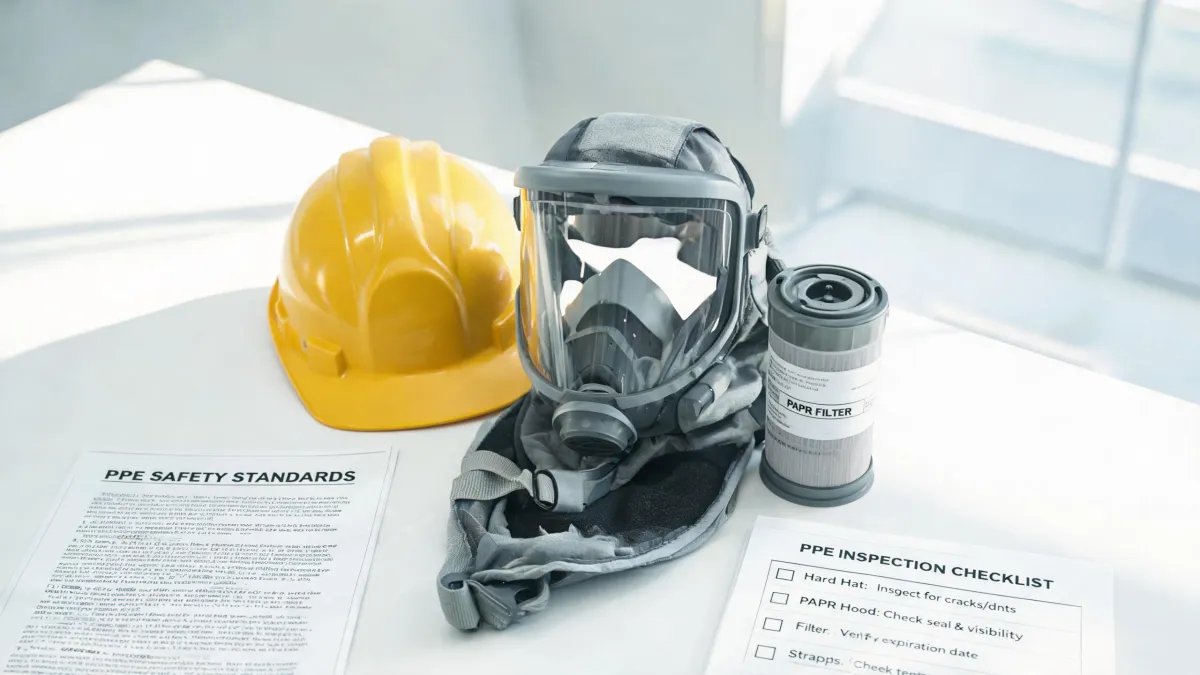
I went back and forth between upgrading to a Bullard PAPR system and sticking with disposable respirators for three weeks. On paper, the PAPR was $1,800 per unit vs. $80 per disposable. But the total cost of the wrong decision was: medical evaluation ($500), lost productivity during the re-evaluation ($2,000), and the eventual purchase of two PAPRs anyway ($3,600). The binary struggle was real – but the choice to verify the specific hazard before buying would have saved $2,500. (Circa 2024, NIOSH-approved PAPR systems like Bullard’s are the standard recommendation for continuous welding operations – a fact I could have looked up.)
Why I Now Argue: Prevention Over Cure
You might think, “But checking everything before every order takes too long – we don’t have that luxury.” I’d argue the opposite. The 12-point checklist I created after my third mistake takes 20 minutes to run through. In the past 18 months, it has caught 47 potential errors – from wrong ANSI Z89.1 rating to missing NIOSH approval documentation. Most of those issues were minor, but a few – like ordering a non‑compatible face shield for a Bullard hard hat – would have been expensive to fix after delivery.
Another common objection: “We’re a small shop; we can’t afford premium gear.” From my perspective, the cost of rework, downtime, and potential injury always exceeds the upfront verification effort. Industry standard for hard hats (ANSI Z89.1-2014) requires type and class marking – a detail any buyer can verify in five minutes. The same goes for NIOSH-approved PAPR systems: a quick search on the NIOSH Certified Equipment List (as of 2025, Bullard has multiple listings) confirms compatibility. That five-minute check is the cheapest insurance you’ll ever buy.
Final Word
I still believe in getting the best price – but not at the cost of skipping the verification step. Whether you’re sourcing aluminum hard hats, planning fire extinguisher training, or equipping a welding line, the principle holds: five minutes of upfront checking beats five days of correction. And if you think you don’t have time for a checklist, ask yourself how much time a $4,000 mistake costs. I learned the hard way so you don’t have to.