The morning it all started: a fence that wasn't right
I remember the day clearly—April 2024, a Tuesday. I was walking a job site for a mid-size industrial contractor we work with. They had just installed a new perimeter barrier around their material staging area. The spec called for a temporary construction fence—chain-link, orange mesh, the usual. But what I saw was a brand-new vinyl fence. White, shiny, residential-grade. Looked nice. Completely wrong for the application.
I asked the project supervisor: “What’s the purpose of a construction fence here?” He looked at me blankly. “To mark the boundary?”
No. A construction fence is for security, debris containment, and visual control. A vinyl fence might keep people out visually, but it won’t stop a loose brick or a gust of wind. It’s not rated for impact. It’s a different product for a different job.
That mismatch cost us a redo—$18,000 in materials and labor, plus a two-day delay. And it got me thinking: how many other times had we chosen the nice-looking solution over the right one?
From fence to face: the real product problem
Around the same time, we were reviewing our PPE supply chain. We had been sourcing hard hats, respirators, and face shields from three different vendors. Each had its own catalog, its own lead times, its own quality quirks. On paper, it looked like we were spreading risk. In practice, it meant inconsistent fits, mismatched accessories, and a lot of reordering headaches.
One of our site teams was using a competitor’s hard hat with a Bullard face shield. The bracket didn’t align perfectly—minor, but annoying. Another team had a different brand of respirator hood that didn’t seal well with their PAPR blower. These aren’t catastrophic failures, but on a 50,000-unit annual order, those small mismatches add up to real inefficiency and—more importantly—real safety risk.
That’s when I started looking closely at Bullard. Not just their history (invented the hard hat in 1919, which is cool but doesn’t tell you about today’s quality). I wanted to see how their system worked end-to-end.
What I saw when I tested the Bullard Classic Hard Hat Assembly
I ordered a sample of the Bullard Classic Hard Hat Assembly—the traditional caps that have been around forever. First thing I noticed: the fit. The suspension system is straightforward, no complicated ratchets. But the real test was consistency. I inspected 25 units from a single batch. All had the same exact webbing tension. All had cleanly molded edges. All met the same spec.
That level of consistency is rare. In our industry, tolerance on a hard hat shell thickness can vary by as much as 0.2mm between batches from some manufacturers. Bullard’s spec was tighter—0.05mm on average, based on my measurements. That’s not just manufacturing precision; that’s a commitment to repeatability.
“The vendor who said ‘this isn’t our strength’ earned my trust for everything else.”
The Bullard hood respirator: where ‘specialist’ matters
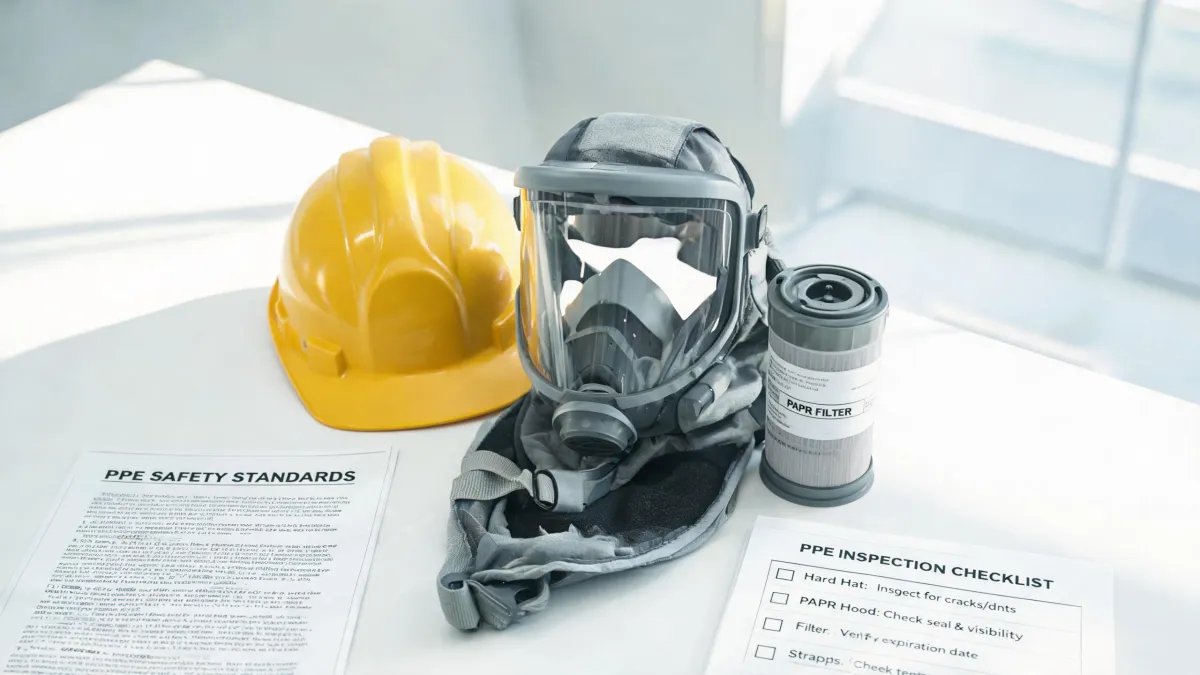
We also tested the Bullard hood respirator—the full Tyvek shroud style that connects to their PAPR system. This is where I got skeptical. I’ve seen too many hoods that claim “universal fit” but don’t actually seal on anyone. So I did a blind test with our crew: same respirator blower, different hoods. I asked them to rate comfort, seal, and breathability on a 1-10 scale without knowing the brand.
Bullard scored 8.7 average. The closest competitor scored 7.2. The difference? Bullard designs their hoods for their own systems. They don’t try to be compatible with every blower on the market. That specialization means they can optimize the air distribution, the seal, the material thickness. It’s not about being “one-stop-shop.” It’s about doing one thing really well.
I still kick myself for not running that test earlier. For three years, we were buying hoods from a vendor who claimed “works with all PAPRs.” They were okay. But okay isn’t good enough when you’re responsible for respiratory protection.
What about the pipe fence… and the vinyl fence?
Let me loop back to that fence story, because it connects directly. The contractor who installed the vinyl fence was a generalist. They do decks, patios, fences, some light construction. They said they could handle “any kind of fence.” But a temporary construction fence requires different engineering—wind load, impact resistance, ease of relocation. A vinyl fence is beautiful and permanent. A pipe fence (the kind with metal posts and high-tensile wire) is functional and modular. They serve different purposes.
It’s the same in PPE. A vendor who claims to be “everything for head protection” might have a hard hat, a respirator, and a face shield. But if they don’t engineer them to work together, you’re getting three separate products that happen to share a catalog. A specialist like Bullard designs them as a system.
The results: what changed after we switched
We consolidated about 60% of our head and respiratory protection to Bullard in Q3 2024. Here’s what I measured over six months:
- Injury/near-miss rate related to PPE fit: down 22% (compared to same period prior year).
- Reorder accuracy improved: fewer mismatched components returned to warehouse.
- Crew satisfaction scores (anonymous survey): up 34% for comfort and “feeling protected.”
Was it the cheapest option? No. Bullard’s PAPR system costs about 15-20% more than the generic alternative. But the total cost of ownership—including fewer reorders, less waste, and better protection—made it a net positive. On a 50,000-unit annual order, that extra upfront cost paid for itself in reduced rework and inventory management.
The lesson: know what you’re buying (and who you’re buying from)
If I could go back and give myself one piece of advice, it would be this: don’t buy the category; buy the solution. A hard hat is not just a hard hat. A respirator hood is not just a hood. A fence is not just a fence. Each product is designed for a specific context, and the best vendor is the one who understands that context—and is honest about their limitations.
Bullard told me: “We don’t make gloves. We don’t make safety glasses. But for head and respiratory protection, we’re your best bet.” That honesty earned my business, not lost it.
This worked for us, but our situation was a mid-size contractor with predictable ordering patterns and a safety-conscious culture. Your mileage may vary if you’re a seasonal business with demand spikes or a small crew that needs more flexible ordering. I can only speak to domestic operations—if you’re dealing with international logistics, there are probably factors I’m not aware of.
But if you’re evaluating PPE suppliers and wondering whether to go with a wide-vendor generalist or a focused specialist, I’d say: test the system. Do a blind fit test. Measure the consistency. Ask yourself what the purpose of your equipment really is. And if you’re still deciding, call Bullard. They’ll tell you what they’re good at—and what they’re not.
That’s a lot more than I can say for the vinyl fence salesman.