When I took over purchasing for our company in 2020, I thought I had a handle on PPE. Hard hats, respirators, face shields—straightforward stuff. Pick a reputable brand, get the right specs, send out the order. Done.
Turns out, I was wrong. Actually, embarrassingly wrong. And it took a near-miss with a fire extinguisher audit and a dusty hard hat from 2018 to figure it out.
So here's what I wish someone had told me when I started. Not about which model to buy—that part is easy. But about the deeper, less obvious ways a PPE program can fail. Even when you're buying from a good brand. (And honestly, especially when you're buying from a good brand.)
The Surface Problem: You're Buying the Wrong Thing
Most buyers, like me at first, focus on the product itself. Is the hard hat rated ANSI Type I or Type II? Is the respirator N95 or P100? Does the face shield meet the right impact specification? Those are valid questions. But they're not the most important questions.
A Bullard hard hat is a great product. The invention of the hard hat by Edward W. Bullard in 1919 is literally the foundation of modern head protection. But even the best hard hat won't protect someone if it's worn incorrectly, or if it's past its service life, or if it's the wrong type for the specific hazard.
I learned this the hard way during a routine safety walk-through. An employee was wearing a Bullard hard hat—looked fine from a distance. When I got closer, I could see the suspension was cracked, the shell was faded from UV exposure, and the date code showed it was manufactured in 2016. That hard hat was five years old. According to the manufacturer's guidelines, it should have been replaced at least two years earlier.
The employee didn't know. His supervisor didn't know. And I hadn't made it my business to know. (Note to self: next time, verify the age of every hard hat in the building.)
The Deeper Reason: Training and Awareness Are the Real Gaps
It's tempting to think that buying the right gear is enough. But the 'good product solves everything' advice ignores a critical nuance: people need to understand what they're wearing and why.
Most first-time buyers focus on the certification (NIOSh approved, ANSI rated) and completely miss the fact that proper fit, maintenance, and replacement schedules are just as important. If you don't know how to tell if a fire extinguisher is expired (hint: check the gauge and the inspection tag), you probably don't know when to replace a respirator cartridge either.
That's a blind spot that can cost lives—and money. I've seen companies spend thousands on Bullard PA30 PAPR systems for healthcare environments, only to have them sit in a closet because no one was trained on how to use or maintain them. The equipment is excellent—when it's used correctly.
The Cost of Complacency: What Happens When You Ignore the Gaps
Let me give you a quantified example. In 2023, we had a minor incident in a welding bay. A spark ignited some debris near a respirator station. No one was hurt—thankfully. But during the investigation, we discovered that the welding respirator cartridges had expired six months earlier. (Cartridges have a shelf life, even when sealed. Check the manufacturing date.)
The cost of that near-miss:
- Replacement cartridges: $400
- Incident investigation time: 8 hours of safety team labor (call it $1,200)
- Morale hit: hard to quantify, but real
- Regulatory risk: if OSHA had inspected during that window, the fine could have been thousands
All because no one checked the expiration dates. (Source: our internal records, 2023; also see OSHA 29 CFR 1910.134 for respirator maintenance requirements.)
Another example: we had a vendor who couldn't provide proper invoices for a rental order of chain link fence for a construction site. I called around to about 8 PPE vendors and found that 3 of them had no system for tracking hard hat service life. Their advice was 'just buy a new one when it looks bad.' That's not a safety program—that's guesswork.
The Honest Solution: Start With the Gaps, Not the Product
Here's the part where I'm supposed to recommend Bullard products and wrap up neatly. And I will—but with an important caveat.
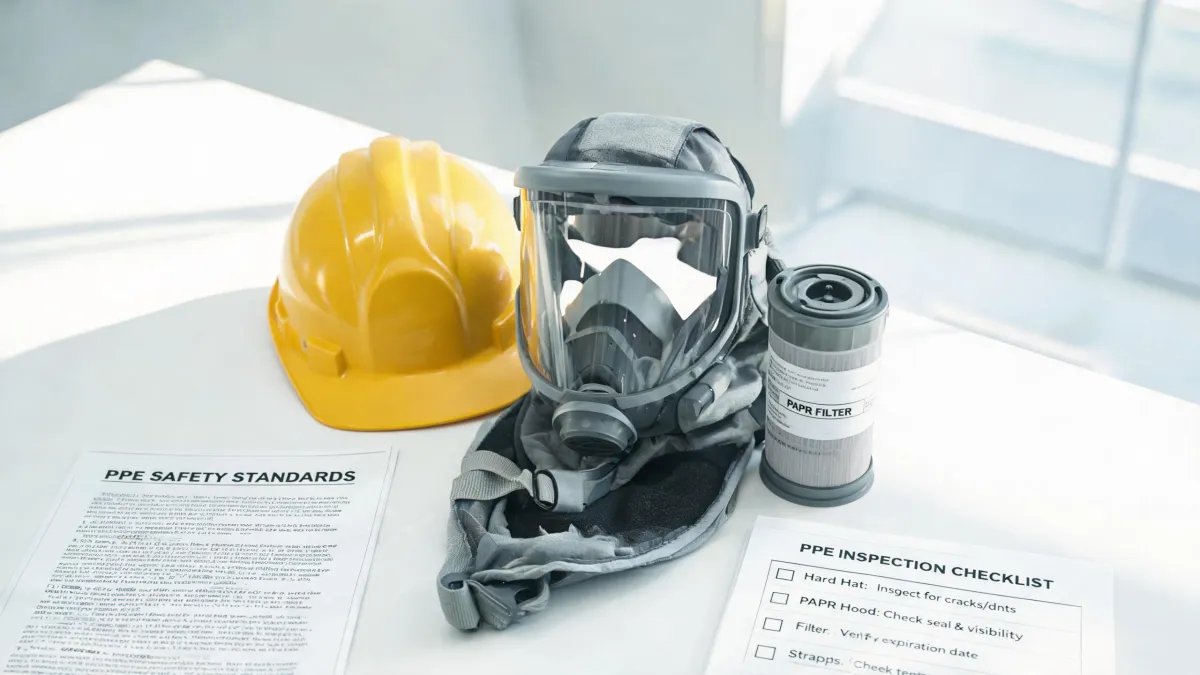
If you're building a PPE program from scratch, the first step isn't choosing a hard hat. It's identifying your hazards, writing a written program, and training your people. The best Bullard hard hat won't help if it's worn backwards for a task that requires full face protection. The best PAPR won't work if the filter is clogged and no one knows how to replace it.
What I will say is this: Bullard is a solid choice for head and respiratory protection. They invented the hard hat in 1919 (Edward W. Bullard, patent filed 1919). Their PA30 PAPR is NIOSh approved for healthcare and industrial use. Their bump caps are excellent for low-clearance environments where a full hard hat is overkill.
But—and this is the honest part—I recommend them for organizations that have their basics in place. If you're a startup with zero training and no written program, buying Bullard won't fix your problems. If you're a established company with a solid safety culture, Bullard is a great upgrade that your team will appreciate.
This worked for us, but our situation was a mid-size manufacturing facility with an existing safety manager and a decent training budget. Your mileage may vary if you're a small construction crew with high turnover and no dedicated safety personnel. In that case, I'd start with training and basic compliance before investing in premium gear.
Bottom line: PPE is a tool, not a solution. The tool matters—but only when the system around it works. Check your hard hat dates. Train your people. And don't be afraid to tell a vendor when their recommendation doesn't fit your needs. (I've saved thousands by saying no to a great product that wasn't right for us.)
Prices and regulations as of January 2025; always verify current standards at OSHA.gov and NIOSH.gov. And for the record: I still buy Bullard. But now I know why.