The first time I made this mistake, I was six months into my role. A vendor offered a hard hat at $8.50 a unit. The one I'd been buying was $12.00. On a quarterly order of 400 units, the difference was $1,400. Easy decision, right?
Wrong.
That 'savings' evaporated faster than you'd think. By the end of the year, I had tracked over $600 in 'miscellaneous' charges—shipping, a 'hazardous material' surcharge for the respirator cartridges (turns out, some paper dust isn't hazardous, but the vendor's billing system thought it was), and a $250 'expedite fee' when we needed a rush shipment because the first batch of liners didn't fit. The unit price was cheaper. The total cost wasn't.
That was 2023. I still have the spreadsheet.
The Surface Problem: Why Type 1 vs. Type 2 Confuses Everyone
The question I get most often: 'Should I buy a Type 1 or Type 2 hard hat?' It sounds like a simple spec check. It's not. It's the entry point to a much bigger question about what you're actually paying for.
Here's the textbook answer: A Type 1 hard hat protects against blows to the top of the head. A Type 2 hard hat protects against blows to the top, sides, front, and back. The difference is in the liner and the suspension system.
Here's the real-world answer: Most people buy Type 1 because it's cheaper. And most people who buy Type 1 for a construction site should probably have bought Type 2. The assumption is that cost drives the decision.
The reality is worse. The cost of buying the wrong hat—Type 1 when you needed Type 2—isn't the price difference. It's the risk of a compliance failure, a site shutdown, or (worst case) an injury that a Type 2 might have mitigated. That's a cost that never shows up on an invoice. But it's the most expensive line item you'll never see.
What's Actually Driving Your Decision?
People think expensive vendors deliver better quality. Actually, vendors who deliver quality can charge more. The causation runs the other way. A $40 Bullard Type 2 hard hat isn't expensive because of the brand. It's expensive because of the engineering—the suspension that doesn't collapse after a single drop, the shell material that doesn't degrade under UV, the liner that actually fits a human head.
Numbers don't lie. But they can be incomplete. The cheap hat passes the same ANSI Z89.1 test as the expensive one. So on paper, they're equal. But on a job site, the difference is in how often the suspension fails, how quickly the shell cracks, and how many times a worker has to order a replacement because the original 'bargain' hat didn't survive the first season.
I have mixed feelings about the Type 1 vs. Type 2 debate. On one hand, Type 1 is perfectly adequate for many tasks—light maintenance, warehouse work, areas with no lateral impact risk. On the other hand, if you're on an active construction site, the risk profile strongly favors Type 2. How do I reconcile? By asking one question: 'What's the worst thing that could hit you from the side?' If the answer is anything heavier than a branch, buy the Type 2.
The Hidden Toll of 'Just the Hard Hat'
The surprise wasn't the price of the hard hat itself. It was the cost of everything that goes with it.
Let me give you a real example from Q2 2024. I was comparing a budget hard hat ($9.00/unit) against a premium model ($15.00/unit). The budget vendor's quote: $9.00 per hat, plus $45 flat shipping, plus a 'customization fee' of $1.25 per hat for a simple logo imprint. The premium vendor's quote: $15.00 per hat, shipping included, imprint included.
For a 500-unit order:
- Budget vendor: (500 x $9.00) + $45 + (500 x $1.25) = $5,170
- Premium vendor: (500 x $15.00) = $7,500
The budget vendor was $2,330 cheaper. Easy decision? That's what I thought.
Except the budget hat's suspension failed on 12 units within the first month. Workers complained about fit—the headband was too tight and too loose at the same time. And when we called the vendor for replacement parts, they didn't stock the liner separately. We had to buy new hats. The $5,170 order turned into a $5,170 order plus a $700 'emergency' order for replacements plus 40 hours of lost productivity while we swapped out fittings.
Next quarter, I went back to the premium vendor. The total cost of that decision? About $8,000, including the $2,330 'savings' I never actually saved. The cost of cheap? Just under three grand, not counting the headache (and the actual headache complaints from the crew).
One Framework That Changed Everything
Why does this keep happening? Because procurement is trained to look at unit price. It's a KPI. It's on the spreadsheet. It's an easy number to compare. But unit price is the tip of the iceberg. Total Cost of Ownership (TCO) is the part below the waterline.
I built a cost calculator after getting burned on hidden fees twice. Now, before I compare any vendor quotes, I add up the following:
- Unit price (obvious)
- Shipping & handling (is it always this much, or only the first order?)
- Setup & customization fees (logo costs, die charges, mold fees)
- Replacement parts availability (can you buy just the liner, or do you need a whole new hat?)
- Warranty & durability (how long does the hat actually last in your environment?)
- Compliance & training costs (does the hat require special fitting or instruction?)
Basically, if the quote doesn't include everything up to point 4, it's an incomplete quote. The difference between a $9 hat and a $15 hat isn't $6. It's $6 plus the risk of a $700 emergency order plus the cost of lost productivity plus the cost of worker frustration.
People think rush orders cost more because they're harder. The reality is they cost more because they're unpredictable and disrupt planned workflows. The same logic applies to cheap hard hats. The 'economical' option is only economical if it works perfectly 100% of the time. And realistically, it won't.
What to Actually Do (Short Version)
I've compared 8 vendors over 3 months using my TCO spreadsheet. Here's the bottom line:
- For a Type 1 hard hat (warehouse, low-risk): Pay more than the absolute minimum. Look for a hat with a suspension that's replaceable, a standard headband size, and a shell that doesn't feel like cheap plastic. A $12-15 hat is usually the sweet spot. Below $10, you're gambling.
- For a Type 2 hard hat (construction, high-risk): Don't bargain hunt. Pay the premium for a proven brand—Bullard, MSA, 3M. The difference in safety isn't marginal; it's material. Expect $20-40 per unit. It's not a cost. It's an investment.
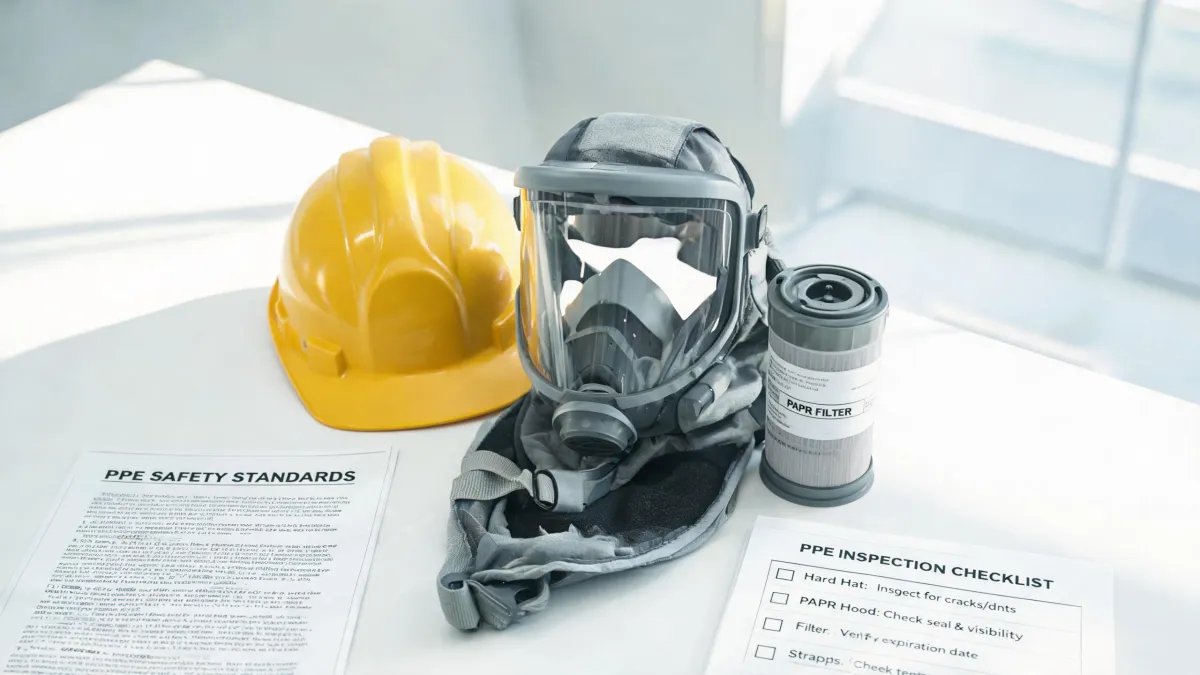
- For a PAPR system (respiratory protection): This is the biggest TCO trap of all. The cheap system might save $200 upfront, but if the battery dies in 8 months, the blower is underpowered, or the filters aren't NIOSh-approved, you're buying a new system. Go with a reputable brand (like Bullard) and look at the total cost over 3 years: blower + battery + filter replacement + training + support.
Simple.
I know not everyone can buy the most expensive option. Budgets exist for a reason. But I've learned that the most expensive option isn't always the most costly. And the cheapest option is rarely the most affordable. The trick is to stop looking at the price tag and start looking at the bill.