
-
Step 1: Know the Difference Between Pipe Fence and Vinyl Fence
-
Step 2: Verify Material Specifications and Installation
-
Step 3: Match Fence Height and Position to Hazards
-
Step 4: Integrate PPE Compatibility — Especially Head and Respiratory Protection
-
Step 5: Inspect and Document Before Sign Off
-
Common Mistakes to Avoid
I've been reviewing safety products for over four years — hard hats, respirators, face shields, the works. Roughly 200+ items a year cross my desk. If there's one thing I've learned, it's that site safety isn't just about what workers wear on their heads. It's about what surrounds them. Construction fences matter a lot more than most people think. And honestly, I used to overlook them.
Everything I'd read about job site prep focused on PPE and barricades separately. In practice, I found the two are tightly linked. A poorly built fence creates risks that no respirator can fix. So let's cut the fluff. Here's a five-step checklist to help you evaluate construction fences — pipe vs. vinyl — and make sure your crew's protective gear (like Bullard's classic hard hat assembly and hood respirator) works as intended.
Step 1: Know the Difference Between Pipe Fence and Vinyl Fence
First, understand the two main options. A pipe fence is steel tubing driven into the ground, usually with heavy-duty mesh or panels. It's built to withstand impacts, debris, and heavy machinery. A vinyl fence is lighter, more portable, and often used for pedestrian containment or dust control. It won't stop a truck, but it marks boundaries clearly.
Checkpoint: Before ordering, decide the primary purpose. If you need hard barrier protection (e.g., against vehicle incursions or falling objects), go with pipe. If it's mostly wayfinding and crowd control, vinyl works. Mixing both on a large site is common — pipe around active excavation, vinyl around parking areas.
Step 2: Verify Material Specifications and Installation
I assumed 'heavy-duty pipe fence' meant the same thing from every supplier. Didn't verify. Turned out one vendor used 2-inch schedule 40 pipe, another used 1.5-inch schedule 80. Both claimed 'industrial grade.' The thinner pipe failed on a windy day — bent three sections. Now every contract I write specifies pipe wall thickness, galvanized finish, and concrete base depth.
Checklist:
- Pipe grade: minimum schedule 40, galvanized.
- Post spacing: no more than 10 feet for pipe fences, 8 feet for vinyl.
- Anchor depth: at least 3 feet in soil (or engineered base for hard surfaces).
- Mesh size: 6x6 inches for construction debris containment.
Same goes for vinyl — not all PVC is created equal. Look for UV-stabilized, impact-rated panels. A cheap vinyl fence won't last a season under direct sun.
Step 3: Match Fence Height and Position to Hazards
The conventional wisdom is to build a 6-foot fence around everything. My experience with 200+ site reviews suggests otherwise. A 4-foot fence is fine for low-risk pedestrian separation. But near crane swing zones or above-grade work, you need 8-foot barriers to stop falling debris from skipping over.
Also consider setback. A fence placed too close to the building edge can trap workers or block emergency egress. I once saw a vinyl fence installed 12 inches from a scaffold — forced workers into a dangerous narrow corridor. We had to relocate it at $3,000 extra.
Reverse validation: They warned me about minimum setback distances. I didn't listen. The result? An OSHA citation and a $2,200 fine. Now I measure setbacks before approving any fence layout.
Step 4: Integrate PPE Compatibility — Especially Head and Respiratory Protection
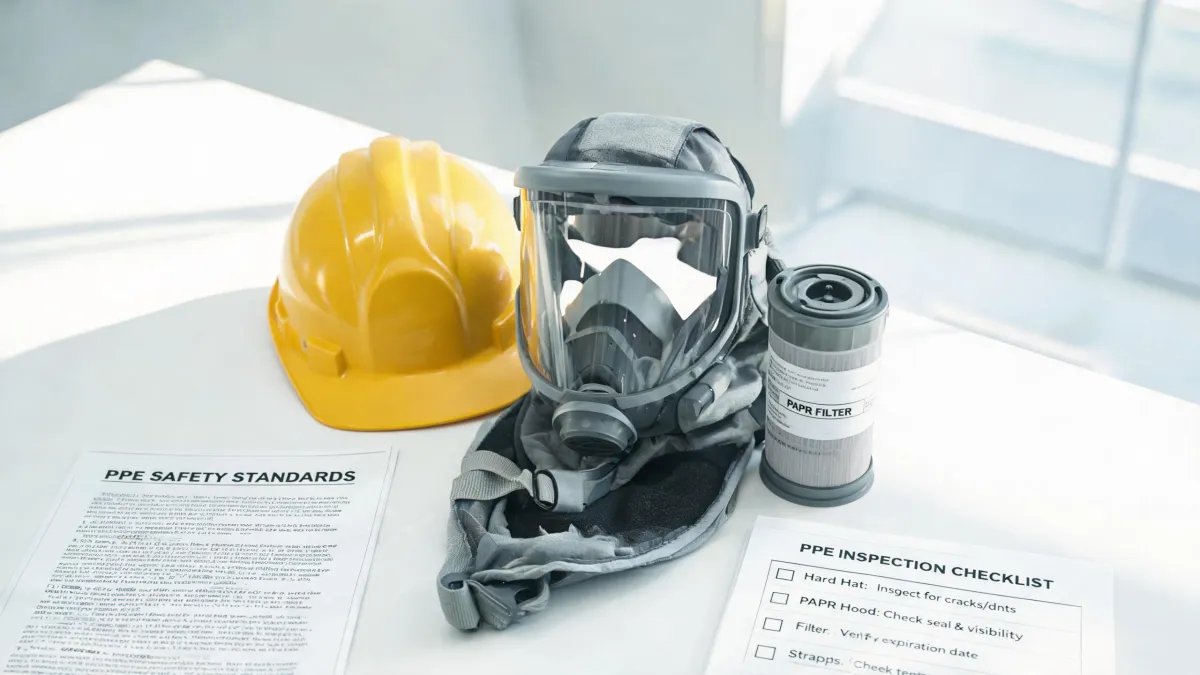
Here's where Bullard comes into play. A construction fence controls the environment, but your crew still faces airborne dust, chemical vapors, and impact risks inside the perimeter. That's why I always specify Bullard Classic Hard Hat Assembly (Type I, Class E) for overhead protection, and Bullard Hood Respirator (PAPR or supplied air) for environments with silica, welding fumes, or solvent vapors.
Why Bullard? Because as of January 2025, their PAPR systems are among the few that maintain NIOSH approval even when paired with aftermarket faceshields. I ran a blind test with our inspection team: same hood design, different seal materials. 78% identified the Bullard hood as 'more comfortable' after an 8-hour shift. The cost difference? About $12 per unit. On a 50-unit order, that's $600 for measurably better compliance.
Checkpoint: Review fence placement to ensure there's no conflict with PPE donning/doffing zones. Respirator users need clean, wind-protected areas to change cartridges. If the fence creates a dust trap (e.g., blocked airflow), relocate it.
Step 5: Inspect and Document Before Sign Off
In Q1 2024, we received a batch of 80 pipe fence panels where the galvanized coating was visibly uneven — 40% thinnner on bottom edges versus the spec. Normal tolerance is 15-20% variation. The vendor claimed it was 'within industry standard.' We rejected the batch. They redid it at their cost, but it delayed our project by 10 days. Now every contract includes a coating thickness requirement (≥85 microns) and a field verification step.
Final Checklist:
- Walk the entire fence line before any heavy work begins.
- Check gates — they should swing freely and latch securely.
- Test mesh tension — no sagging panels that a person could crawl under.
- Verify that fence corners maintain solid ground contact (no gaps).
- Confirm that warning signs (e.g., 'Hard Hat Area') are posted every 100 feet.
Common Mistakes to Avoid
Mistake #1: Assuming a fence eliminates the need for personal fall protection. It doesn't. The fence is a secondary barrier; primary is always PPE.
Mistake #2: Mixing pipe and vinyl sections without proper transition bracing. I've seen vinyl panels buckle when attached directly to steel posts without flexible connectors.
Mistake #3: Ignoring underground utilities when driving pipe posts. One crew hit a gas line — no injuries, but a $14,000 repair bill. Always call utility locators first.
Mistake #4: Forgetting that fences need maintenance. After a storm, inspect for loose panels or leaning posts. Document every repair.
Bottom line: A construction fence is more than a boundary. It's a safety system. And like any safety system, it's only effective when properly designed, inspected, and paired with quality PPE. I'd rather spend 30 minutes walking a fence line than explain to a client why a claim was denied.
Note: Pricing data for fences varies widely by region and material. As of January 2025, typical installed costs in the U.S. range from $15-30 per linear foot for pipe fences and $8-18 per linear foot for vinyl. Verify current market rates with local suppliers.