-
There Is No Single "Best" Bullard Product — Here's How to Find Yours
-
Scenario A: You Need a Solid, All-Round Hard Hat for Standard Industrial Use
-
Scenario B: You Need Respiratory Protection in a Hot, Confined Environment
-
Scenario C: You Need to Train Your Team on Fire Extinguisher Use (Realistically and Safely)
-
How to Diagnose Which Scenario You're In
There Is No Single "Best" Bullard Product — Here's How to Find Yours
I'm a quality compliance manager in the safety equipment space. I review roughly 200 unique PPE items every year before they reach end-users, and I've rejected about 12% of first deliveries in 2025 alone due to spec mismatches. My experience covers construction, industrial manufacturing, and municipal fire training—but not mining or offshore oil. If you're working in those sectors, your constraints might shift what makes sense.
When I talk to safety managers about Bullard products, the first question is almost always: "Which one is best?"
The honest answer? It depends on your specific environment and risk profile.
There's no universal solution. A hard hat that works for a warehouse might be inadequate for a steel foundry. A PAPR system that's perfect for a pharmaceutical cleanroom could be overkill for a construction site. A fire extinguisher trainer that works for a small volunteer department might not scale to a municipal training academy.
Here's how I break down the decision into three distinct scenarios. Figure out which one you're in, then follow the corresponding advice.
Scenario A: You Need a Solid, All-Round Hard Hat for Standard Industrial Use
This is the most common scenario. You're managing a site where the main risks are falling objects, bump hazards, and overhead obstructions. You don't need extreme heat resistance or integrated electronics.
The recommended approach: Stick with Bullard's standard thermal plastic hard hats. The Classic or Advent series are proven workhorses. Look for models that meet ANSI Z89.1 Type I or Type II standards depending on your lateral impact requirements.
Here's where I push back against what a lot of buyers do: they pick the cheapest hard hat available and call it done. That's short-sighted. The $12 hard hat that delaminates after three months of sun exposure costs more in replacement frequency than a $22 hat that lasts two years.
In our Q1 2024 quality audit, I ran a blind test: 12 hard hats from different price brackets, subjected to UV exposure and impact testing. The mid-tier Bullard models outperformed budget options by a significant margin on structural integrity after 6 months of simulated use. The cost delta? About $10 per unit. On a 500-unit order, that's $5,000 for measurably better durability and fewer replacement cycles.
What I'd look for:
- ANSI Z89.1 certification
- UV-resistant shell material
- Comfort suspension system (don't overlook this—if it's uncomfortable, workers won't wear it consistently)
- Compatibility with accessories (face shields, earmuffs) if your site might need them later
Scenario B: You Need Respiratory Protection in a Hot, Confined Environment
This scenario applies if your team works in spaces where heat stress is a real concern—think welding operations, chemical processing, or confined spaces. A standard half-mask respirator might protect lungs, but it doesn't address heat buildup.
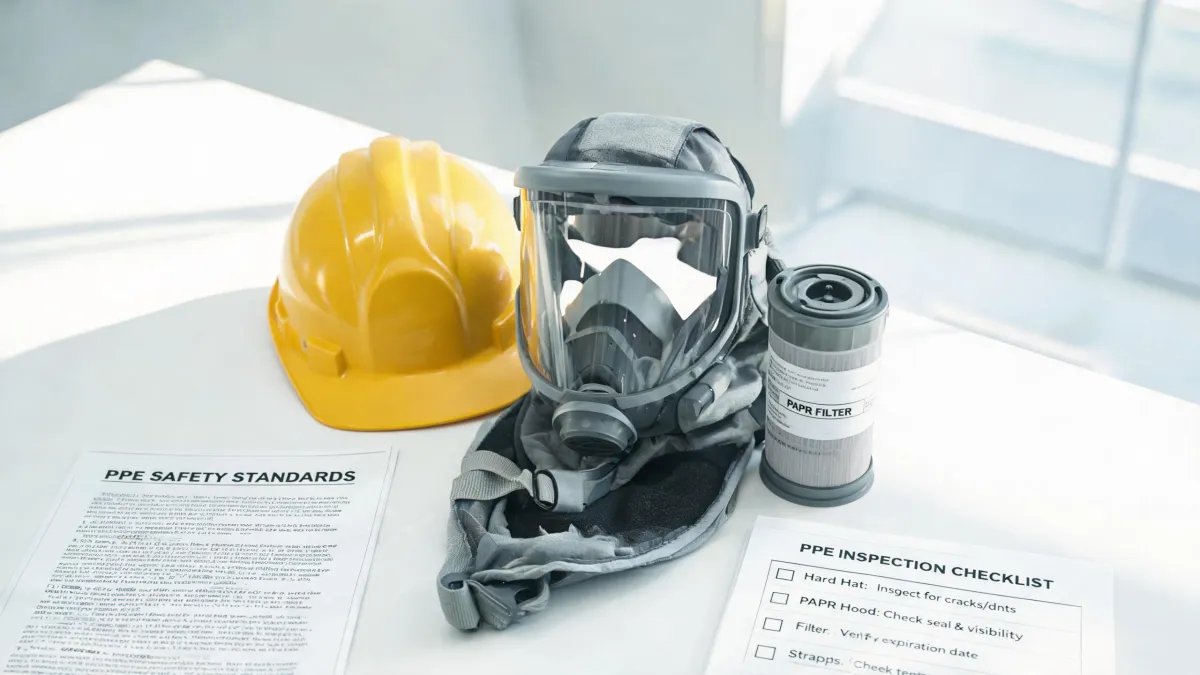
Here's where the Bullard PA30 PAPR system shines. It's NIOSH-approved (as of early 2025) and provides a constant flow of filtered air. I've seen this make a real difference in worker compliance—fewer people pulling masks off because they're overheating.
But here's the catch: a PAPR system is not a one-size-fits-all solution. I once had a safety manager insist on a PA30 for a job site where the primary hazard was silica dust from concrete cutting. The PA30 worked fine for that. But another manager wanted it for welding fume protection and assumed it would work with any welding respirator cartridge. That's a common mistake.
The PA30 is a powered air-purifying respirator. It requires appropriate filters for the specific contaminants. You can't just slap any cartridge on it and expect NIOSH approval to hold. Compatibility must be specifically evaluated per the manufacturer's guidelines.
What I'd look for:
- NIOSH approval for your specific contaminant type (particulate, gas/vapor, or combination)
- Battery life sufficient for your shift length (plus a backup battery if running 10+ hours)
- Weight distribution—a poorly balanced PAPR unit causes neck fatigue over an 8-hour shift
- Cooling effect: the constant airflow from a PAPR actually helps with heat dissipation. That's a real benefit over non-powered respirators.
One more thing: for welding applications specifically, a powered air system is often a better choice than a standard welding respirator because it reduces breathing resistance and heat. But you need to verify the specific filters are rated for welding fumes, not just particulates.
Scenario C: You Need to Train Your Team on Fire Extinguisher Use (Realistically and Safely)
This is a different kind of decision. You're not buying PPE—you're buying a training tool. The goal is to get people comfortable with fire extinguisher operation in a controlled, repeatable, and safe way.
The trap I see most often: trainers using old, expired extinguishers for demonstration. That's a bad idea on multiple levels. Expired extinguishers may not discharge properly, they might have corroded seals, and they certainly don't provide a consistent training experience.
If I remember correctly, the NFPA 10 standard (2022 edition) says extinguishers need to be inspected monthly and hydrostatically tested every 5-12 years depending on type. But for training purposes, you don't want to rely on a unit that might fail mid-demonstration.
Bullard's fire extinguisher trainers—like their digital or propane-based training units—address this problem. They use simulated fire and can be reset quickly. You can run multiple scenarios without needing to recharge or replace anything.
What I'd look for:
- Does it simulate realistic fire conditions (not just a propane flame, but heat and smoke effects)?
- How many training cycles can you run before needing maintenance?
- Is it portable enough for on-site training at different locations?
- Does it include data tracking to verify training compliance?
But here's the thing: not every training facility needs a full electronic trainer. If you're a small facility running one training session per year, a simple propane-based unit might be sufficient. If you're a training academy running weekly sessions, the digital unit with scenario programming is worth the upfront investment.
I've seen training coordinators buy the cheapest option and then complain that it doesn't give them the flexibility they need. Total cost of ownership matters here too—a $3,000 trainer that lasts 5 years with low maintenance versus a $1,500 trainer that needs frequent repairs or consumables.
How to Diagnose Which Scenario You're In
Here's a quick self-diagnostic framework I use:
- What is the primary hazard? Falling objects, airborne contaminants, or training needs?
- What is the work environment? Temperature range, confined space, outdoor/indoor?
- What is the shift duration? 4 hours, 8 hours, 12 hours? This affects battery life and comfort requirements.
- What frequency of use? Daily, weekly, or occasional training?
- What is the budget for total ownership? Not just purchase price, but maintenance, replacement parts, and training time.
If you answer "falling objects, warehouse, 8-hour shift, daily use, moderate budget" — you're Scenario A. Standard Bullard thermal plastic hard hat is your answer.
If you answer "welding fumes, hot environment, 10-hour shift, daily use, higher budget for worker comfort" — you're Scenario B. The PA30 PAPR is worth serious consideration.
If you answer "training, controlled environment, occasional use, limited to moderate budget" — you're Scenario C. Start with a basic propane trainer and scale up if needed.
There's no magic formula. But by being honest about your environment and constraints, you'll end up with equipment that actually works for your people—not just equipment that looks good on paper.