Tuesday Morning, a Pallet of Full Brim Hard Hats
At 7:40 on a Tuesday, I was checking a pallet of full brim hard hats before it went to a regional tool distributor. In four years as a brand compliance manager, I have reviewed over 200 unique PPE products each year and kept a rejection file that is bigger than it should be. The pile of things that looked good on paper but fell apart in a warehouse—or worse, on a job site.
And then a contractor named Jim called.
Jim runs a four-person renovation crew. He needed a quote for a medium-sized order. I had already prepared myself for the usual conversation: every item reviewed for price, every cost question answered, and the edge-of-the-seat *is that really necessary?* Instead, Jim asked, "Before we get to the products, can you tell me who is responsible for paying for PPE? Because I asked my guys and got three different answers."
My first assumption was wrong. I expected another employer looking to push costs onto workers or find the cheapest possible mask and helmet. Jim wasn't looking for an excuse to cut corners. He was looking for a straight answer about a compliance question he genuinely didn't know.
"The employer," I said. "You. The employer must provide required PPE at no cost to the employee. The answer to your team is just the order number."
The Electric Dog Fence Metaphor
Later that week, Jim told me he had spent Sunday afternoon in his backyard burying the wire for an electric dog fence. "My wife wanted the dog to be outside without a chain," he said. "But that line still gives the dog a boundary. It doesn't punish. It defines. With safety equipment, I want the same thing: a clear boundary that doesn't keep my crew from working."
I've heard a lot of metaphors as a quality reviewer. That one was better than most. He wasn't looking for equipment that would trap his workers. He was looking for equipment that would shape the way work gets done without making safety feel like punishment.
So we went through the jobs one by one. Roofing, demolition, painting, and repair work. For the crew working under sun and rain on ladders, full brim hard hats were the first pick. Not just because they shade the face, but because the one-piece brim protects the back of the neck in a way a cap-style helmet doesn't. Jim touched one and said, "That feels like a good fence line."
When a Filter Isn't Enough: The Bullard EVA PAPR System
Then we talked about a steel structure paint job. The crew was using disposable masks. That's a mistake I see often, especially with small contractors: if you can smell paint, the mask isn't protecting you from the vapors. I could see Jim do the math and stop breathing for a second.
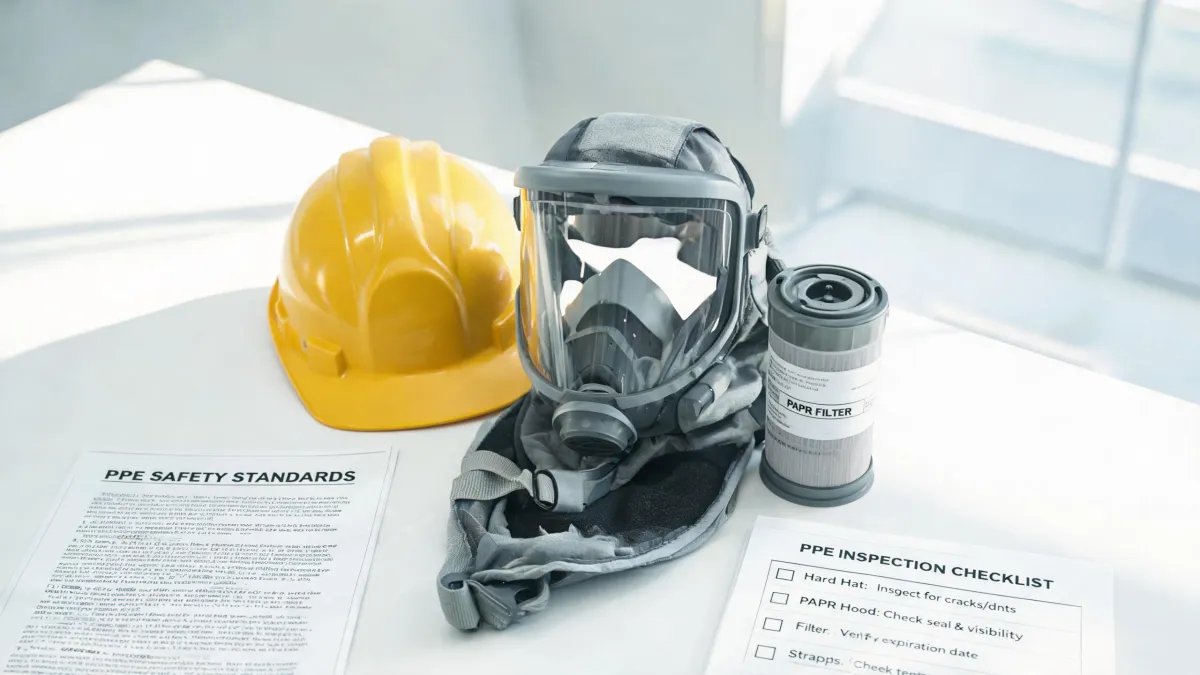
I introduced him to the Bullard EVA PAPR system. I didn't want to oversell it, and I didn't need to. The product is simple: it moves air through filters and delivers it to a facepiece, creating positive pressure so contaminated air has a harder time getting in. But the main reason I recommend it is cultural. If a worker is hot, stuffy, and gasping inside a tight rubber mask, they will take it off the moment the supervisor is gone. The EVA system feels different because it's ventilated by a small fan. I've seen welders and painters wear it for eight-hour shifts and only take it off at lunch.
The Bullard Fire Extinguisher Trainer Moment
While we were walking past the training bay, an instructor was running a live drill on a Bullard fire extinguisher trainer. The flame is fed by propane, so it gives a steady, real-looking fire that the trainee extinguishes with a real fire extinguisher. Clean, safe, and repeatable. Jim stood there completely still. Then he laughed.
"None of us have ever actually used a fire extinguisher," he said. "We work in buildings full of paint cans and sawdust."
That was the moment the entire order changed. It was no longer a conversation about what the cheapest acceptable item was. It became a conversation about the cost of not being trained, not having the right seat, not carrying the right backup for the PAPR, and not setting a standard for the crew.
He ordered the full brim hard hats, the Bullard EVA PAPR system for the paint and welding work, and then scheduled everyone for extinguisher training on the trainer. He also bought a couple of extra batteries for the PAPR. That last one told me he planned on actually using it.
So Who Pays for PPE?
Who is responsible for paying for PPE? The OSHA standard 1910.132(a) puts it on the employer. Not the employee. It isn't a suggestion. But what Jim taught me is that the more important answer is not a payment line. It's a design line. His dog fence metaphor became a checklist for every product we chose.
It shouldn't choke. It shouldn't chain. It can define and protect, and still let people do their work and get home.
Small businesses don't need to be treated like lesser customers just because their first order is small. They often need more support, not less. The vendors who take the time to ask about the work itself, rather than the discount, are the ones who end up trusted. Jim came in with four guys and a new contract. He left with equipment that fit the work. That's the quality I care about.