-
The $3,100 Near-Miss That Changed My PPE Checklist
-
Why a Bullard Classic Hard Hat Assembly Only Does One Job
-
Safety Vests and Hi Vis Hoodies: Visibility Is a Form of Protection—Not Chemical Protection
-
What About a Bullard Compressed Air Respirator?
-
Which PPE Can Protect You from Liquid Chemicals?
-
The Procurement Lesson: Ask What Is Not Included
-
The Boundary: Don't Ask One Product to Do Another's Job
No single piece of PPE can protect you from liquid chemicals. If you are searching 'which PPE can protect you from liquid chemicals?', I'll save you the scroll: real protection is a layered system—body, hands, eyes/face, and breathing—chosen for the specific chemical and task. That is why a Bullard Classic hard hat assembly isn't chemical splash protection by itself. A safety vest or a hi vis hoodie isn't chemical splash protection either. A Bullard compressed air respirator can protect your lungs from certain airborne hazards, but it won't stop a liquid from reaching your skin.
I've been handling PPE orders since 2017, and I've made enough mistakes to know the difference between looking safe and actually being safe. The biggest one came from assuming that anything labeled 'workwear' would handle a chemical job. It didn't. This article is the checklist I wish I'd had before that day.
The $3,100 Near-Miss That Changed My PPE Checklist
In late 2021, I ordered 40 hi vis hoodies for a crew that worked on a roadside job. They were warm, bright, and exactly right for being seen by traffic. The problem started when some of those same workers wore the hoodies in our yard while transferring alkaline chemicals.
In March 2022, a drum coupler failed. One worker's arm got splashed, and the liquid soaked through the hoodie sleeve before he could get out of it. He wasn't seriously injured—we got him to the shower quickly and the solution was fairly dilute—but the near-miss cost us about $3,100 in downtime, replacement PPE, and training. That number doesn't include the credibility I lost by not catching the problem sooner.
I'm not blaming the hoodie. It was sold as a high-visibility garment, not chemical protective clothing. My mistake was treating visibility as if it were protection.
Why a Bullard Classic Hard Hat Assembly Only Does One Job
Bullard is one of the brands I rely on for head protection. The company introduced the hard hat in 1919, and the Bullard name still shows up on a lot of our order sheets. But a hard hat's job is to absorb impact and protect the top of the head. That job ends where liquid chemicals begin.
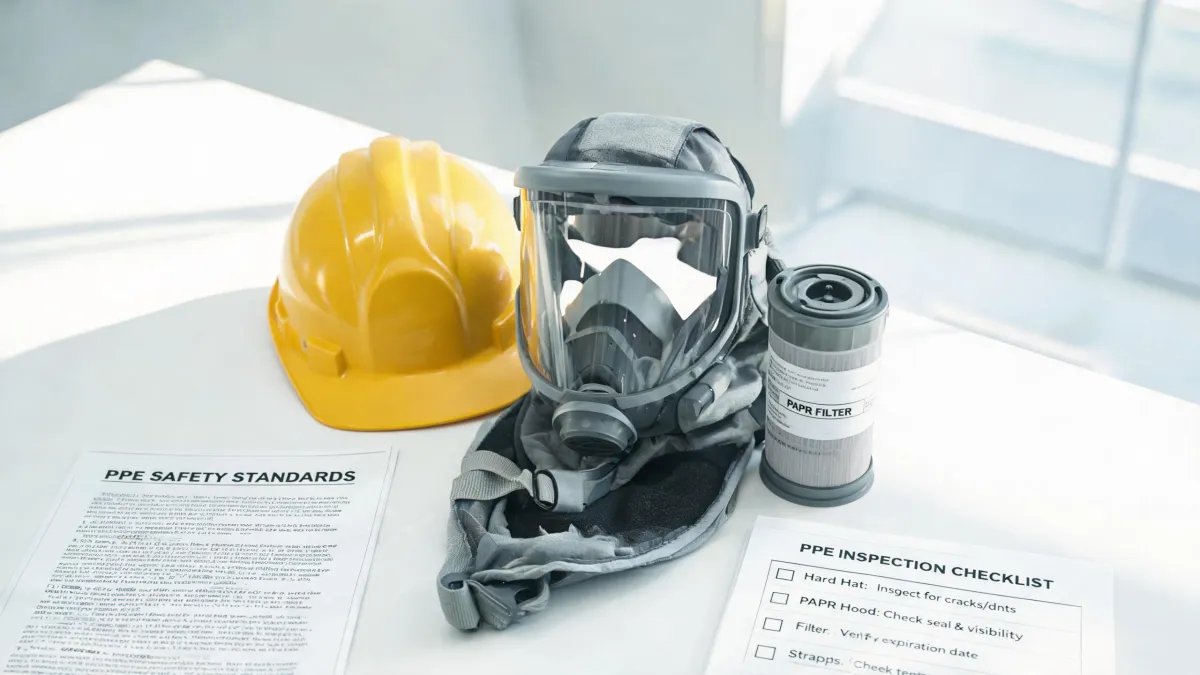
I see the phrase Bullard Classic hard hat assembly on our purchase list often. The word 'assembly' is a clue: the shell and suspension have to work together as one system. I once ordered Bullard Classic hard hat assembly replacements without verifying the suspension style on every shell, and I paid return shipping plus a two-day delay before I caught it. The bigger lesson wasn't about part numbers. Even a correctly assembled hard hat won't protect a worker's face, neck, or hands from a splash. If liquid chemicals are present, you need chemical splash goggles and a face shield rated for chemical splash—not just whatever is attached to the helmet.
Does that mean a Bullard Classic hard hat doesn't belong on a chemical site? No. It means you pair it with the right chemical-rated eye and face protection instead of treating the hard hat as a chemical barrier.
Safety Vests and Hi Vis Hoodies: Visibility Is a Form of Protection—Not Chemical Protection
Let me be clear: safety vests and hi vis hoodies have real value. On a roadway or around moving equipment, they make the difference between being noticed and being hit. That is PPE, and I don't want to minimize it.
But their standards reflect that purpose. The high-visibility standard (ANSI/ISEA 107) measures color, retroreflectivity, and design placement. It doesn't measure chemical soak-through or breakthrough time. From the outside, a hi vis hoodie looks like it might add a layer of defense. The reality is that without chemical-specific test data, you should treat it as ordinary clothing around liquid chemicals. If workers need visibility and chemical splash protection, the garment must be tested for both—or the chemical-resistant layer has to be worn underneath or over it, depending on the manufacturer's instructions.
What About a Bullard Compressed Air Respirator?
When a liquid chemical creates a vapor, mist, or gas, respiratory protection may be part of the answer. A Bullard compressed air respirator is a supplied-air system, not a simple filter mask, and Bullard also makes NIOSH-approved PAPR systems for certain jobs. In the right application, that type of respiratory protection is a serious asset.
To be clear, I am not suggesting every liquid chemical job needs a respirator. If the liquid has low volatility and the task doesn't create mist or spray, the Safety Data Sheet may not call for one at all. The point is to base that decision on a real exposure assessment, not on how strong the chemical smells.
But respiratory protection only protects the respiratory tract. It doesn't replace chemical-resistant clothing, gloves, or eye/face protection. If someone suggests that wearing a respirator means the skin hazards don't matter, that's a red flag. Under OSHA's respiratory protection standard (29 CFR 1910.134), the whole system has to be set up properly: medical evaluation, NIOSH-approved equipment, supplied air quality, and a written program.
Which PPE Can Protect You from Liquid Chemicals?
Here is my short answer: the PPE that has been tested against the chemical you are using, and that covers body, hands, eyes/face, and breathing as needed. A hi vis hoodie, safety vest, or standard hard hat isn't on that list by itself.
This is the checklist I now use before approving any order:
- Start with the Safety Data Sheet. Identify the chemical, its hazards, and the manufacturer's recommended PPE before looking at product catalogs.
- Do a hazard assessment for the actual task. OSHA's PPE standard (29 CFR 1910.132) requires employers to assess the workplace and select PPE accordingly.
- Ask for chemical compatibility data. Terms like 'chemical resistant' are only useful when supported by permeation or breakthrough data for the specific chemical.
- Cover all the exposure points. In many liquid chemical jobs that means chemical-resistant gloves, a protective suit or apron over regular clothing, splash goggles or face shield, and sometimes respiratory protection.
- Confirm that components work together. If you're combining a Bullard Classic hard hat assembly with a face shield or a respirator, check the manufacturer's compatibility testing before you assume it works.
Since I put this checklist in place, my team has caught 47 potential order errors in about eighteen months. Most were simple mistakes: wrong part numbers, suspension style mismatches, missing fit-test supplies. None became an injury. That's the whole point.
The Procurement Lesson: Ask What Is Not Included
This is also a pricing problem. When I get a quote for a Bullard Classic hard hat assembly or a respiratory system, I now ask what is not included before I compare prices. A low-looking quote may not include replacement filters, face shields, training, or documentation. The supplier who lists every component honestly—even when the total looks higher—usually costs less at the end. I would rather see all the line items than discover them during an audit.
The Boundary: Don't Ask One Product to Do Another's Job
I have mixed feelings about the idea of all-in-one PPE. On one hand, fewer pieces sound easier to manage. On the other, a product that tries to do several jobs can leave dangerous gaps. I solve that by asking for test data before I buy, not after.
So, back to the question: which PPE can protect you from liquid chemicals? The honest answer is the PPE selected for the specific chemical, concentration, task, and exposure route—not the cheapest garment in a bright color. Bullard hard hats and Bullard respiratory systems are solid tools, and safety vests or hi vis hoodies are essential on roadsides. Just don't hand a worker a visibility garment and call the chemical hazard solved. That mistake is easy to make, and I've got the invoice to prove it.