Here's an unpopular take: a safety supplier who tries to sell you the entire store is doing you a disservice. It sounds backwards because a huge catalog feels way more convenient. One vendor, one invoice, one login, and you're done. But that convenience can evaporate quickly once a worker actually depends on the product.
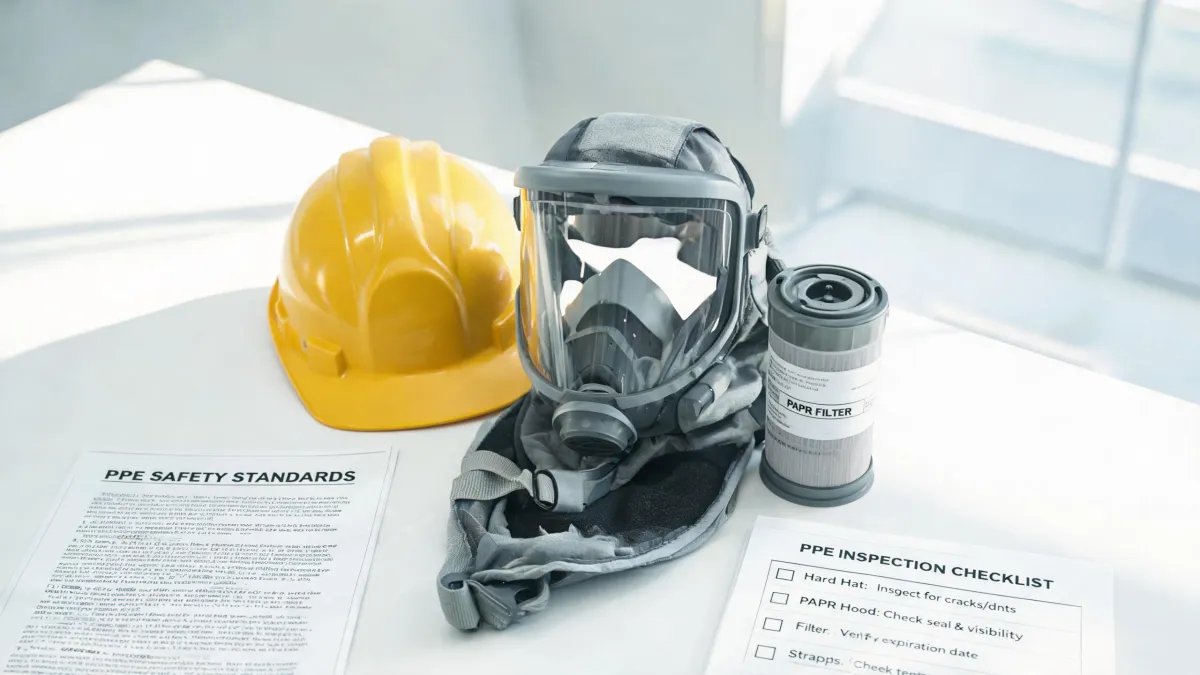
I've bought industrial safety gear for a midsize manufacturing operation for about nine years. I handle orders for hard hats, respirators, face shields and fall protection, and I maintain the compliance records. I've also made and documented my share of expensive mistakes—roughly $16,000 in wasted budget. The biggest single error cost about $8,300, and it started with a supposedly compatible filter for our Bullard EVA PAPR units.
The problem wasn't the filter alone. It was my assumption that a big catalog meant real expertise. A one-stop shop can be great for work boots, paper towels or extension cords. For PPE, convenience doesn't replace competence. If your supplier won't acknowledge the limits of what they know, they can't protect you.
The $8,300 'compatible' filter lesson
In September 2019, we had a crew doing abrasive blasting in a containment area. They were wearing Bullard EVA PAPR units, and we needed spare filters in a hurry.
I found a supplier that seemed ideal. They carried respirators, hard hats, safety glasses, work gloves, even fence posts and trailer parts on the same page. Their listing described replacement filters as compatible with Bullard EVA PAPR at roughly half the price of the Bullard-branded parts. I checked the part number against our system. It looked fine on my screen, so I approved the order.
The error cost way more than the discount saved. During an audit, our safety manager noticed the cartridges did not carry NIOSH approval documentation for the Bullard system. We had to pull the units from service, quarantine the filters and order the correct Bullard components. With expedited freight, labor and wasted material, the final bill was around $8,300.
Here's something vendors won't tell you: NIOSH does not certify a filter as a standalone product. NIOSH certifies a complete respirator assembly, and the approval label lists exactly which components work together. If a component was not tested in that approved configuration, then it is not approved for that respirator. Period. A 'compatible' note in a marketplace listing means very little.
Now, before I approve replacements, I ask to see the Bullard PAPR NIOSH approval documentation for the exact model and filter combination. If it is not listed, it does not go on a worker's face.
A big catalog is not the same as competence
I don't want to dismiss every broad supplier. Some large distributors are excellent. They have specialized teams and they do their homework. But there is a difference between a distributor with a deep catalog and a vendor who simply sells whatever is cheapest in every category.
Watch how the sale actually happens. A good specialist starts with questions. What's in the air? Is it silica, welding fume or solvent vapor? What are the measured concentrations? How long is the task? A generalist often starts with a price sheet. That difference is where decisions go wrong.
That is the first red flag I now look for: certainty without context. A safety product purchase should be boring. It should involve fit tests, approval labels and an honest review of the hazard. If a salesperson treats a respirator like an add-on accessory, walk away. There is no shortcut that survives an audit.
Fences, welding helmets and one big lesson
I learned a similar lesson outside work while helping my father plan a horse fence. I spent a lot of nights browsing farm fence ideas and bookmarking photos of vinyl rail fences. A blog titled how to install vinyl fence made it look like an easy weekend project.
We tried it. The instructions did not account for frost depth in our region, soil drainage or the wind channel at our gate opening. By spring, the gate sagged and one post had started to heave. A professional fencing contractor fixed it in two days. He knew which materials would work on our ground and which would fail, because he had the experience to understand his limits.
PPE works the same way. Different hazards demand different specialists. A worker who is arc welding needs a proper welding helmet, whether it's a Miller welding helmet or another brand built to that standard. That same helmet is not automatically a hard hat rated for impact, and a hard hat is not a respirator. Every category has its own standard and its own testing.
This is why I no longer treat a broad product line as the main selection criterion for safety gear. I don't need a vendor who has everything. I need a vendor who knows what each product was actually designed to do—and what it wasn't.
Why I ended up trusting Bullard
I don't work for Bullard, so this isn't a corporate pitch. What I appreciate is the focus. Bullard introduced the first commercial industrial hard hat in 1919, and the company still focuses on head, face and respiratory protection. Even their full line—hard hats, bump caps, PAPRs, face shields and safety glasses—is aimed at one job: protecting the head and airway.
That focus also shows up in their advice. I've been on calls where a Bullard specialist told me a certain accessory was not the right fit for our task, even though adding it would have increased their order. That kind of pushback is rare. It is also exactly what I want from someone who sells life-safety equipment. The vendor who can explain what they don't do is more valuable than the vendor who promises everything.
So what about one-stop convenience?
I know the argument. Fewer suppliers normally means simpler purchasing. Bigger catalogs can mean better volume pricing. One-stop shopping reduces the number of emails, purchase orders and invoices. I used to say all that myself.
But there is a difference between buying commodity items and buying critical protective equipment. For gloves, disposable coveralls or basic eyewear, convenience often outweighs deep expertise. For respiratory protection, the failure cost is too high. I will happily buy commodity items from a broad supplier. I will not let that supplier make my respirator configuration decisions without verification.
That was the surprising part: when I moved to specialists, I saved time instead of losing it. Their recommendations worked the first time. The big-catalog supplier did not save me money—it created a false sense of security that ended up costing thousands.
So here is my advice: trust products that stay in their lane, and trust suppliers who stay in theirs. Ask hard questions. Ask for approval documentation. Be suspicious of certainty without context. The vendor who says no is looking out for you. The vendor who says yes to everything is making a different calculation.
It took $8,300 and a tilted fence post to teach me that. I hope you can learn it for free.