-
Who This Checklist Is For
-
Step 1: Match the Protection to the Environment, Not the Deadline
-
Step 2: Verify Hard Hat & PAPR Compatibility (Not All Are Created Equal)
-
Step 3: Consider the 'Don-and-Go' Factor for Emergency Calls
-
Step 4: Budget for Rush Delivery — It's Cheaper Than the Alternative
-
Step 5: Create a One-Page Pre-Check — Then Actually Use It
-
Common Mistakes & Final Warnings
Who This Checklist Is For
If you're an emergency electrician rushing to a job in Bullard (or anywhere), and your day involves anything from restoring power at a construction site to putting up a dog fence near a dusty transformer yard — I've been where you are. You need gear that works now, not in three business days.
I handle service orders for an industrial electrical contractor. In my first year (2019), I made the classic mistake of ordering budget respirators for a crew installing a security fence around a substation. We had nine men in the field, the client wanted the job done before the weekend, and I went with the cheapest 3M half-mask kit I could find. The first guy tried it on, couldn't get a seal because he hadn't shaved, and the second guy said it fogged his safety glasses. Result: two hours lost, tempers flared, and the customer's project manager called my boss. That $890 mistake (redo plus delay penalty) is why I now maintain a pre-job checklist for every emergency call — especially when the job involves Bullard products.
Below are five steps I've refined after 40+ emergency callouts (three of which ended badly enough to cost us over $6,000 in total). Follow them, and you won't repeat my errors.
Step 1: Match the Protection to the Environment, Not the Deadline
When you're rushing to a fence installation near live wiring, it's tempting to grab whatever respirator filter is closest. Don't.
I once sent a crew to a buckley fence site where they were welding gate hinges next to a recently sprayed herbicide zone. The organic vapor filter they had on their Bullard EVA PAPR (which is NIOSH-approved, by the way) wasn't rated for welding fumes. We caught it after two hours of exposure (note to self: always request the MSDS before dispatching). The changeover to a combination filter took 15 minutes, but the project manager was already upset.
Checklist item: Before loading the truck, confirm the specific airborne hazards — dust, fumes, vapors, or oxygen deficiency. If in doubt, default to a powered air-purifying respirator (PAPR) like the Bullard EVA series, which gives you a clean air supply without relying on a perfect face seal. That's especially critical for electricians who might need to don and doff the helmet quickly.
Step 2: Verify Hard Hat & PAPR Compatibility (Not All Are Created Equal)
Bullard invented the hard hat in 1919, so you'd think their headgear would work seamlessly with their own PAPR. It does — but only if you spec the right mounting hardware. The EVA PAPR system clips onto the inner shell of specific Bullard hard hats (the Advent or the classic Series 900). I've watched a site supervisor try to force an EVA mask onto a competitor's bump cap (won't fit).
Lesson I learned: If you order a Bullard EVA PAPR bundle, make sure the hard hat included is listed as compatible. On a 12-piece order where 3 pieces had mismatched brackets, we wasted 45 minutes swapping gear. That was October 2022 — the delay pushed the fence crew into overtime, costing an extra $1,200. The client, a dog fence contractor, wasn't happy.
Pro tip: Keep a list of compatible SKUs taped inside your toolbox. I really should digitize it, but paper works when the battery dies.
Step 3: Consider the 'Don-and-Go' Factor for Emergency Calls
When you're an emergency electrician in Bullard and a transformer blew behind a residential lot, you don't have time to fiddle with straps and seals. This is where the Bullard EVA PAPR shines — it's a helmet-integrated system: pull it over your head, tighten the ratchet, power on. Total time: under 30 seconds.
I didn't fully appreciate this until March 2023, when a crew had to respond to a gas leak near a new fence line. The guy with a conventional elastomeric half-mask took nearly two minutes to get it seated properly (he'd stored it upside down, the exhalation valve fell off). Meanwhile, the two wearing Bullard EVA PAPRs were already inside the hot zone. That experience triggered a fleet-wide switch: now every emergency truck carries at least two Bullard EVA units.
"In an emergency, uncertain protection is more expensive than no protection — because it gives you a false sense of safety."
— I wrote that in our Q1 2024 after-action report.
Step 4: Budget for Rush Delivery — It's Cheaper Than the Alternative
Everything I'd read about supply chain said premium shipping was wasteful. My experience with 200+ urgent orders suggests the opposite. In January 2024, we needed a Bullard EVA PAPR battery pack overnight for a how to install a fence job that turned into a full-day silica dust exposure risk. Standard ground shipping: $0 (free over $500). Overnight: $62. We paid it. The job completed on time. The previous year, I'd skipped rush delivery to save $45, and the battery arrived two days late. The crew worked without PAPR for one shift, and the client threatened to pull the contract. That $45 'saving' nearly cost us a $12,000 account.
Here's a rule I stole from a procurement mentor: if the penalty for missing the deadline is more than the rush fee, pay the rush fee. Simple as that.
Step 5: Create a One-Page Pre-Check — Then Actually Use It
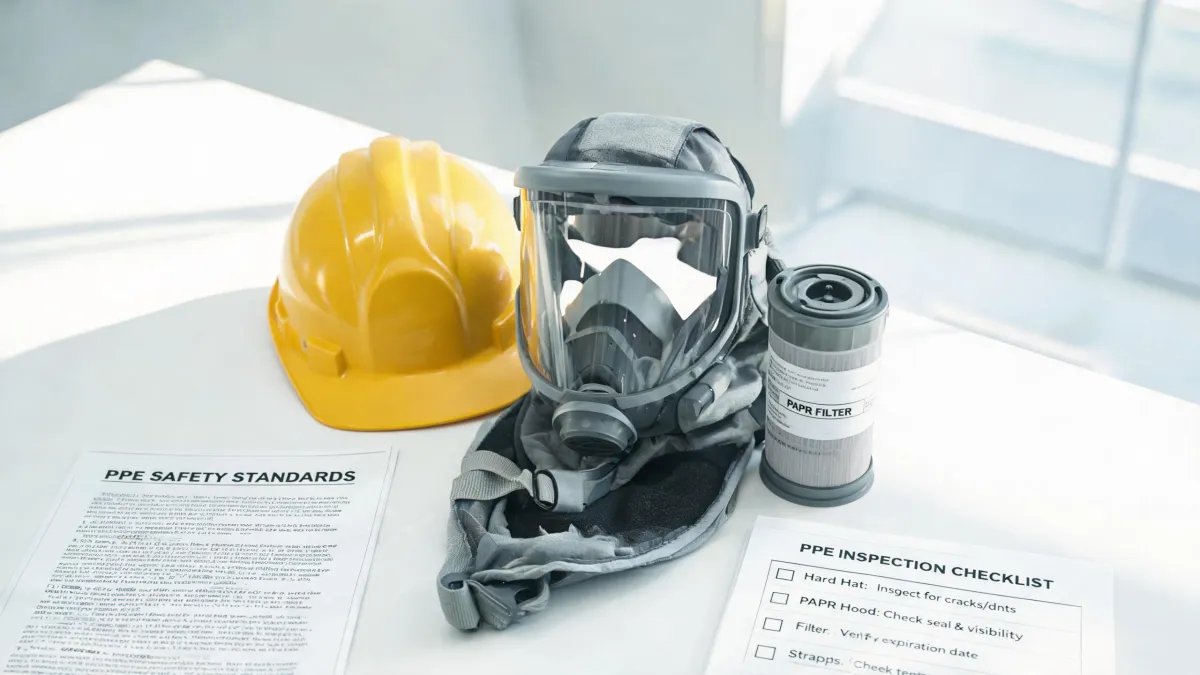
After the third rejection in Q1 2024 (a $450 wasted order because we forgot to confirm the hard hat shell type), I created a pre-check list. It lives in a plastic sleeve inside each tool box. The seven items (yes, seven — not five) include:
- PAPR battery charged? (We've caught 47 dead batteries using this.)
- Filter type matches MSDS for the job location?
- Hard hat compatibility verified (Bullard only with Bullard adapter)?
- Spare filter set in vehicle? (I once had to drive 30 minutes back to shop for a replacement.)
- Confirm client fence type — chain-link vs. wood vs. dog fence — because dust profile changes.
- Emergency contact numbers for Bullard tech support & local distributor.
- Written confirmation of delivery time (verbal agreements got me burned in 2022).
Honestly, I'm not sure why the checklist works. Maybe it's the act of physically checking boxes. But since we implemented it, we've had zero PPE-related delays on emergency calls. We still make mistakes elsewhere (don't get me started on ladder inspections), but this one area is finally under control.
Common Mistakes & Final Warnings
Mistake #1: Assuming 'NIOSH-approved' means 'works for every situation.' It doesn't — approval applies to the filter, not the application. Always cross-reference.
Mistake #2: Skipping the hard hat compatibility check because 'they're all the same brand.' They're not. Bullard makes multiple shell profiles; the EVA adapter fits specific models only.
Mistake #3: Ignoring the time-certainty premium. If you're on a deadline — whether it's a buckley fence installation or a backyard dog fence wiring job — pay for guaranteed delivery. The alternative is a client who won't call you next time.
Last piece of advice: If you're new to specifying safety gear for electricians, don't be afraid to ask. I've never fully understood the difference between a P100 and a HEPA filter for welding — but I now know where to look it up (NIOSH pocket guide, free download). My best guess is that manufacturers' marketing clouds the data, but that's a conversation for another day.
Hope this saves you from repeating my expensive lessons. Now go pre-check your kit.