-
When You Need to Gear Up Fast
-
Step 1: Verify Lead Times Before You Compare Price
-
Step 2: Check for NIOSH Approval on Respiratory Gear
-
Step 3: Calculate Total Cost, Including Rush Fees
-
Step 4: Confirm Compatibility (The Step Everyone Forgets)
-
Step 5: Lock in the Order with a Confirmation Window
-
Common Mistakes to Avoid
When You Need to Gear Up Fast
If you've ever had to source hard hats or respirators for a crew that starts next week, you know the feeling. You're not picking the best product—you're picking the one that'll actually arrive on time. This checklist is for those moments. It covers 5 steps I've refined over about 6 years of managing procurement for a 120-person industrial contracting company. We spend roughly $80,000 annually on PPE alone, so I've made every mistake in the book.
Step 1: Verify Lead Times Before You Compare Price
This is the step everyone skips. You get a quote from Vendor A for an aluminum Bullard hard hat at $18.50 each. Vendor B quotes the same model at $19.20. You lean toward A. But you forgot to ask: how fast can they ship?
In my experience, the cheapest quote often comes with a 'standard' lead time that assumes the warehouse is fully stocked. If you need 50 hard hats in 5 business days, and Vendor A says '7 to 10 days,' that quote is irrelevant. Two summers ago, I saved us $0.70 per unit on a bulk order of bump caps. We saved maybe $140 total. Then we waited. And waited. The shipment arrived on day 11. Our crew started the job without head protection for the first 4 days—we had to rent from a local safety shop at 3x the cost. Net loss: about $400, plus the headache. Basically, that $140 'savings' turned into a $400 loss. Seriously, check lead times first.
Step 2: Check for NIOSH Approval on Respiratory Gear
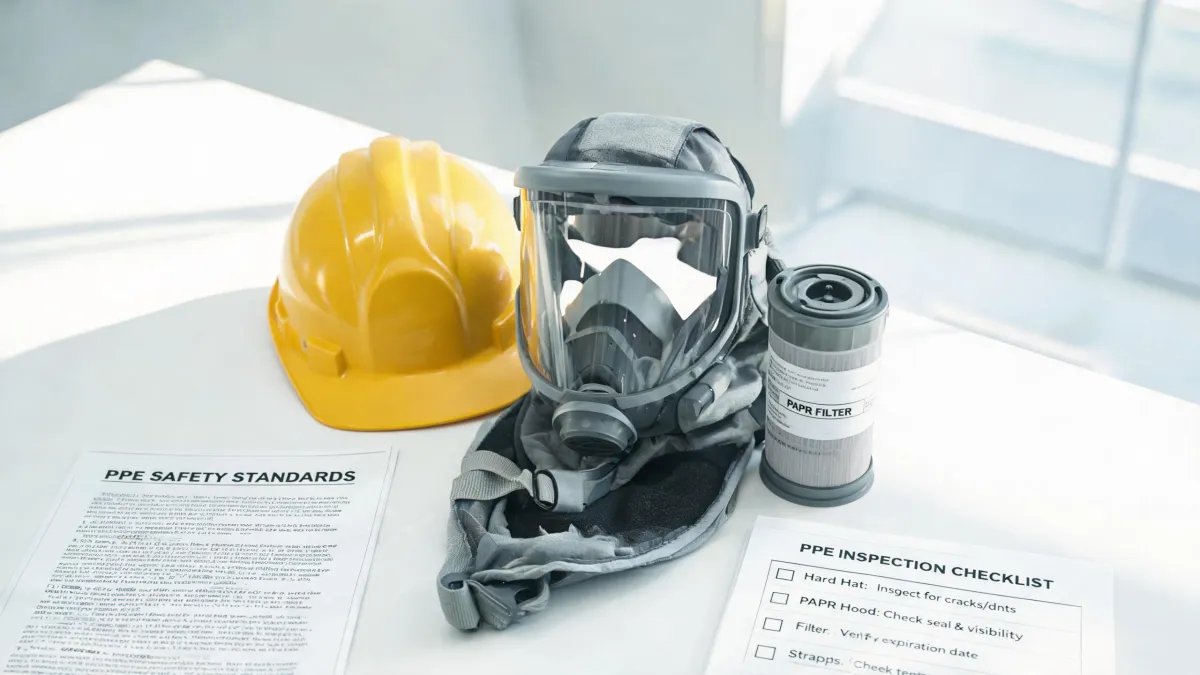
If you are ordering any powered air-purifying respirator (PAPR) systems—like Bullard's line—this is a non-negotiable check. I've run into vendors offering 'comparable' systems that lack NIOSH approval. The upside of saving maybe $200 per unit was tempting. The risk? An OSHA fine, or worse, an actual failure on site.
I asked myself: is $200 worth potentially having a respirator that doesn't meet the spec a safety inspector will check? The answer was no. We only buy NIOSH-approved PAPR systems now. Bullard's units carry that approval, and that fact alone is worth the price premium. The way I see it, a non-approved system isn't a respirator—it's a liability.
Step 3: Calculate Total Cost, Including Rush Fees
Okay, so you've found a vendor with the right Bullard products in stock and the correct certifications. Next question: can they meet your deadline? If the answer is 'maybe' or 'we'll do our best,' you need a backup plan.
Here is where the concept of time certainty premium comes in. In March 2024, I paid $400 extra for guaranteed rush delivery on a batch of Bullard face shields. The alternative was missing a $15,000 event we had contracted for. That 'free setup' offer from a competitor actually would have cost us more in lost revenue. I'm a cost control guy, so I track this stuff. Paying for rush shipping isn't wasting money—it's buying certainty. I'd argue that an uncertain 'cheap' option is more expensive than a certain 'premium' one every time.
Step 4: Confirm Compatibility (The Step Everyone Forgets)
Here's a pitfall I've fallen into. You order Bullard hard hats. Great. You order Bullard face shields. Great. You order a Bullard mounting bracket... Wait, do they fit together? Not all Bullard parts are cross-compatible.
For instance, some of their slotted hard hats accept a specific face shield bracket. The non-slotted models? They need a different adapter. I almost ordered the wrong bracket once. I caught it because I called their support and asked. So glad I did. The near miss was being one click away from ordering 50 brackets that wouldn't fit. Dodged a bullet. So Step 4 is: physically verify the attachment compatibility. Call the manufacturer if you have to. It's a 10-minute call that saves a week of returns.
Step 5: Lock in the Order with a Confirmation Window
Once you've selected the vendor, do not just send a purchase order. Call them. Confirm the stock. Ask for a written commitment on the ship date. I've had orders 'placed' in a system that turned out to be a backorder. There was zero communication. We found out when the truck didn't show.
To prevent this, I now request a 'ship by' date in the confirmation email. If they can't give me a specific date, I move on. In my opinion, a vendor that can't commit to a date is a vendor that can't deliver. Period. This is especially true for essential items like aluminum Bullard hard hats, which are often needed for high-heat environments or electrical work—not exactly items you want to substitute.
Common Mistakes to Avoid
I've seen teams skip Step 1 entirely and end up with the wrong product because the cheap vendor was out of stock. Or they skip Step 3 and get hit with a rush fee that doubles the unit price. So here are three rules I follow now:
- Don't optimize for unit price alone. The $0.50 discount isn't a win if the shipment is late.
- Don't assume compatibility. Bullard makes a full line—from hard hats to PAPR to fire extinguisher trainers—but not every piece plays with every other piece.
- Don't trust 'estimated' delivery dates. Get a confirmed ship date. If they can't give it, go elsewhere.
To sum it up: lead time first, certification second, total cost third, compatibility fourth, and a locked-in date fifth. Follow that and you'll probably avoid the mistakes I made.