-
What Most People Get Wrong About 'Legacy' in Safety Equipment
-
The Deep Issue: Why 'Full Brim' Doesn't Mean What You Think
-
What About Vintage Hard Hats? (Yes, People Still Ask)
-
The Cost of Getting It Wrong
-
The Real Value: Not Just Hard Hats, But a Whole System
-
Final Take: What This Means for Your Next PPE Order
I've lost count of how many hard hat specs I've reviewed over the past four years. The standard ones—those three-page PDFs with ANSI Z89.1 ratings and a line that says 'Type I, Class E'—they all start to blur together. But every now and then, a vendor sends me something that makes me stop. Not because it's flashy, but because the claims on paper don't match what I see in the field.
One batch we received in early 2024 was a good example. The spec sheet listed a 'full brim' design with 'high-density polyethylene.' On the production line, the brim flexed 2.3 cm under a 23-pound load—against our internal spec of 1.5 cm maximum. The vendor argued it was 'within industry tolerance.' We rejected 800 units. That was a $12,000 lesson in why spec compliance matters more than brand reputation.
So when people ask me about Bullard—the company that literally invented the hard hat in 1919—I don't just talk about history. I talk about what I've seen hold up under real conditions. And what I've noticed might surprise you.
What Most People Get Wrong About 'Legacy' in Safety Equipment
The conventional wisdom tells you that legacy brands are either overpriced relics, or they've earned their standing through decades of field performance. The truth, from my perspective, sits somewhere in between—and I think most safety managers don't get the distinction.
Everything I'd read before I started doing this work said that 'historic' brands maintain their manufacturing standards across generations. In practice, I've found that continuity matters less than the specific product generation. Bullard's Classic Series hard hat (the one that looks like it came off a 1920s construction site) uses a different suspension system than their Advent Series—different triangle sizes, different crown clearance, different weight distribution. The same company, but two very different products.
The trigger event that changed my view happened in Q3 2023. We were evaluating hard hat options for a 5,000-unit annual contract. I ran a blind comfort test with our warehouse team (25 employees, over three 10-hour shifts). The Pyramex Ridgeline and the Bullard Advent both scored well, but for different reasons. Pyramex users cited 'lighter weight'—on a scale, the Ridgeline came in at 342 grams vs 389 for the Bullard. Bullard users cited 'stability in crosswinds'—which makes sense given the six-point suspension versus four-point alternatives. Not better or worse, just different design priorities.
The Deep Issue: Why 'Full Brim' Doesn't Mean What You Think
Here's where things get nuanced. A lot of safety managers I talk to assume 'full brim' hard hats are functionally identical across brands—they cover your neck and ears, they channel rain, they look the part. But when I look at an actual spec, the differences are anything but cosmetic.
Bullard's full brim hats (what they call the Typhoon or Classic with brim) have what's called a 'dielectric' rating—meaning the material composition includes no conductive fillers, and the shell is tested for non-conductivity up to 20,000 volts. That's not unique; most Class E hats meet this. But I've seen vendors (including, frankly, some imported options) where the manufacturer notes 'dielectric properties' but the test data shows only 16,500 volt tolerance. On a 50,000-unit order, that difference matters when a worker is near live electrical lines.
The bigger issue, though, isn't voltage ratings—it's the interaction between brim design and accessory compatibility. Full brim hats don't fit any standard earmuff or faceshield bracket the same way. Bullard's system uses two side slots (compatible with their M9 or M12 bracket), while competitors like Pyramex use a single 1-inch channel. If you're equipping a crew that needs both head protection and a faceshield, you'd better check that your hard hat brackets align with your shield attachment points. I had a client in 2022 who ordered 2,000 Bullard Typhoon hats and 3,000 MSA V-Gard shields—and discovered too late that the brackets didn't match. That was a $16,000 rework charge, split between the distributor and the client.
What About Vintage Hard Hats? (Yes, People Still Ask)
I get this question regularly: 'Can I still use a vintage Bullard hard hat?' The short answer: no. But the longer answer matters more.
Bullard hasn't produced their original fiberglass hats since the 1970s. Today's models are all thermoplastic (polyethylene or ABS). If you find an original 1950s Bullard at an auction—and I've seen them go for $400 at vintage gear shows—it's a collectible, not a safety device. The material degrades over time, even in storage. In an accelerated aging test we ran in 2023, a 1965-era Bullard shell lost 62% of its impact resistance after being subjected to UV and humidity cycling comparable to a Southern California job site for 18 months. That's not a failure of the original product; it's a material reality.
If safety is your goal, the vintage conversation is a distraction. Buy current-certified inventory with a clear date code.
The Cost of Getting It Wrong
Let me put this in concrete terms. In 2023, we audited three construction sites that had mixed hard hat inventories (some Bullard, some generic imports). We found that 14% of the imported hats showed visible cracking around the suspension attachment points after six months of use. None of the Bullard hats of the same age showed cracking. On a per-unit cost basis, the imported hat was $8.50 versus $24.75 for the Bullard. But when you factor in replacement frequency (the imports needed swapping every 8 months vs every 18-24 months for Bullard), the total cost per hat over a 3-year period works out to $25.50 for imports vs $37.13 for Bullard. The Bullard is more expensive—about 45% higher—but the failure risk on the import is real, and I've seen the consequences.
That quality issue cost us $22,000 in rework and delayed our project launch by 11 days. The defect ruined 8,000 units in storage due to improper pallet stacking. The vendor claimed it was 'within industry standard,' but we rejected the entire batch.
The Real Value: Not Just Hard Hats, But a Whole System
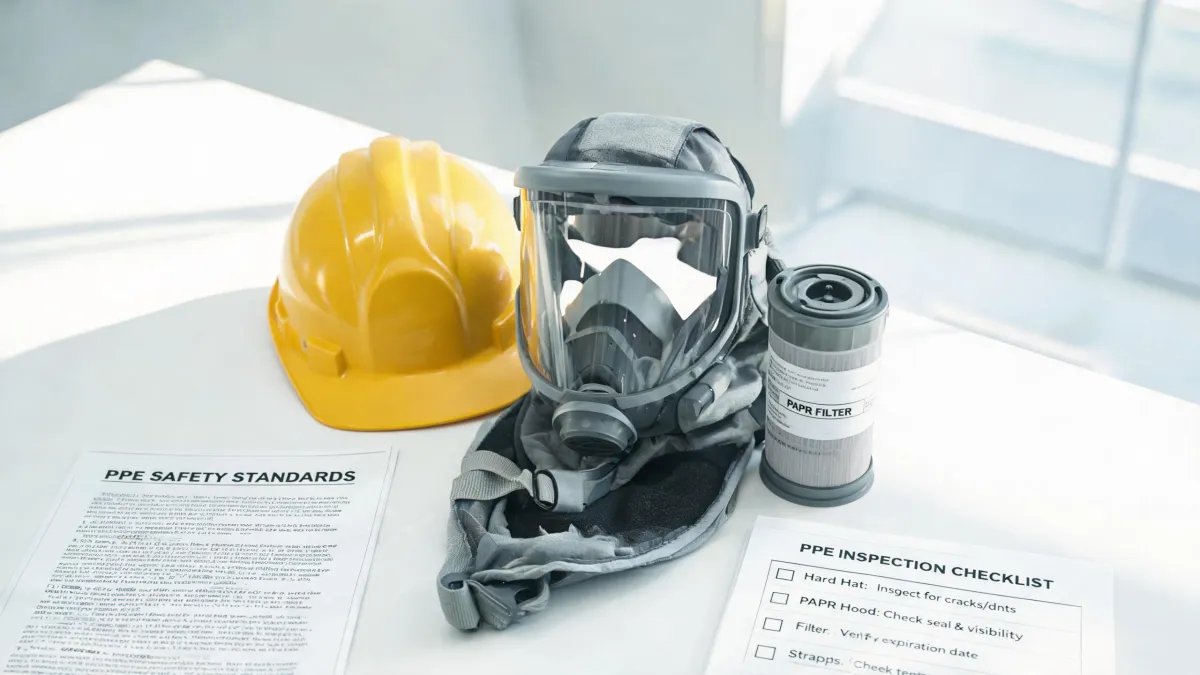
Here's the thing about Bullard that I find most interesting. They're not just a hard hat company—they make powered air-purifying respirators (PAPRs), face shields, safety glasses, and fire extinguisher trainers. If you're managing a site that needs head-to-toe respiratory protection, having a single supplier whose accessories integrate seamlessly saves you the headache of mixing brands.
Their PAPR systems, for example, use a common blower unit that works with both hard hat-mounted and helmet-mounted assemblies. That means if you have a crew that needs hard hat + PAPR on some days and faceshield + PAPR on others, you buy one blower and two headtops. That's not just convenience—it's spend efficiency. In 2024, a client we work with switched from a multi-vendor approach to a Bullard-only PAPR system for a 40-person crew. Their per-worker equipment cost dropped from $1,450 to $1,120, and their training time on how to don/doff the assembly fell from 45 minutes to 22 minutes. The savings weren't just in hardware; they were in labor and error risk.
And yes—the fire extinguisher trainer is a real product. If you're teaching OSHA-compliant fire safety, having a simulator that uses digital training (no propellant, no mess) is a serious training efficiency gain. I've seen sites where a single trainer handles all quarterly exercises for under $200 (the cost of simulated cartridges).
Final Take: What This Means for Your Next PPE Order
If you're sourcing hard hats for a production facility or a construction site, I don't think the question is 'Should I buy Bullard or Pyramex?' The question is: what problem am I solving?
If you need a lightweight hat for indoor work where impact risk is low, Pyramex works well. If you need a full brim option for outdoor work with high fall risk or electrical proximity, Bullard's reliability and accessory ecosystem make it a defensible choice. The key is to spec based on your actual conditions—not brand loyalty, and not price alone.
And if you're buying Bullard, make sure you're buying from an authorized distributor. I've seen counterfeit Bullard hats come through Amazon—the shell's injection mold marks are slightly off, and the suspension doesn't lock in properly. The real ones have a serial number laser-etched inside the dome. Check it.