-
I Used to Think “a Hard Hat is a Hard Hat”
-
1. Where should I start when buying a Bullard hard hat?
-
2. Do I really need a chin strap for hard hats?
-
3. When does a Bullard PAPR system make sense vs. a regular respirator?
-
4. What does “PPE performance” actually mean in practice?
-
5. Smoke detector vs. fire alarm—and why Bullard makes a fire extinguisher trainer
-
6. How do I manage Bullard inventory for multiple locations?
-
7. What’s the one thing most buyers overlook?
I Used to Think “a Hard Hat is a Hard Hat”
When I first started managing PPE purchasing back in 2020, I figured the cheapest option would do. Hard hat, bump cap, respirator—how different could they be? I was wrong. (Unfortunately, that realization cost me about $400 in re-orders, and a stern email from our safety manager.)
Here are the questions I wish someone had answered when I started ordering Bullard gear. If you’re an office administrator, facility manager, or anyone suddenly in charge of PPE procurement, this is for you.
1. Where should I start when buying a Bullard hard hat?
Start with the application, not the price list.
Bullard has been making hard hats since they invented them in 1919. Their current lineup includes standard Type I caps (top impact) and Type II caps (top, lateral, and front/back impact). For a general construction crew, a Type II standard hard hat is usually the baseline. For workers in tight spaces, like utility crews or plumbers, a Bullard bump cap might be the better fit.
“Check the ANSI/ISEA Z89.1 rating first. It’s printed inside every Bullard hard hat.”
Don’t assume “one size fits all.” It doesn’t. And if you’re working with an emergency plumber (a phrase I’ve seen more often than I’d like in our work orders), the reduced profile of a bump cap makes a huge difference when crawling under sinks or through attics.
Pro tip from my own mistake: I once ordered a single batch of hard hats for everyone—including our office staff. The field crew complained for weeks. Now I track job roles separately.
2. Do I really need a chin strap for hard hats?
It depends on the work environment—but more often than not, yes.
OSHA 1910.135 doesn’t mandate chin straps for general industry. But if any of your crew works at height (scaffolding, ladders, roofs), a
Bullard hard hat chin strap is basically required by common sense. I’ve seen a hard hat fall 30 feet from a ladder. Thankfully, no one was below.
For our warehouse team, I skip the chin strap. For our roofing crew? It’s mandatory.
Personally, I’d argue that if you’re ordering Type II hard hats, just include the chin strap as a standard accessory. It’s cheap insurance. One box of 10 straps costs less than the paperwork for an incident report.
3. When does a Bullard PAPR system make sense vs. a regular respirator?
A PAPR is for comfort and long shift wear. A disposable N95 is for short, low-risk tasks.
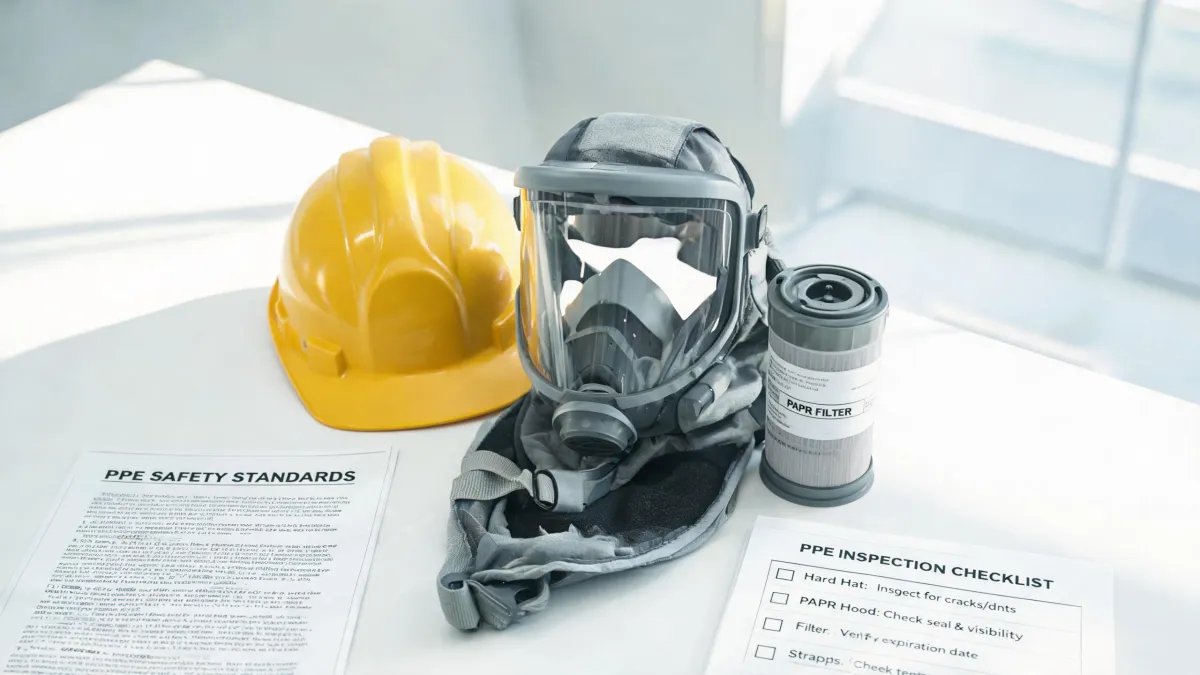
Bullard’s NIOSH-approved PAPR systems (like the Adamo or Typhoon) are a serious investment. I process about 60–80 orders annually across 8 vendors. For one client site, we switched from half-face disposables to a Bullard PAPR. The result? Crews stopped taking off their respirators every hour to wipe sweat. Compliance went up. The safety manager told me the lost-time incidents dropped.
“According to NIOSH, a PAPR with a high-efficiency filter provides an assigned protection factor (APF) of 50. A half-face elastomeric respirator gives an APF of 10.”
But—and this is the “experience” part—you cannot just assume a PAPR is compatible with every respirator filter. Bullard systems need Bullard components. I’ve had vendors try to sell me “compatible” filters that weren’t actually certified. That’s a hard no for me now.
4. What does “PPE performance” actually mean in practice?
It’s not just about passing a test. It’s about whether workers will actually wear it.
I’ve ordered fancy safety glasses that looked great on paper but fogged up after 10 minutes. The crew ditched them. I’ve ordered Bullard face shields that integrated with their hard hats seamlessly—and compliance was high.
To me, real-world PPE performance includes three things:
- Fit and comfort – If it doesn’t fit, workers will modify it or leave it off.
- Integration – Can they wear it with a hard hat, hearing protection, and a face shield all at once?
- Durability – Does it survive a full shift on a construction site?
That’s why I stick with Bullard for head-to-respiratory. The system integration is real. I’ve seen setups where everything clicked together—hard hat, face shield, PAPR—and workers actually kept it on.
5. Smoke detector vs. fire alarm—and why Bullard makes a fire extinguisher trainer
They’re different devices, but both matter for safety.
A smoke detector is a point sensor. It detects smoke in one spot. A fire alarm is a system that (usually) pulls input from multiple detectors and sounds a building-wide alert. The confusion is understandable, but functionally, they serve different purposes.
So why does Bullard make a fire extinguisher trainer? Because hands-on training is proven to increase correct extinguisher use. Their digital trainer simulates flames without real fire or CO₂. I’ve seen it used in a warehouse training session—it’s effective, and it avoids the regulatory hassle of live fire drills. (Prices as of January 2025 for the Bullard Fire Extinguisher Trainer start at around $7,200 for the base system; verify current pricing with your rep.)
6. How do I manage Bullard inventory for multiple locations?
Standardize where you can. Customize where you must.
In 2023, I consolidated orders for 400 employees across 3 locations. Using a single vendor and standardizing on Bullard hard hats with a few color options (white for supervisors, yellow for crew) cut our ordering time from 8 hours per quarter to about 2 hours. We eliminated the “picket fence” problem—different colors for different trades—and made it simpler for the warehouse team to stock.
But I also learned to ask instead of assume. One site needed bump caps, not hard hats. Different scenario entirely. A standardized system with a few well-chosen exceptions works best. I keep a spreadsheet (yes, boring, but it works) tracking by site, role, and size.
7. What’s the one thing most buyers overlook?
NIOSH approval is not a feature—it’s a requirement.
I know this sounds obvious, but I’ve seen buyers skip the verification step. “The vendor said it’s compatible.” “The listing says NIOSH-compliant.”
I was that buyer once. I ordered “compatible” filters for a Bullard PAPR. They weren’t actually certified. The safety manager caught it during our quarterly audit. We had to return the whole lot. That cost me two weeks of lead time and a chunk of the department budget.
Now, every Bullard PAPR order includes checking the NIOSH approval number (it’s printed on the filter and the headpiece). I keep a folder with the approval certificates. It takes 5 minutes per order, and it’s saved us from at least two major compliance near-misses.
To be fair, Bullard’s systems are usually labeled clearly. But I’ve learned never to assume. Verify.
Prices as of January 2025; verify current rates. Regulatory information is for general guidance. Consult official sources (OSHA, NIOSH) for current requirements.