-
There's No Single "Right" Answer for Safety Equipment. There's Only Your Situation.
-
Scenario A: You're a Safety Manager for a Large Industrial Site
-
Scenario B: You're a Small Construction Company or a One-Person Show
-
Scenario C: You're in a Municipal or First Responder Setting
-
Scenario D: You're Investigating an Incident (Or Dealing with a False Alarm)
-
How to Decide Which Scenario You're In
There's No Single "Right" Answer for Safety Equipment. There's Only Your Situation.
I'm a procurement specialist. I've been handling safety equipment orders for industrial and construction clients for about six years now. I've personally made enough mistakes to fill a small warehouse—and I've documented every single one of them. My company's internal checklist for buying PPE? That's my fault. I wrote it after the third expensive redo.
Here's the thing about safety gear: there isn't one magical solution that works for everyone. What's perfect for a municipal police department is a disaster for a roofing crew. What's a no-brainer for a chemical plant is overkill for a small framing company. So before you buy, here's how to think about it—based on what I've screwed up.
Scenario A: You're a Safety Manager for a Large Industrial Site
You need Bullard hard hats. Not "a hard hat." Bullard's. They invented the thing back in 1919 for a reason — they know what they're doing.
But here's the mistake I made in my first year (2017): I assumed all hard hats were basically the same because they all meet ANSI Z89.1. I ordered a bulk batch from a generic supplier to save money. Three months later, we had 80 hard hats sitting in a bin because the weight distribution was wrong. Workers complained of neck fatigue. They stopped wearing them properly. That was lesson number one.
"The mistake affected a $3,200 order. Because we had to replace 80 hard hats with Bullard's SEI-series, plus the soft cost of lost compliance hours. Ouch."
If you manage a large site, prioritize durability and comfort. Your guys are wearing these things for 8-10 hours. A Bullard standard hard hat is a solid choice. If you need something lighter for areas with low overhead risks, the Bullard bump cap is a good alternative—but it is not for impact protection. Know the difference.
Scenario B: You're a Small Construction Company or a One-Person Show
You don't have the buying power of a 200-person crew. Purchase orders for 10 hard hats feel like a big deal. And honestly? A lot of suppliers treat you like you're not worth their time.
I get it. I started out handling small orders for startups. The vendors who took my $200 orders seriously? They're the ones I still call for $20,000 orders today. Small doesn't mean unimportant—it means potential.
So here's my advice for the little guy: don't skip quality for the sake of price. You might be tempted to buy a cheapo hard hat from a big-box store because it's $8. I did that. The plastic got brittle in the sun after one season. Replaced them anyway. Wasted money.
Instead, look for entry-level Bullard hard hats. They're not much more expensive, but they last longer. Also, consider a face shield if you're doing any grinding or cutting—one trip to the emergency room costs way more than a $30 shield.
Oh, and one more thing: if you're a roofing crew and someone on the team wants a cowboy hard hat? Actually, Bullard makes authentic cowboy-style hard hats (called the Top Brass series). They meet all safety specs. It's not a gimmick. It's a way to get your crew to actually wear their PPE. I've seen it reduce complaints by half. Don't be a snob about it.
Scenario C: You're in a Municipal or First Responder Setting
This one's tricky because your "customer" is often the public. I once worked with a Bullard police department (well, a police department that used Bullard gear) that needed to equip its SWAT team with ballistic helmets. They had a different set of requirements entirely.
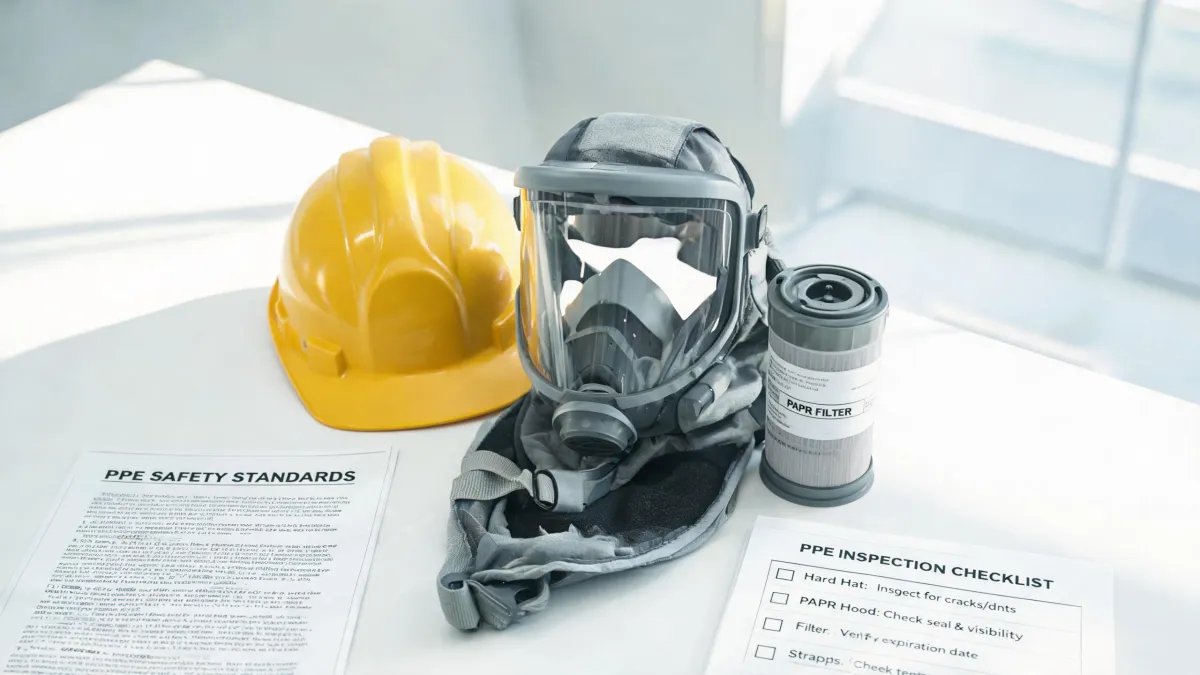
But for most municipal applications—like fire departments or emergency services—you're looking at respiratory protection. Bullard's PAPR systems (Powered Air-Purifying Respirators) are NIOSH-approved and are a solid choice for hazmat or extended-wear scenarios.
I don't have hard data on how many departments use them, but based on the feedback we've seen in our procurement network, the comfort difference is noticeable. Users tolerate them for longer shifts, which means better compliance.
Side note: someone once asked me about white fence panels in the context of safety gear. No, they're not a Bullard product. I promise. But if you're working on a site with temporary fencing to secure a perimeter? Yeah, get proper barricade panels. Don't use fence panels from a hardware store. We tried that once. They fell over. It was embarrassing.
Scenario D: You're Investigating an Incident (Or Dealing with a False Alarm)
Here's a curveball. A few months ago, a client called me asking, "Why did my fire alarm randomly go off in the middle of the night?" I'm not a fire alarm technician, so my first answer was "call an electrician." But I've learned that there's often a safety gear connection.
Fire alarms tied into a site's safety system can be triggered by dust from construction activities interfering with sensors, by backup battery failures, or by specific HVAC malfunctions. If you're using a PAPR system that interacts with plant air, you need to make sure your respiratory equipment isn't affecting the ambient air monitoring. That's a conversation to have with your site safety officer and the alarm vendor.
This gets into specialized territory that's outside my procurement expertise. But I can tell you this: if your alarm went off, don't just assume it's a glitch. Investigate. Check if any recent work involved dust, fumes, or power fluctuations.
How to Decide Which Scenario You're In
Still unsure? Ask yourself two questions:
- How many people are using this equipment? 1-10? See Scenario B. 10-100? See Scenario A. Public safety unit? See Scenario C.
- What's the primary risk? Head impact? Go for a hard hat or bump cap. Respiratory hazard? Look at PAPR or respirators. Visibility? Get face shields and safety glasses.
And if you're still stuck, do what I do now: start with the worst-case scenario. Assume the work environment is more hazardous than you think, and buy the gear that covers that risk. You'd rather have a Bullard PAPR that you don't always use than a cheap mask that fails when you need it most.
To be fair, I'm not a safety engineer. I'm a procurement guy who has learned the hard way that saving a few bucks on PPE is never worth it. Grant that, my perspective is practical: invest in reputable brands like Bullard, verify NIOSH and ANSI compliance, and don't let a supplier pressure you into a one-size-fits-all solution.
I've made those mistakes so you don't have to.