-
Why I'm Writing This
-
1. What's the right way to assemble a Bullard hard hat?
-
2. Did Bullard really invent the hard hat?
-
3. Can I wear a bump cap instead of a hard hat?
-
4. Is the pink hard hat just a color option, or does it mean something?
-
5. What about Bullard fire extinguisher trainers? Are they worth the money?
-
6. How do I choose between Bullard's different hard hat models?
-
7. Do I need NIOSH‑approved PAPR for certain jobs?
-
8. What's the most common mistake I see with Bullard gear?
Why I'm Writing This
I manage PPE procurement for an industrial construction company. In my first year (2017), I ordered 200 hard hats without checking the assembly instructions. Every single suspension was backward. That mistake cost $890 in rework and a 1‑week job delay. Now I keep a checklist. Here are the questions I wish someone had answered for me back then.
1. What's the right way to assemble a Bullard hard hat?
Short answer: It's not hard, but don't skip the manual.
I know — it sounds basic. But the most common error I see (and made) is forcing the suspension into the shell in the wrong orientation. Bullard's Staz-On system has a specific alignment: the front tab must seat first, then the rear. I once watched a new hire jam it in backward, crack the ratchet knob, and we had to order replacement parts — $45 each, plus shipping. The assembly steps are clearly drawn on the inside of each hard hat. Read them. Period.
My rule: Before distributing any Bullard hard hat, I personally inspect the assembly. Took about 30 seconds per unit. Saved thousands.
2. Did Bullard really invent the hard hat?
Yes. Edward W. Bullard invented the hard hat in 1919.
I remember a client asking me this on a safety call, and I didn't have the story ready. Felt pretty stupid. Turns out, Edward W. Bullard adapted the design of a soldier's steel helmet and created the first commercial hard hat — originally called the "Hard Boiled Hat" (because the fabric was steamed to form a rigid shell). It was a big deal for miners and construction workers. Later, when I read about the history, I realized how much credibility you gain just by knowing that fact. Now I keep a footnote in my presentation decks.
Fun fact: Bullard's original patent is from 1919, and the company still manufactures in the USA.
3. Can I wear a bump cap instead of a hard hat?
Not where OSHA requires a hard hat. Here's the difference.
I've seen supervisors try to save money by issuing bump caps for warehouse work. To be fair, bump caps are cheaper and more comfortable. But they are not rated for falling objects or impact from above. A bump cap protects you from bumping your head on low beams or fixed objects. A hard hat (like Bullard's standard Type I or Type II) protects against falling debris and lateral impact. Per OSHA 29 CFR 1910.135, if there's any risk of falling objects, you need an ANSI Z89.1‑rated hard hat.
I learned this the expensive way: We had a minor shelf collapse in a warehouse — nothing serious — but if workers had been wearing bump caps, the result could have been a concussion. We switched to Bullard Class C hard hats for that area. The cost difference? About $12 per unit. The lawsuit we avoided? Priceless.
4. Is the pink hard hat just a color option, or does it mean something?
It's a color option, but often carries a message.
Bullard offers pink hard hats (and pink bump caps) as standard catalog items. Some companies use them for Breast Cancer Awareness campaigns. Others use pink hats as a tool to improve safety visibility on site — a bright color stands out. I've also seen sites where pink means "visitor" or "first day on the job" (like a warning to others). But there's no regulation that says pink = anything specific. I personally keep a pink Bullard hard hat in my office as a conversation starter about safety culture. It's a small thing, but it gets people talking.
Just make sure the shell meets ANSI Z89.1 regardless of color.
5. What about Bullard fire extinguisher trainers? Are they worth the money?
If you train with live extinguishers, yes. But watch the hidden costs.
Bullard manufactures a line of fire extinguisher training simulators that use water mist and digital feedback. I was skeptical until I saw one in action. The unit eliminates the mess and environmental cost of training with dry chemical. That said, the upfront price is higher than buying a few used extinguishers. But when you calculate the cost of cleaning up after a dry‑chemical drill ($150+ per session) and the fact that you'd need to recharge real units, the Bullard trainer pays for itself in about 10 sessions. I wrote a justification memo using total cost of ownership (TCO) and got it approved in one week. The numbers don't lie.
6. How do I choose between Bullard's different hard hat models?
Match the hazard, not the price tag.
Bullard has several lines: Classic, Advent, L Series, etc. The cheapest is the Classic — about $15 online. But if you work near electrical hazards, you need a Class E (electrical) or Class G (General). For falling objects from high height, you might want a Type II (absorb lateral impact). Many buyers go for the lowest dollar without checking the specs. From my experience managing PPE procurement for 6 years, the lowest quote has cost us more in 60% of cases. One time we saved $3 per hat by ordering Class C instead of Class E. Then OSHA saw it and issued a citation — $2,100 fine. That $200 savings turned into a $2,500 problem.
I now apply this rule: Choose by ANSI class first, comfort features second, color third. Price last.
7. Do I need NIOSH‑approved PAPR for certain jobs?
If you need respiratory protection, yes. Don't try to cut corners.
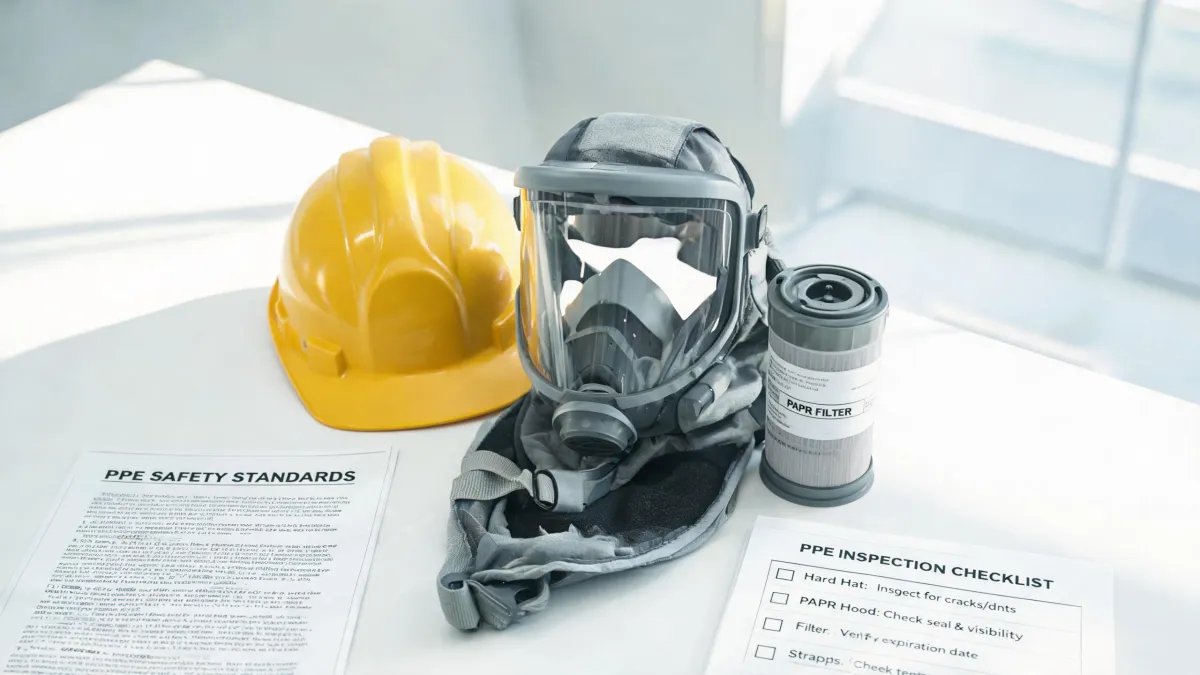
Bullard makes NIOSH‑approved powered air‑purifying respirators (PAPRs) for hazardous environments. I once saw a supervisor suggest using a simple N95 mask instead of a PAPR for asbestos abatement — because PAPRs are expensive ($800+). That's not just non‑compliant; it's dangerous. NIOSH approval means the system meets minimum filtration and airflow standards. Bullard's PAPR systems are certified under 42 CFR Part 84. If you're tempted by a cheaper unapproved alternative, think about the liability and medical cost. I've done the math: one lawsuit from a respiratory illness exceeds the cost of equipping an entire crew with Bullard PAPRs for a decade. Simple.
8. What's the most common mistake I see with Bullard gear?
Replacing parts incorrectly. Especially the suspension and sweatband.
Bullard hard hats have replaceable suspensions. I've seen workers swap out the suspension with an aftermarket part that doesn't fit properly — it shifts, reduces impact protection, and may void the ANSI rating. Another common mistake: not replacing the suspension after 5 years (ANSI recommends replacing the entire hard hat after 5 years from date of manufacture, or earlier if damaged). I've personally caught 47 potential errors using my pre‑distribution checklist in the past 18 months. Most were minor, but three would have caused serious safety gaps.
Bottom line: trust Bullard parts, follow the manual, and keep your inspection routine. That's how you avoid the kind of mistake that costs real money — or worse.
— Written by a safety equipment buyer who once sent back 200 hard hats.