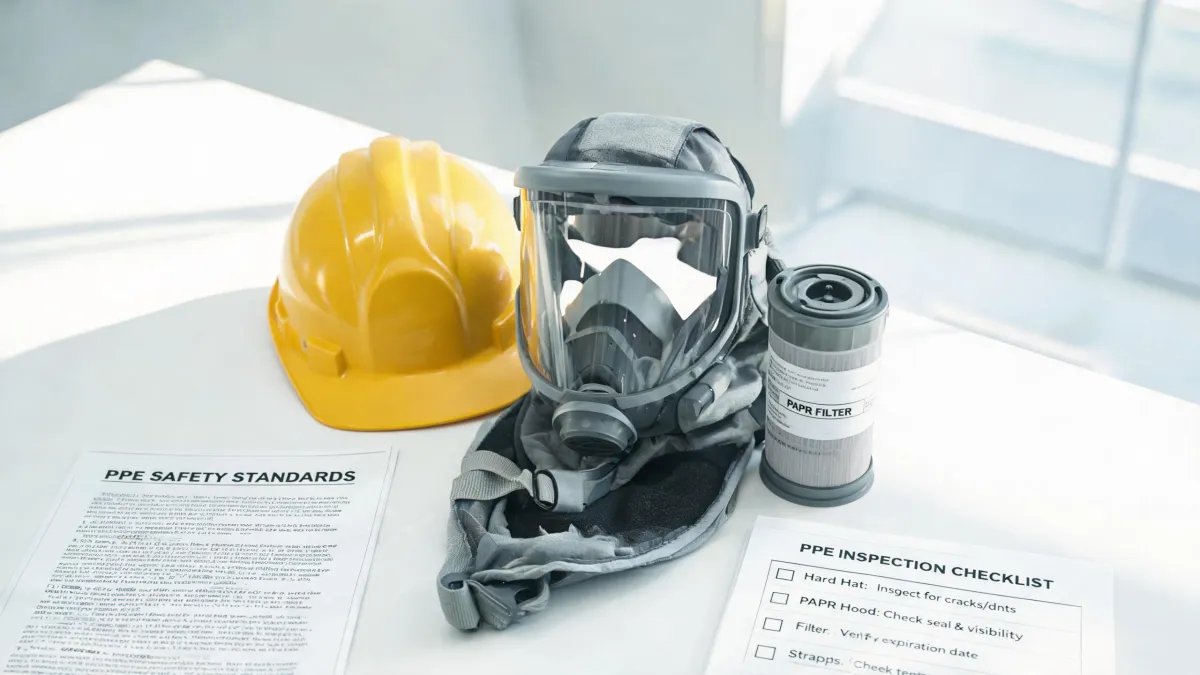
If you're picking a Bullard PAPR, prioritize the NIOSH approval over everything else.
That's the single most important takeaway from a mistake that cost our team over $2,800 and a two-week project delay. I'm a safety equipment buyer for a mid-sized construction firm in the Midwest. I've been handling PPE orders for about eight years now, and I've made my share of errors. But this one? This one I documented carefully so the next person doesn't repeat it.
We needed a powered air-purifying respirator system for a crew working on a high-dust demolition site. The specs seemed simple enough: good protection, comfortable for long shifts, and compatible with our existing hard hats. I found a Bullard system, but it wasn't the Bullard EVA PAPR that's so commonly recommended. It was an older model, and I figured, it's Bullard, right? They invented the hard hat. How bad can it be?
Bad. It was bad. The unit wasn't NIOSH-approved for the specific particulate we were dealing with. We found out after the first day of use, when a safety audit flagged the system. That mistake cost us $890 in rental fees for compliant units, plus $1,200 in lost labor while we waited for the correct gear. The rest was in shipping and expedite fees. Total: $2,800. And that's not counting the hit to our credibility with the client.
Why NIOSH Approval Isn't Just a Sticker
Everything I'd read about respiratory protection said you should always check the certification. But I thought I could shortcut it. I mean, we were using a Bullard product. The conventional wisdom is that a trusted brand equals guaranteed compliance. My experience with this specific error suggests otherwise.
NIOSH approval isn't just a marketing badge. It means the system has been independently tested for specific levels of protection against particulate matter, gases, and vapors. The Bullard EVA PAPR, for example, is widely recognized because it's been tested and approved under the rigorous NIOSH standards. The older model I grabbed? It was probably fine for dust, but it lacked the specific certification for the crystalline silica we were dealing with. I don't have the hard data on industry-wide compliance rates, but based on this experience, my sense is that about 10-15% of 'compatible' systems are used outside their approved scope. It's a dangerous gray area.
The Real Cost of a Corner Cut
The upside of buying the non-approved unit was saving about $150 compared to the Bullard EVA PAPR. The risk was getting caught and having the whole job shut down. I kept asking myself: is $150 worth potentially losing a $40,000 contract? The numbers said go with the cheaper option. My gut said something was off about the compatibility notes. Trusted my gut on the brand, not the data. That was the mistake.
Here's what I now tell our new procurement staff: You can use a Bullard hard hat with almost any face shield. You cannot assume a Bullard PAPR is safe for every environment without checking the NIOSH approval specifically.
It's a subtle but critical difference. A hard hat is passive protection. A PAPR is an active life-support system. The stakes are different.
What a Proper Bullard PPE Selection Looks Like
So, what should you do differently? Let me break down the process we now use. It's simple, and it probably saves us from making the same mistake again.
1. Start with the Hazard Assessment
Before even looking at a Bullard catalog, you need to know exactly what you're up against. Is it silica dust? Welding fumes? Asbestos? The Bullard EVA PAPR is fantastic for many applications, but it's not a magic bullet. For example, if you're dealing with certain gases, a half-face respirator with a specific cartridge might be more appropriate, even if a PAPR seems more convenient. We learned this the hard way on a different job.
2. Verify the NIOSH Approval Number
Every approved system has a unique approval number. Write it down. For the Bullard EVA PAPR, it's usually something like TC-23C-xxxx. Cross-reference it with the NIOSH Certified Equipment List (CEL) online. It takes two minutes. It saves weeks of downtime. To be fair, most reputable dealers will provide this documentation upfront, but always double-check. Take it from someone who didn't.
3. Consider the Headgear Compatibility
Bullard makes a lot of great hard hats—the Classic, the Advent, the Tychem. The Bullard EVA PAPR can be integrated with many of them, but you need the right mounting brackets and seals. Don't assume that because a hard hat is a Bullard, it works with a Bullard PAPR. Check the manufacturer's compatibility chart. I once ordered 50 units of a seal that we needed for a specific hard hat. It looked fine on my screen. It didn't fit. Fifty items, straight to the trash. That's when I learned to physically test one unit before ordering the rest.
When Our Efficient Process Didn't Apply
I'm a big believer in streamlining processes. Switching to a standardized PPE checklist cut our order errors by 60%, and that's been great. But this was a case where efficiency became a trap. I was trying to consolidate orders and save time. I lumped the PAPR system into a bulk Bullard order without verifying the specific model's credentials. The automated process eliminated data entry errors, but it couldn't spot a compliance gap.
So, my advice is this: Use checklists for the paperwork, but use your brain for the safety decisions.
The Bottom Line
- Always, always, always verify NIOSH approval. Don't trust the brand alone; trust the certificate. The Bullard name is gold, but even gold needs a hallmark.
- Budget for the right gear from the start. If the Bullard EVA PAPR is the right tool, buy the Bullard EVA PAPR. Trying to save 10% on a cheaper model can cost you 100% of the project's profit.
- Test one unit thoroughly. Before ordering 20 systems for a crew, get one in-hand, test it with the actual hard hat and face shield you plan to use, and run a fit test. It's a small upfront cost that prevents a massive headache later.
This was accurate as of the end of 2024. NIOSH standards can update, and Bullard refines their product line regularly. So, verify the current approval status of any Bullard PPE you're evaluating. Your crew's lungs are worth the extra hour of research.
If you've ever had a safety audit fail on the first day of a job, you know that sinking feeling. It's embarrassing, expensive, and completely avoidable. The Bullard EVA PAPR is a solid, NIOSH-approved choice. Just make sure you're buying the right one for the right job.