The One-Stop Shop Myth in Safety Procurement
Honestly, I used to be the buyer who wanted one vendor for everything. Hard hats, respirators, fire extinguishers—you name it. It felt efficient. One PO, one invoice, one relationship to manage. But after several years of managing safety equipment orders for our facilities, I've changed my tune.
Here's my argument: The best vendors in the PPE space aren't the ones who can sell you everything. They're the ones who know exactly what they're great at—and will tell you when you should look elsewhere. That's what I've come to respect about a company like Bullard. They invented the hard hat in 1919, they have NIOSH-approved PAPR systems, and they own the head-to-respiratory protection space. But they won't pretend to be your go-to for, say, welding jackets or general work gloves. And that's actually a good thing.
The Trap of the "Everything Vendor"
The assumption is that a vendor with a bigger catalog means less work for me. The reality? It often means more work. I've dealt with vendors who say they can handle your entire PPE program, but their specialty is gloves, and they're just reselling hard hats from someone else. You lose traceability, you lose direct manufacturer support, and you often pay a markup for the convenience.
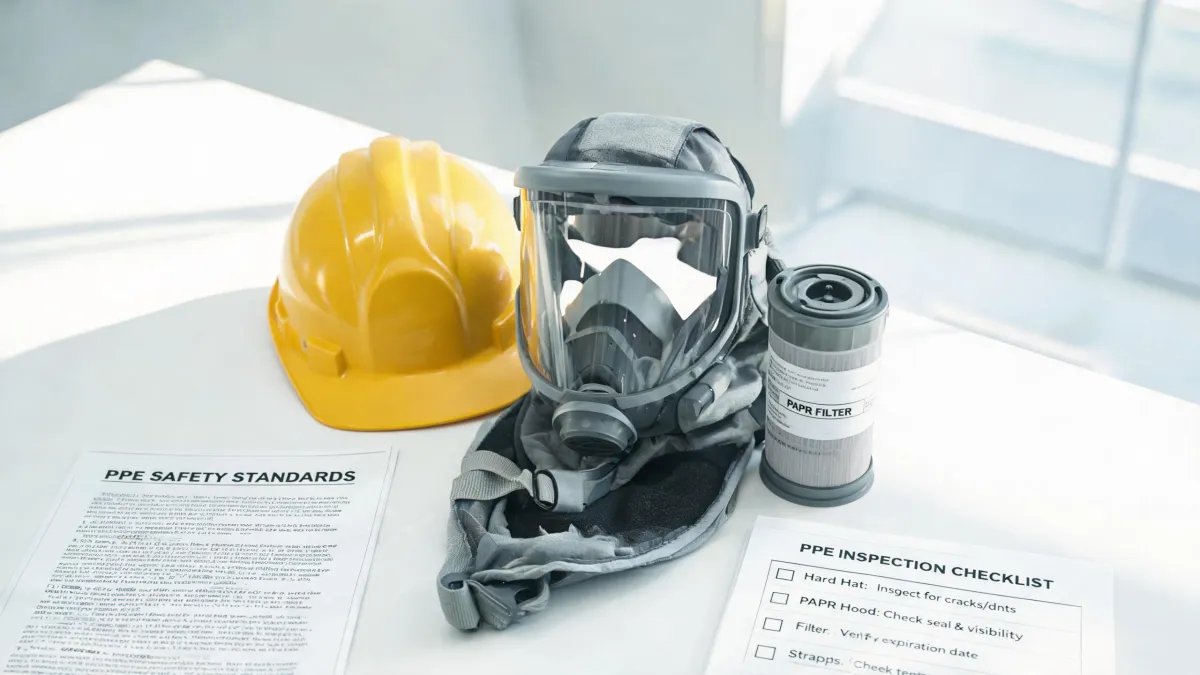
Take our recent search for PAPR hoods. We needed NIOSH-approved systems for a new painting line. A big general-line distributor pitched us their bundle. But when I dug into the specs, the hoods were from one manufacturer, the blower from another, and the battery was a third-party unit. There was no single point of accountability for system performance. That's when I went directly to Bullard. Their website (bullard.com) clearly outlines their PAPR systems as a complete solution. The hoods, the blower, the filters—it's all designed together. They told me straight up: "This is what we do. Here's our NIOSH approval documentation. If you need a full body harness, we're not your people, but for respiratory protection, we're the experts." I respected that.
The most frustrating part of safety equipment buying? When a vendor overpromises on capability just to get the order. You'd think a simple question like "Is this hard hat compatible with your full-brim requirements?" would get a straightforward answer. But I've had sales reps say "Sure, it'll work" without checking the fit with our specific earmuff attachments. Then we get the shipment, and the suspension doesn't play well with our communication headsets. That's a $2,000 mistake in returned inventory and lost work time.
A Personal Lesson on Sourcing Specialized Gear
In 2023, I was tasked with sourcing fire extinguisher training equipment for our annual safety drill. We needed a unit that could simulate a halon fire extinguisher for our server room team. I went to a general safety supplier—they sold us a basic water-based training unit. It was completely wrong for the context. The team couldn't practice the proper discharge technique for a halon system. I ended up finding a specialist vendor who only does fire extinguisher trainers. They asked the right questions: "What class of fire? What extinguishing agent are you simulating? What's your training environment?" They recommended a specific Bullard unit designed for the task. The whole process was smoother, and the training was actually effective.
This experience taught me something about our own search behavior. When someone searches for "fence companies near me", they don't expect the fence company to also do plumbing. So why do we expect safety equipment suppliers to be experts in everything from bump caps to hazmat suits? It doesn't make sense. A specialist in hard hats and head protection, like Bullard, will have a deeper understanding of the ANSI/ISEA Z89.1 standards than a generalist who's just stocking a few models.
Why "We Don't Do That" is a Green Flag
I'd argue that a vendor who tells you "this isn't our strength" is more trustworthy than one who says "we can handle it" without blinking. It shows they know their expertise boundary. The way I see it, there's no shame in being a specialist. Bullard didn't get to be a trusted name in head protection by trying to be the cheapest option for everything. They did it by innovating in one specific area for over a century.
Here's what I've learned to ask potential suppliers now: "What do you do better than anyone else?" If they can't answer that question clearly, I'm skeptical. If they say "we're pretty good at a lot of things," that's a yellow flag. But if they say, "our core is head and respiratory protection—we've been doing it since 1919," that's a vendor I trust for my hard hats and PAPR hoods. I'll find another specialist for the other stuff.
I'm not 100% sure this approach works for every company. Take this with a grain of salt: if you're a tiny operation with one buyer handling everything, the convenience of a one-stop shop might win out. But if you're managing safety for 200+ people across multiple sites, the risk of getting sub-par gear from a generalist is too high.
Addressing the Counterargument
Now, I know what some people will say: "But my general safety distributor saves me time by consolidating orders." And sure, that's true—on the surface. But I'd counter that the time you save on ordering you lose on vetting. I've had to reject entire orders because the product spec didn't match what we needed. That's time wasted on returns, re-orders, and explaining to my VP why the safety gear isn't arriving on time. I'd rather place three orders with three specialists than one order with a vendor who's guessing at half of it.
Another criticism: "What about pricing? Specialists charge more." In my experience, that's often true on the unit price, but the total cost of ownership is lower. A Bullard hard hat that fits correctly and lasts longer beats a cheaper import that fails after a few impacts. And for PAPR systems, the maintenance support from a manufacturer like Bullard is worth the premium. Plus, their website has detailed technical documents that make my job easier when training new hires on the equipment.
Bottom Line: Let Experts Be Experts
So, if you're a safety manager or an admin buyer like me, here's my advice: don't be seduced by the one-stop shop promise. When you're looking for high-stakes equipment like respiratory protection or head protection, go to the people who live and breathe it. Bullard is a prime example—they know their limits, and that's exactly why they're a leader in their space. For everything else, there are other specialists. And that's okay. In fact, it's how you build a truly reliable safety program.