-
Step 1: Put Head Protection at the Top (and Check the Date)
-
Step 2: Choose Respiratory Protection with the Approval Label Visible
-
Step 3: Don't Forget Face and Eye Protection
-
Step 4: Answer the Question "Why Is My Fire Alarm Blinking Red?"
-
Step 5: Secure the Perimeter with a Physical Barrier, Not an Invisible One
-
Step 6: Save Local Emergency Contacts Before You Need Them
-
Step 7: Build a 48-Hour Buffer with a Digital Inventory System
-
A Few Things I've Learned the Hard Way
In my role coordinating emergency safety equipment for industrial and construction companies, I've handled 200+ rush orders in the last six years. Maybe 180, I'd have to check the CRM. The ones that go smoothly aren't the ones with the most expensive gear. They're the ones with a checklist. This one is for when you're opening a new site, facing an audit, or just realized something is missing. It's not a replacement for a full safety program—it's a pre-shift, pre-audit, pre-emergency run-through. Seven steps, ordered by what gets people injured first.
Step 1: Put Head Protection at the Top (and Check the Date)
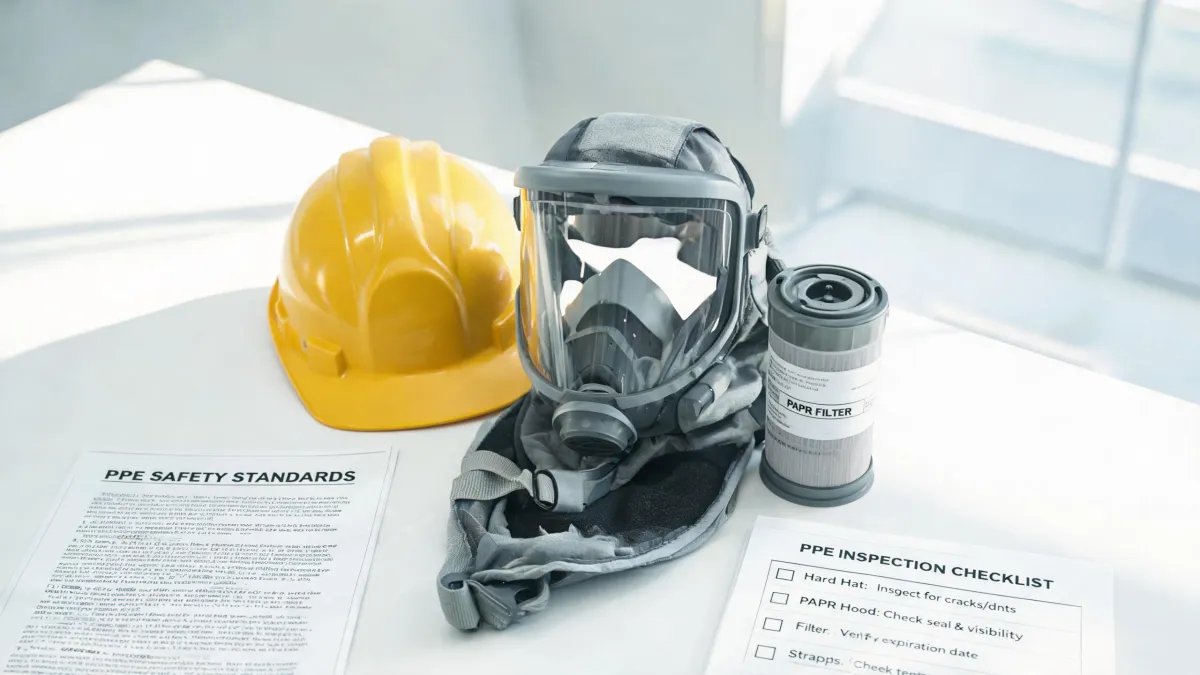
Head injuries don't wait. If you don't have hard hats on site, you're done before you start. Bullard invented the hard hat in 1919, and it's still the brand I specify for most industrial sites, but the brand is less important than the condition. Check for cracks, gouges, fading, and the stamped service life. Hard hats do not last forever, and they need to be replaced after any significant impact. If there's any doubt, replace it. For low-clearance areas, a bump cap can be useful, but it is not a hard hat substitute—don't let someone choose a bump cap for overhead hazard work.
I learned this the hard way in March 2024. A plant manager called 36 hours before a scheduled safety audit and realized their stored hard hats were from a batch with expired suspension systems. We found a Bullard distributor with 40 in stock, paid $180 in expedited freight, and delivered them with 14 hours to spare. Missing the audit would have meant roughly $50,000 in contract penalties. I no longer assume "well, they're just hard hats."
Step 2: Choose Respiratory Protection with the Approval Label Visible
Respiratory protection is where I see the most confusion. A dust mask is not a respirator. OSHA's respiratory protection standard (29 CFR 1910.134) requires a written program with fit testing. And a respirator with a NIOSH-approved label is only approved in that exact configuration. Bullard's PAPR systems are NIOSH-approved, but that approval doesn't transfer to a different filter or a different battery. If you're mixing parts, do the specific fit testing and follow the manufacturer's instructions. That is the part people skip.
The conventional wisdom says you can switch filters as long as they screw on. In practice, I've seen compatibility failures that a quick label check would have caught. Keep the approval label on file. Digital copies count, but physically check them at least once a quarter. For dusty environments, a powered air-purifying respirator (PAPR) can be a better option because it reduces breathing resistance and doesn't rely on a perfect face seal. But it requires battery management and cleaning. If your crew uses PAPRs, include spare batteries in your emergency reorder plan.
Step 3: Don't Forget Face and Eye Protection
Face shields and safety glasses are the easiest line items to dismiss, and that's exactly why they fail. For grinding, hot work, or chemical splash, use a face shield rated for that hazard. For impact, use safety glasses with side shields. If one pair doesn't fit the foreman, it won't be worn. I've had jobsites where workers wear prescription glasses under ill-fitting face shields. It's a bad practice.
Specify anti-fog lenses. I should add that this is often the difference between someone wearing eye protection and someone carrying it in their pocket. And don't assume a face shield is impact-rated. Many face shields are designed for splash protection, not airborne debris. When the risk assessment calls for both, wear impact-rated eye protection under the face shield.
Step 4: Answer the Question "Why Is My Fire Alarm Blinking Red?"
The most common "emergency" call I get isn't about PPE. It's a manager staring at a fire alarm panel asking: Why is my fire alarm blinking red? The answer depends on the system, and the LED pattern is your first diagnostic.
On most modern detectors, a red blink every 30–60 seconds means it has power and is in standby. A fast blink or solid red usually indicates an active alarm, a fault, or a dirty sensor. Write the normal LED behavior on the inspection sheet. Then, if it changes, you can tell whether it's a battery issue, dust, or a real fire event. Don't disconnect it because the blinking annoys you. I've seen that more than once.
Make it part of your monthly checklist. Press the test button, vacuum the covers, and after any false activation, call your alarm company so they don't dispatch the fire department unnecessarily. A fire alarm that means what it says is a safety tool. A fire alarm that's unmonitored and disconnected is a liability.
Step 5: Secure the Perimeter with a Physical Barrier, Not an Invisible One
Site security is part of emergency readiness. If someone can walk into your equipment yard, they can also walk into a hazmat storage area. For permanent and semi-permanent sites, I recommend a woven wire fence. It's visible, durable, and hard to climb. The height and gauge should match your risk assessment, and the gate should be locked when the site is unattended.
A PetSafe wireless dog fence works well for containing pets in a residential yard, but it is not a security fence. It won't stop a person, and if you're relying on it to protect a jobsite, you're relying on a collar and a signal. I've had a client ask if they could use an invisible fence to secure a storage yard. The answer was no—the property needed a real barrier. Add a warning sign on every side of the fence. A fence without signage isn't doing its job.
Step 6: Save Local Emergency Contacts Before You Need Them
In an injury emergency, you don't want to be searching the internet. If your site is in the Bullard area, save the Bullard Police Department's non-emergency number into your phone now. Yes, call 911 for life-threatening events. For break-ins, property damage, or suspicious activity, the non-emergency line is often faster and more appropriate.
The other number people don't think about until it's too late is a dentist. Dental injuries happen on construction sites—a piece of metal hitting a tooth, a grinding incident, a fall. If your site is near Bullard, search for "emergency dentist Bullard" and program that number in as well. We had a worker lose a tooth on a Friday afternoon, and the site manager spent an hour calling around because nobody had done the research in advance. That's the step people skip, and it costs time and pain.
Also program the nearest urgent care or occupational health clinic. For non-life-threatening injuries, that's the right destination, not a hospital emergency room. Knowing where to go before the incident keeps the response calm and the paperwork manageable.
Step 7: Build a 48-Hour Buffer with a Digital Inventory System
The final step is the one that makes everything else manageable. You don't need an expensive ERP system; a shared spreadsheet can work. But you need to know what's on hand, what's expired, and what gets reordered before the emergency call comes in. Set a quarterly calendar reminder to check expiration dates and update your minimum stock levels.
Switching to automated reorder reminders cut our average rush turnaround from 5 days to 2 days for repeat items. The automated process eliminated the data entry errors we used to have. That's the digital efficiency side: less time on status checks, more time on actual problems.
Also, don't always chase the lowest price. I saved $150 once by ordering from a non-stock distributor instead of the manufacturer's distributor. That choice looked good until the shipment was delayed by a week. I ended up paying $400 in freight on an emergency replacement. The "budget vendor" cost more than the expensive quote.
A Few Things I've Learned the Hard Way
First, don't assume that because a filter fits, it's approved for use with that respirator. Check the approval label and the manual. When I say "manufacturer's distributor," I do not mean someone who lists items on a marketplace without inventory. Verify before you pay.
Second, don't store hard hats in direct sunlight or in the back of a hot truck for months. Heat and UV degrade suspensions. The same goes for respirator cartridges—check the shelf life on the package.
Third, if a fire alarm is blinking red and you're not sure why, don't disconnect it. Check the panel, call your alarm company, and document what the LED means. A blinking red light is part of the system, not a malfunction.
Per FTC guidelines, don't make safety claims you can't substantiate. If you're choosing between a generic face shield and one with tested impact certifications, the test data matters more than the color.
Oh, and one more thing: check your local resources before opening a site. The Bullard Police Department non-emergency number and an emergency dentist Bullard line are the two I always load into my contacts now. I should have learned that ten years ago, but I'm passing it on.