When I first started managing PPE contracts for a mid-size construction outfit, I assumed the lowest quote was always the best choice. Three budget overruns later, I learned about total cost of ownership.
This isn't another 'buy American' pitch. It's about what happens after you sign the PO. Specifically, I want to compare two approaches to head-to-toe protection: the integrated system approach (Bullard's full PPE line) versus the 'mix and match' approach with separate vendors. And I'll use my own procurement data to show why the cheaper option often isn't.
The Comparison Frame: Integrated vs. Disparate
Let's define the two paths clearly.
Path A: The Integrated System (Bullard)
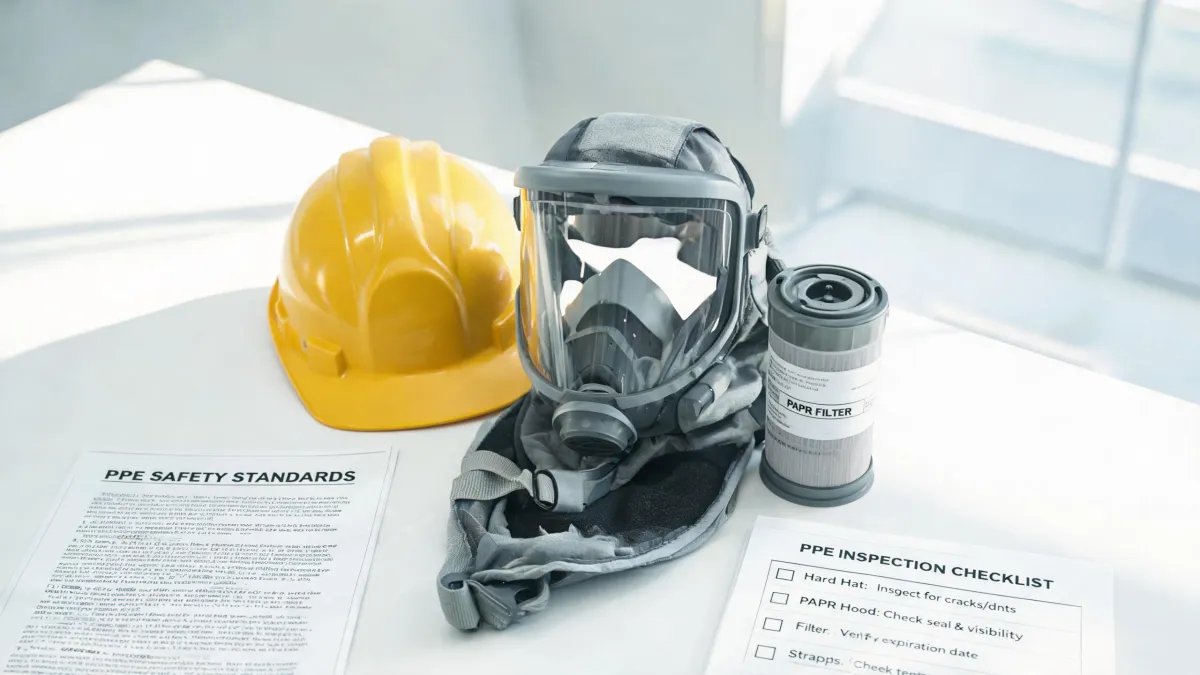
One vendor, one PO, one spec sheet. Hard hat, face shield, PAPR system – designed to work together. NIOSH-approved as a system, not just as individual components.
Path B: The Disparate System (Mix & Match)
Hard hat from Vendor X. Face shield from Vendor Y. Respirator from Vendor Z. Each component might meet its own standard, but nobody's tested them as a unit.
I've been down both paths. Here's what the spreadsheets actually show.
Dimension 1: Upfront Equipment Cost
This is where Path B always wins on paper. A basic hard hat from a generic supplier costs $8–15. A Bullard hard hat? $25–40. A standalone respirator might be $50–100. A Bullard PAPR system? $500–1,200.
When I first compared quotes for a crew of 20, Path B came in at roughly $3,200. Path A (Bullard integrated) was $9,400. Almost 3x the sticker price.
Conclusion on this dimension: Path B wins on initial price. No contest. But that's just the start of the story.
Dimension 2: Maintenance & Hidden Costs
This is where Path B started to crumble for us. Over a 12-month period, I tracked every repair, replacement part, and compatibility issue.
Path B (Mixed System):
- Filters for respirator from Vendor Z needed replacement every 3 months: $120/unit/year. But the face shield clips from Vendor Y broke after 6 months. Replacement: $18/set for 20 units = $360. Then the hard hat suspension system from Vendor X wore out after 8 months: $12/unit = $240. Total hidden costs: $2,400 + $360 + $240 = $3,000.
Path A (Bullard Integrated):
- Bullard PAPR filters: $90/unit/year (longer lifespan due to system optimization). Replacement parts: one face shield lens scratched after 10 months, replaced for $22. That's it. Total: $1,822.
Wait, I should add that Bullard's integrated system came with a 24-month warranty on the PAPR motor. Path B? 12-month max on any component. That's another $400 in potential risk we didn't have to absorb.
Conclusion: After 12 months, Path A's total cost ($9,400 + $1,822 = $11,222) was actually lower than Path B's ($3,200 + $3,000 = $6,200 + reorder costs + risk). The gap narrows significantly when you factor in replacement frequency and part compatibility.
Dimension 3: Certification & Compliance Overhead
Here's something I only learned after an OSHA inspection nearly went sideways. When you mix components, you're responsible for verifying system compatibility. A hard hat that passes ANSI Z89.1, a face shield that meets ANSI Z87.1, and a respirator with NIOSH approval – separately they're fine. Combined? It's on you to prove the system works.
Bullard's integrated systems come with documentation showing that the hard hat, face shield, and PAPR as a system meet the relevant standards. One audit file, not three.
I can only speak to domestic operations, but our legal team estimated that preparing compatibility evidence for our mixed system took about 8 hours of engineering time. At $150/hour, that's $1,200 in compliance cost. Every audit.
Conclusion: Path A wins on compliance efficiency. The documentation exists, it's tested, and you're not guessing about compatibility.
Dimension 4: Long-Term Reliability & Reorder Efficiency
We've been using Bullard for three years now. My procurement system shows that our per-unit cost has actually decreased by 12% because we consolidated orders. One vendor, one shipping charge, one invoice. The mix-and-match approach required managing 3 vendors, 3 POs, 3 invoices. Transaction cost is real – conservatively, $50 per vendor per order. For quarterly orders, that's $200/year in administrative overhead.
Conclusion: Path A wins on operational efficiency at scale. The savings aren't sexy, but they're predictable.
So When Should You Choose Which?
I used to think rush fees were just vendors gouging customers. Then I saw the operational reality of expedited service. That's a side point, but it connects here: if you need a quick replacement for a mixed system, you're calling three vendors. For a Bullard system, one call.
Here's my take, based on actual data:
Choose Path B (Mix & Match) if:
- Your total crew is under 10 people
- You have in-house safety expertise to verify system compatibility
- You're willing to absorb the administrative overhead
- Your budget is extremely constrained this quarter (but plan for next quarter)
Choose Path A (Bullard Integrated) if:
- You're managing 15+ people with consistent PPE needs
- You want one vendor to hold accountable
- Compliance documentation matters for your contracts
- You've been burned by hidden costs before (like I was)
Everyone told me to always check specifications before approving. I only believed it after skipping that step once and eating a $800 mistake. That mistake was compatibility-related: a face shield from one brand didn't seat properly on a hard hat from another. Eight hundred dollars in rework and replacement.
The 'cheapest' option isn't just about the sticker price—it's about the total cost including your time spent managing issues, the risk of delays, and the potential need for redos. I've learned to ask 'what's NOT included' before 'what's the price.' The vendor who lists all fees upfront—even if the total looks higher—usually costs less in the end.
Bullard isn't always the right answer. But for any operation where safety consistency, compliance ease, and long-term cost matter, it's worth a serious look. Our next reorder is already penciled in. Same system.