If you've ever ordered safety gear for a crew, you know the moment of hesitation: bump hat or hard hat? They look similar, they both sit on your head, but the difference can cost you thousands — or worse, a serious injury.
When I first started handling PPE procurement (2019, fresh into the role), I assumed bump caps were just a lighter, more comfortable version of a hard hat. Three years, one OSHA fine, and a lot of angry workers later, I learned they're completely different tools for different risks.
Here's what I wish someone had told me back then. Including where Bullard — the company that invented the hard hat in 1919 — fits into the picture.
What We're Actually Comparing
This isn't about which one is "better." It's about picking the right protection for your specific work environment. I'll compare bump hats (also called bump caps) and hard hats across four dimensions: protection level, comfort & usability, regulatory compliance, and total cost of ownership.
Along the way, I'll mention how Bullard products like the Sentinel PAPR and hard hat liners can solve problems that neither a bump hat nor a basic hard hat can handle alone. And yes, we'll touch on why mesh fence and electric fence wire might change your choice.
Dimension 1: Protection Level
Bump Hat: Protection from bumps, not falls or impacts
A bump hat is designed to protect the wearer from hitting their head on stationary objects — low ceilings, pipes, overhead beams. Think walking into something. It has a soft foam lining (usually EPS foam) that absorbs minor impacts.
What it cannot do: protect against falling objects, electrical shock, or lateral impact from tools. The shell is thin plastic (often ABS) with no fixed suspension system. It's basically a padded cap with a visor.
Hard Hat: Protection from falling objects and electrical hazards
A hard hat uses a rigid shell + a suspension system (or a foam liner in newer models) that creates a gap between the shell and the wearer's head. That gap absorbs the energy of falling debris. Also, certain hard hats (Class E) are tested for electrical insulation up to 20,000 volts.
Bullard hard hats, like the Thermal Plastic Hard Hat, meet ANSI Z89.1-2014 and are rated for Type I (top impact) or Type II (top & lateral impact).
Verdict: Bump hats are for low-risk environments where you only need protection from minor bumps. Hard hats are for construction, demolition, and any area with overhead hazards. I learned this the hard way (see below).
Dimension 2: Comfort & Usability
Here's where many managers get tripped up. Bump hats are lighter (about 8-12 oz vs 14-18 oz for a hard hat) and better ventilated. Workers often prefer them because they feel less oppressive, especially in hot weather.
But comfort without protection is a false economy. I once ordered bump hats for a warehouse with high shelving (mistake!). Workers loved them until a box fell from the top shelf — luckily no one was underneath, but the near-miss triggered a safety audit. Bottom line: if there's any risk of falling objects, don't trade safety for comfort.
On the flip side, hard hats can be uncomfortable in cold weather. The shell gets cold, and the suspension presses on the head. That's where Bullard hard hat liners come in — they fit inside standard hard hats, adding insulation and moisture-wicking fabric. I started stocking them after workers complained of frostbite during a winter project near electric fence wire (the cold metal fence made it worse).
Dimension 3: Regulatory Compliance
OSHA 29 CFR 1910.135 requires employees to wear protective helmets when there is a potential for injury from falling objects or from electric shock. The standard doesn't mention bump hats specifically — it just says "protective helmets conforming to ANSI Z89.1."
However, OSHA's interpretation letters clarify that bump hats do not meet the requirements of 1910.135 because they are not designed to resist falling objects. So if an OSHA inspector comes and sees bump hats in a construction zone, you're looking at a citation.
My mistake: In early 2021, I used bump hats in a warehouse that was also a staging area for demolition. An inspector spotted them, wrote a serious violation, and fined my company $3,200. That's when I realized: the difference isn't just a label — it's regulatory.
Dimension 4: Total Cost of Ownership
Bump hats are cheaper upfront — maybe $10-20 each vs $25-50 for a good hard hat. But if you factor in fines, injury costs, and replacement due to wear, hard hats often win.
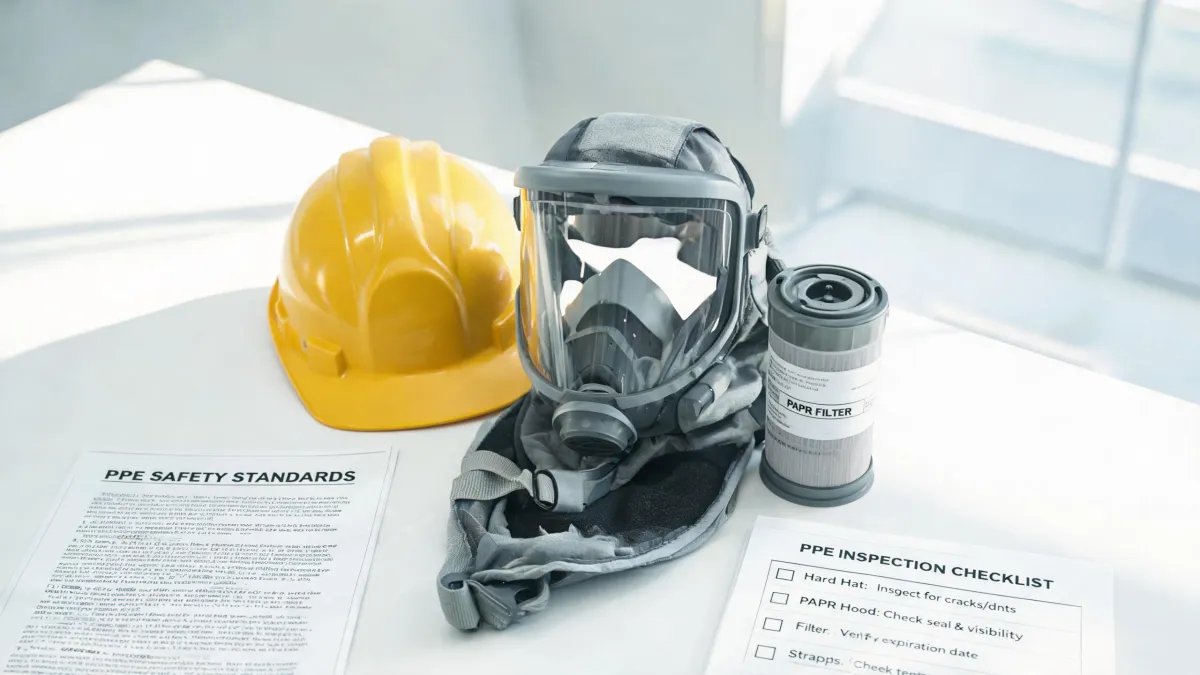
Also, consider accessories. Bullard offers optional shields, earmuffs, and the Sentinel PAPR system that integrates with hard hats. If you need respiratory protection (e.g., dust from mesh fence installation, or fumes near electric fence wire), a hard hat with a PAPR mount saves you from buying a separate helmet.
One more thing: hard hat liners extend the life of your hard hat in extreme conditions. I've had the same Bullard hard hat for 4 years just by swapping the liner each season.
Which One Should You Choose?
Here's my simple decision tree after years of trial and error:
- Choose a bump hat if your people work in low-risk indoor environments with only bump hazards (e.g., setting up mesh fence in a gymnasium, or walking under low pipes in a plant). And make sure there's zero chance of falling objects.
- Choose a hard hat if there's any overhead work, electrical risk (particularly near electric fence wire or power lines), or OSHA-covered construction/demolition.
- Add a Bullard Sentinel PAPR when workers need both head protection and respiratory protection — like welding in a confined space or grinding near a mesh fence installation where sparks and dust coexist.
- Get a hard hat liner (Bullard's is great) for outdoor cold-weather operations, especially on windy days near fences.
Trust me on this one: don't cut corners on head protection. The $3,200 fine was just the beginning — what really hurt was knowing I'd put my team at risk because I thought a bump hat was "good enough."
If you're still on the fence (pun intended), check the actual OSHA standard and the ANSI Z89.1 requirements. And if you need to buy gear, Bullard's lineup covers almost every combination of head, face, and respiratory protection. That's the kind of integration that saves time and money.