If you're in charge of ordering safety gear for a construction crew or an industrial facility, you know the drill: find something that meets compliance, doesn't break the bank, and actually gets used. But when it comes to Bullard—especially their hard hats, PAPR hoods, and ancillary items like hard hat lights—the choices can feel overwhelming. Here's the thing: I've been doing this for a few years now, and I've learned that a little structure saves a lot of headaches.
I'm an office administrator for a mid-sized construction company. I manage about 60-80 safety supply orders a year across three locations and report to both operations and finance. So when I say this checklist works, it's not theory—it's from experience. This is a 5-step guide that'll help you avoid the mistakes I made.
Step 1: Know Your Exposure—and Your Exclusions
Before you even touch a catalog, you need to know two things: what hazards your team faces and what your budget won't stretch to. I assumed 'one-size-fits-all' was fine for bump caps and face shields. Didn't verify. Turned out my guys needed different levels of impact protection depending on the site. A hard hat light? Great for night work, but not if it's not rated for the environment.
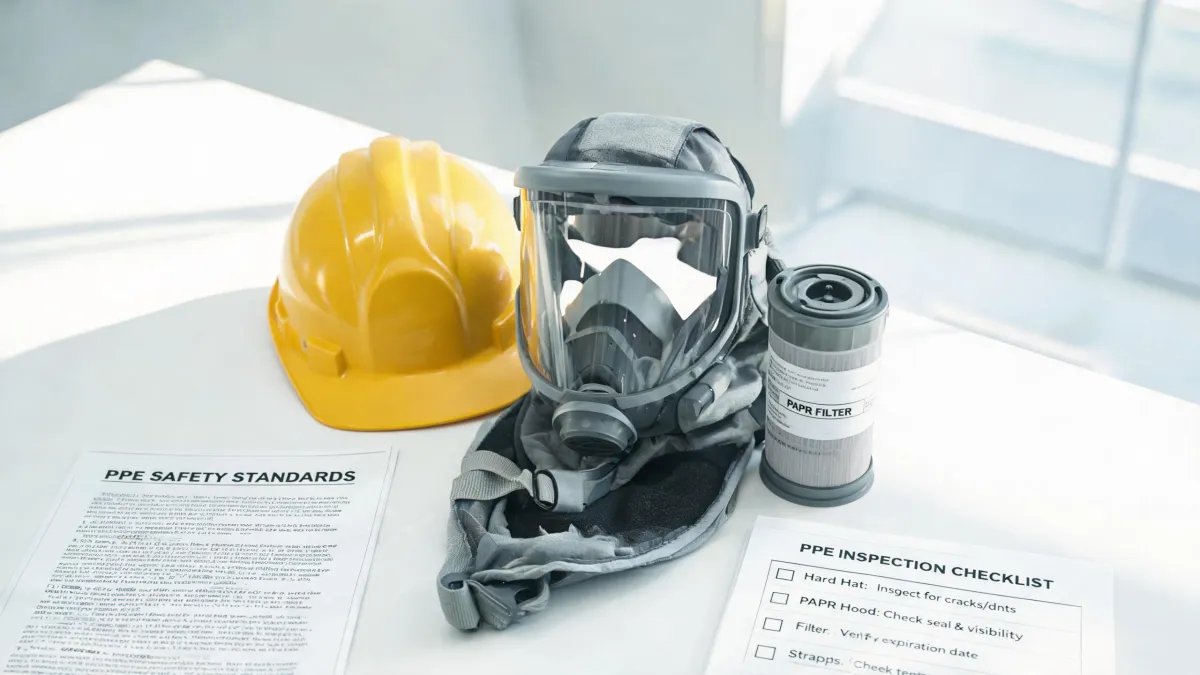
Check this: List the specific tasks your crew does. Are they near live wires? Do they work in confined spaces? Are they exposed to chemicals that require a Bullard PAPR hood with a specific filter? For instance, a standard hard hat won't cut it if they're doing electrical work—you'd need an electrical-rated one.
Pro tip from a mistake: I once bought a bunch of standard hard hats for a crew that needed electrical-rated ones. Cost me $500 in returns and 3 days of expedited shipping. Now I always ask the site safety manager to sign off on the spec sheet first.
Step 2: Verify the 'Bullard' Spec—Don't Assume
Here's where I learned my biggest lesson. A vendor showed me a 'Bullard' hard hat light that looked identical to the one from the official supplier. I ordered 50 units. They arrived and the mounting bracket didn't fit our standard Bullard hard hats. Turned out it was a knockoff. The vendor had said 'compatible,' but it wasn't certified.
I went back and forth between the cheap option and the genuine Bullard for two weeks. The cheap one offered 40% savings. But my gut said to stick with the real deal. I chose genuine Bullard because the risk of a light falling off at height wasn't worth it.
Action item: Check that any Bullard PAPR hood or hard hat light has a model number that matches Bullard's official specs. If the vendor can't provide a NIOSH approval number for the PAPR, walk away. I've learned to never assume 'compatible' means 'certified.'
Step 3: Cross-Reference the 'Pipe Fence' Factor
Now, you might be wondering what a pipe fence has to do with safety gear. Hear me out. In 2024, we had to set up temporary barriers around a confined space where we were testing a Bullard PAPR system. The site supervisor needed a pipe fence that was compliant with our fall protection rules. I assumed the fence was just a fence. But it had to be rated for the load, and the vendor I used didn't mention it. Turned out we had to replace the whole thing.
The lesson: When you're ordering a Bullard hard hat or a face shield, don't just think about the PPE. Think about the context. Does your site need a special mounting system for the hard hat light? Does the PAPR hood work with your existing respirator cartridges? The whole system needs to work together.
Checklist: - Does the Bullard PAPR hood come with a M/N/S connector, and does your tubing match? - Is the hard hat light mount rated for the environment? - Does the face shield attach to your existing hard hat system?
Step 4: Check the Inventory—and the Lead Time
Here's a mistake I made just last year. I ordered a Bullard PAPR system for a team of 10. The vendor said 'in stock.' A week later, they said 'backordered, two weeks.' I had to scramble. I ended up paying rush shipping for a different supplier.
The upside was saving $200. The risk was missing the deadline. I kept asking myself: 'Is $200 worth potentially losing the project?' It wasn't. Now I always ask for a written confirmation on stock and lead time.
Smart move: Build a relationship with a distributor that has an online inventory system. For high-demand items like Bullard hard hats and bump caps, I check stock weekly. And if you're ordering a hard hat light, always order a spare—they break.
Step 5: Document Everything—for Safety and Finance
This is the step most people skip. I used to just order and hope the paperwork was fine. Then a vendor couldn't provide proper invoicing. The expense was rejected. I ate $2,400 out of the department budget. Now I verify invoicing capability before placing any order.
But it's more than just finance. I also keep a record of the NIOSH approval numbers for every Bullard PAPR hood we buy. Why? Because when a compliance officer shows up, I can show them the paperwork in 2 minutes.
What to keep: - NIOSH approval certificate for each PAPR system - Model numbers and batch dates for hard hats and bump caps - User manuals for hard hat lights (they have specific battery and mounting instructions) - A spreadsheet with vendor details and order dates
Bonus: A Few Things You Might Overlook
Can a vape set off a fire alarm? Not directly related to Bullard, but I get asked this a lot. Yes, some vapes can trigger sensitive smoke detectors, especially in confined spaces. If you're using a Bullard PAPR in an indoor environment, be aware that it's not a clean air system for smoking. Stick to the specified filters.
Safety Bullard: Always verify that your 'safety Bullard' gear meets current standards. ANSI Z89.1 for hard hats, ANSI Z87.1 for eye protection, and NIOSH 42 CFR Part 84 for respirators. I've seen suppliers sell old stock that's still technically compliant but not as protective.
Pipe fence: I use it as a metaphor for the whole system. You wouldn't install a pipe fence without knowing the load rating. Don't buy a Bullard PAPR hood without knowing how it integrates with your existing hard hat and face shield. It's all connected.
One last thing: The vendor who said 'this isn't our strength—here's who does it better' earned my trust for everything else. If a supplier can't tell you the exact specs of a Bullard hard hat light, find one who can. Specialization matters.
That's it. Follow this checklist, and you'll save time, money, and a lot of frustration. And if you ever feel like you're making the same mistakes I did, don't worry—we've all been there. Just learn from mine.