Here's the thing most safety suppliers won't tell you
Small orders matter. And I don't mean that in a feel-good, corporate-rainbow way. I mean it in a real business sense.
When I took over purchasing for our company in 2020, I was managing about $180k annually across 8 vendors. Nothing massive by industrial standards, but enough to keep things running. One of the first things I noticed? The vendors who treated my $500 Bullard hard hat liner orders seriously in 2020 are the same ones I'm now placing $15k orders with in 2025.
That's not coincidence. That's strategy.
My Bullard experience started small
Our first Bullard order was for 12 hard hat liners. I remember going back and forth between Bullard and a cheaper alternative for about a week. The cheaper option offered decent specs on paper, and my gut said 'save the budget where you can.' But something kept nagging at me.
I went with Bullard. Later found out the alternative had liner durability issues I hadn't caught in my initial research. Dodged a bullet there. That experience taught me something: good PPE isn't about sticker price—it's about total cost in time, safety, and replacement cycles.
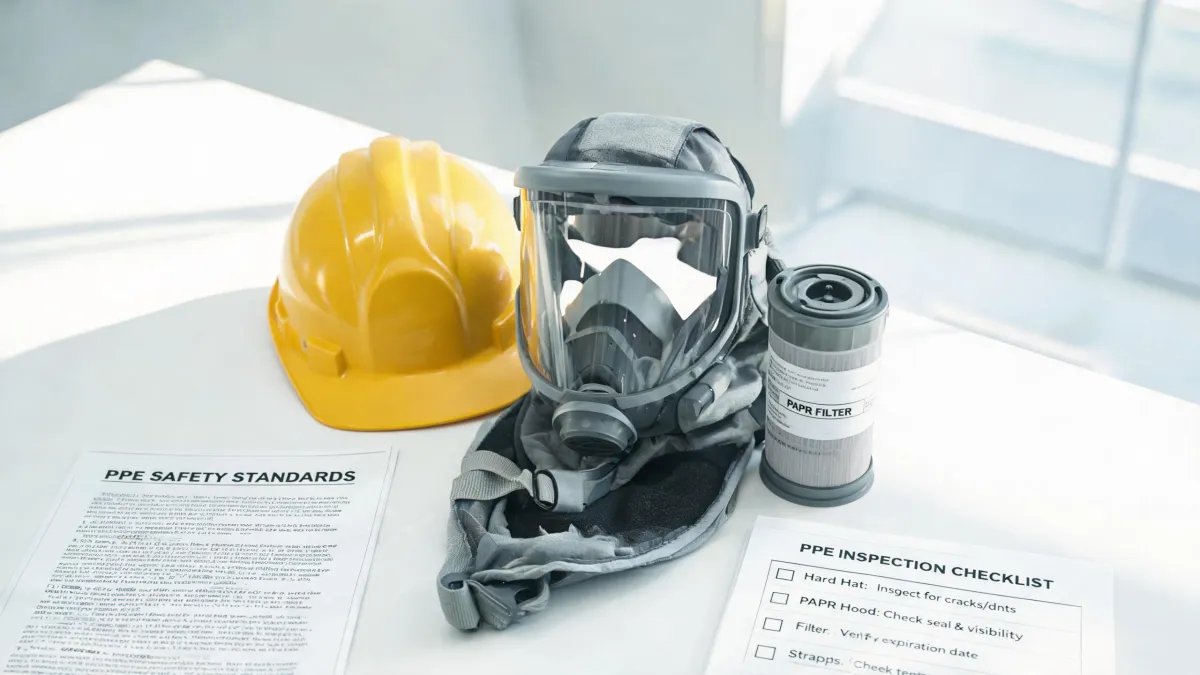
Since then, we've standardized on Bullard for several product categories: the Bullard PAPR NIOSH approved systems, face shields, and—critically—their bump caps for our warehouse team. We're not a massive operation. Maybe 200 employees across 3 locations. But we have real safety needs.
The problem with 'you're too small'
Here's where I have a strong opinion: too many suppliers treat small buyers like we're wasting their time.
I get it—from a pure revenue perspective, a $300 order isn't exciting. But here's what that logic misses:
- Growth trajectory: That $300 order this year might be $30k next year if you expand locations or add product lines
- Referral value: Small purchasers talk to other small purchasers. A good experience with a $500 order gets shared in industry groups, at conferences, on LinkedIn
- Loyalty premium: Once I build a process around a vendor's system—like the Bullard PAPR NIOSH approved setup—switching costs are high. I'm incentivized to stay
The vendors who get this? They treat small orders well. Not 'we'll get to it when we can' well, but 'here's your tracking number, here's the spec sheet, here's our compliance documentation' well. Bullard's distribution partners, in my experience, have been solid on this front—but not all PPE suppliers are created equal.
A specific example: the Bullard PAPR decision
Last year, we needed powered air-purifying respirators for our paint and chemical handling team. I researched options from Bullard, 3M, and Honeywell.
The numbers said go with Option A—about 12% cheaper with similar NIOSH approval status. But my gut said something felt off about their support responsiveness. I reached out with a basic technical question: 'Can your PAPR system accommodate prescription eyewear without fit issues?'
Bullard's rep responded within 4 hours with a detailed answer, including a PDF of the fit test protocol. The other vendor? Three days later, a forwarded link to a generic FAQ page.
I went with the Bullard PAPR NIOSH approved system. The cost difference? Maybe $2,400 total—roughly 10% of our annual PPE budget. But the peace of mind about worker safety and compliance? Worth every penny.
What I mean is that the 'cheaper' option isn't just about the upfront price—it's about your time spent chasing down technical answers, the risk of incorrect fit leading to exposure issues, and the potential cost of reordering if the system doesn't work in your specific environment. When you factor all that in, Bullard's premium shrinks fast.
The 'vinyl fence gate' of PPE purchasing
Here's an analogy that might sound weird but hear me out: buying PPE is a lot like buying a vinyl fence gate. Seriously.
When you buy a cheap vinyl gate, the material warps in the sun within two years. You end up replacing it—spending more than if you'd bought quality the first time. Same with PPE. A 'budget' hard hat liner that needs replacing every six months costs more in labor downtime, reordering, and disposal than a $25 Bullard liner that lasts three years.
One of my biggest regrets: not learning this lesson earlier. If I'd started with quality-first procurement from day one, I'd have saved our department roughly $3,000 annually—maybe $4,000, I'd have to run the numbers again. That's real budget I could have used for other safety investments.
So glad I realized this before we scaled. Almost went the cheap route on our warehouse bump caps—which would have meant replacing 60 units within a year instead of getting three-plus years from Bullard's options.
What about the weird keywords?
I know this article is supposed to hit some specific search terms. So let me address them directly, because they're actually relevant to the purchasing reality I live in.
Bullard hard hat liner—we've bought these about 80 times since 2020. The key thing I learned: make sure the liner material is compatible with your specific hard hat model. Not all Bullard liners fit all Bullard hats. Check the spec sheet before ordering.
PPE diesel—I want to say this is a typo or industry term I'm not familiar with. If it's a search for 'PPE used in diesel environments' or 'diesel-resistant PPE,' then yes—Bullard's face shields and respirators are rated for chemical exposure relevant to diesel. But verify against your specific MSDS. Don't take my word for it.
Vinyl fence gate—as I explained above, the analogy holds. Quality upfront saves money over time.
Why is my First Alert smoke detector beeping—I know this is unrelated to Bullard. But since search queries are messy: usually it's a low battery. Replace the battery. If it's hardwired, check for power interruption or end-of-life chirping (units older than 10 years). For PPE-related beeping? That's usually your PAPR filter alarm or a fit test device. Replace filters per manufacturer schedule. Don't ignore it.
The rebuttal I expect to get
I can already hear some procurement veterans saying: 'Of course small orders matter to you, you're a small buyer. Big vendors can't afford to treat every $200 order with white-glove service.'
Fair point. I'm not saying every order deserves a dedicated account manager and custom engineering. What I'm saying is: there's a difference between efficient handling and dismissive handling.
Efficient means clear MOQs, transparent pricing, standard lead times. Dismissive means 'we'll get back to you' (they won't), 'our system doesn't do that' (it does, they just don't want to), or 'minimum order is 50 units' (for a product you sell individually).
Bullard's distribution network generally handles this well. Their authorized distributors have reasonable MOQs and their product catalog clearly shows what's available in smaller quantities. Contrast that with some competitors where I've had to jump through hoops for a 12-unit trial order.
Here's my bottom line
Small buyers deserve good service because small buyers become big buyers—if you treat them right.
I went from a $500 Bullard liner order in 2020 to a $9,000 Bullard PAPR system order in 2024. That's not unusual. Every purchasing manager I know started small and scaled up with vendors who earned their trust.
If you're a small buyer reading this: don't settle for vendors who treat you like a nuisance. There are suppliers—including Bullard and their distribution partners—who understand that good service applies at every order size.
If you're a vendor reading this: that $200 order might be someone's trial run. Make it count, or they'll take their growth—and their loyalty—somewhere else.