-
I Learned the Hard Way: Price and Looks Aren't Everything
-
Mistake #1: Choosing Hard Hats Like You'd Pick a Fence
-
Mistake #2: Assuming N95 Is Enough (The PAPR vs N95 Trap)
-
Mistake #3: Forgetting That Equipment Needs Maintenance
-
But Isn't Verification Too Slow?
-
Final Thought: Prevention Is the Cheapest Insurance
I Learned the Hard Way: Price and Looks Aren't Everything
In my first year handling safety equipment orders (2017), I made the classic mistake: I focused on what I could see and ignored what I couldn't. I bought 50 hard hats based on how they looked — that clean white picket fence aesthetic — and completely missed the fact that they weren't rated for the high-heat environment our crew worked in. That error cost $890 in redo fees plus a 1-week delay. Since then, I've personally documented 12 significant mistakes totaling roughly $8,000 in wasted budget. Now I maintain our team's pre-purchase checklist, and I'm convinced that prevention beats cure every time.
Most buyers focus on per-unit pricing and brand familiarity and completely miss setup fees, revision costs, compatibility issues that can add 30–50% to the total. I'd argue that if you spend 5 minutes verifying specs upfront, you'll save days of correction down the line.
Mistake #1: Choosing Hard Hats Like You'd Pick a Fence
People think picking a hard hat is simple — grab a color that matches your company branding and go. That's the white picket fence mentality: it looks nice, but doesn't actually protect against what's on the other side. The question everyone asks is "what's the cheapest hard hat?" The question they should ask is "what hazards will it face?"
In my case, I ordered Bullard Classic Hard Hats because they're iconic and affordable. But the Classic model doesn't have a rain trough or accessory slots for face shields. For outdoor construction with frequent rain and welding nearby, we needed the Bullard Advent or another model with visor compatibility. I didn't check. The result? 50 hard hats, $890, straight to the trash. That's when I learned to verify the ANSI type and application.
Now I always tell my team: a hard hat isn't a decorative fence — it's a life-saving tool. (I should add that Bullard's Classic is still great for standard industrial use; my mistake was not matching the hat to the environment.)
Mistake #2: Assuming N95 Is Enough (The PAPR vs N95 Trap)
The second big error happened in September 2022. We had a job in a dusty chemical plant where airborne particles were present. Everyone said "N95 respirators are fine," so I ordered a bulk box. But within two hours, workers were complaining about heat buildup, breathing resistance, and seal fatigue. Productivity dropped. I quickly realized that for extended wear in hot environments, a PAPR (Powered Air-Purifying Respirator) is a game-changer.
The comparison PAPR vs N95 isn't even close — they serve different scenarios. N95s are great for short, low-risk exposures. But for continuous use, PAPRs like the Bullard PAPR NIOSH approved systems provide filtered airflow that reduces breathing effort and keeps workers cooler. The upfront cost is higher (about $600–$1,200 per unit vs $2–$5 for an N95), but the long-term cost in worker comfort, safety compliance, and fewer sick days more than pays for itself. At least, that's been my experience in facilities where exposure exceeds 4 hours per shift.
Looking back, I should have evaluated the task duration and ambient conditions before choosing. But given what I knew then — that N95s were cheaper and "certified" — my choice seemed reasonable. It wasn't.
Mistake #3: Forgetting That Equipment Needs Maintenance
A less obvious pitfall: assuming safety gear lasts forever. I once ordered Bullard PAPR units and forgot to establish a filter replacement schedule. We used them for months without changing the HEPA filters. The result? Reduced airflow, increased motor strain, and eventually a $1,200 repair bill because the blower burned out. That's like building a beautiful wrought iron fence and never painting it — rust eats through eventually.
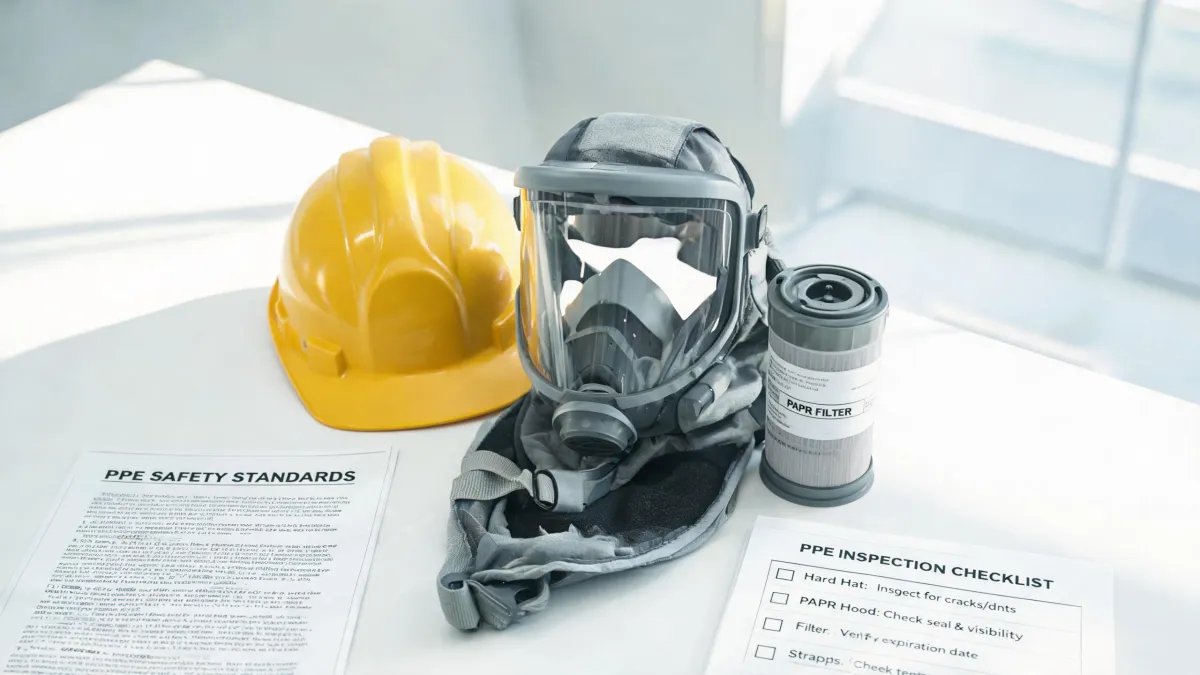
Now I insist on a maintenance log for every piece of PPE. For PAPR systems, filters should be replaced every 40–80 hours of use or when breathing resistance increases, per NIOSH guidelines. Hard hats should be replaced every 5 years from date of manufacture, or immediately after a heavy impact. It's a simple checklist, but it saved us an estimated $4,000 in potential equipment failures over 18 months.
But Isn't Verification Too Slow?
I get why people skip these steps — projects are tight, budgets are small, and everyone wants to order and be done. But in my opinion, skipping verification is like buying a fence without checking the property line: you'll spend more tearing it down and rebuilding. To be fair, sometimes you can get lucky with a quick order. But the odds aren't in your favor.
I created a 12-point checklist after my third mistake. It includes items like "Verify ANSI rating for the environment" and "Confirm PAPR model includes NIOSH approval." That checklist has caught 47 potential errors in the past 18 months. 5 minutes of verification beats 5 days of correction.
Final Thought: Prevention Is the Cheapest Insurance
Granted, this approach requires more upfront work. But it saves time later. If you're ordering Bullard Classic Hard Hats or Bullard PAPR NIOSH systems, or even choosing between N95 and PAPR, don't treat it like picking out a fence. Know the hazards, check the specs, and build a maintenance routine. My mistakes have cost me, but they don't have to cost you.