-
A False Choice: Which Side of the PPE Equation Gets Your Budget?
- Comparison Dimension 1: The Initial Purchase vs. The Inspection Regimen
- Comparison Dimension 2: The Product Spec Sheet vs. The Maintenance Log
- Comparison Dimension 3: The Compliance Certificate vs. The Training Record
-
So, What Should You Compare Next?
A False Choice: Which Side of the PPE Equation Gets Your Budget?
In my role coordinating PPE procurement for industrial clients over the last 6 years, I hear the same question every quarter: "Should we spend more on a better hard hat, or just get the cheapest approved one?" That's the standard comparison—price versus features.
After managing over 200 rush orders and watching a few costly incidents unfold, I'd argue that's the wrong comparison entirely. The more impactful choice isn't between your Bullard hard hat and a cheaper alternative. It's between the purchase itself and what happens next. This is a comparison of Selection vs. Stewardship.
Most of the budget goes to the initial buy. But most of the real cost—and safety risk—lives in the inspection, maintenance, and replacement phase. Let's put them side by side.
Comparison Dimension 1: The Initial Purchase vs. The Inspection Regimen
The Purchase: The Easy Sale
Picking a product like a Bullard hard hat or a pair of safety goggles is straightforward. You compare specs (ANSI Z89.1 or Z87.1), check for comfort features (a good bullard hard hat sweatband can make a huge difference for compliance), and negotiate the price per unit. It's a satisfying transaction. You hand over a PO, and a box shows up.
The risk here? The buyer focuses entirely on the certificate of conformance. I've seen it happen—a purchasing agent gets a great deal on a case of hard hats, and the storage room fills up. The job is done. Or so it seems.
The Inspection: The Hidden Workload
Now, look at the other side: the weekly or monthly inspection of that equipment. When I compared our clients' pre-job PPE inspection logs to their procurement records last year—specifically looking at how often a 'How to check fire extinguisher expiry date' or a 'hard hat shell condition' check was actually recorded—the gap was sobering.
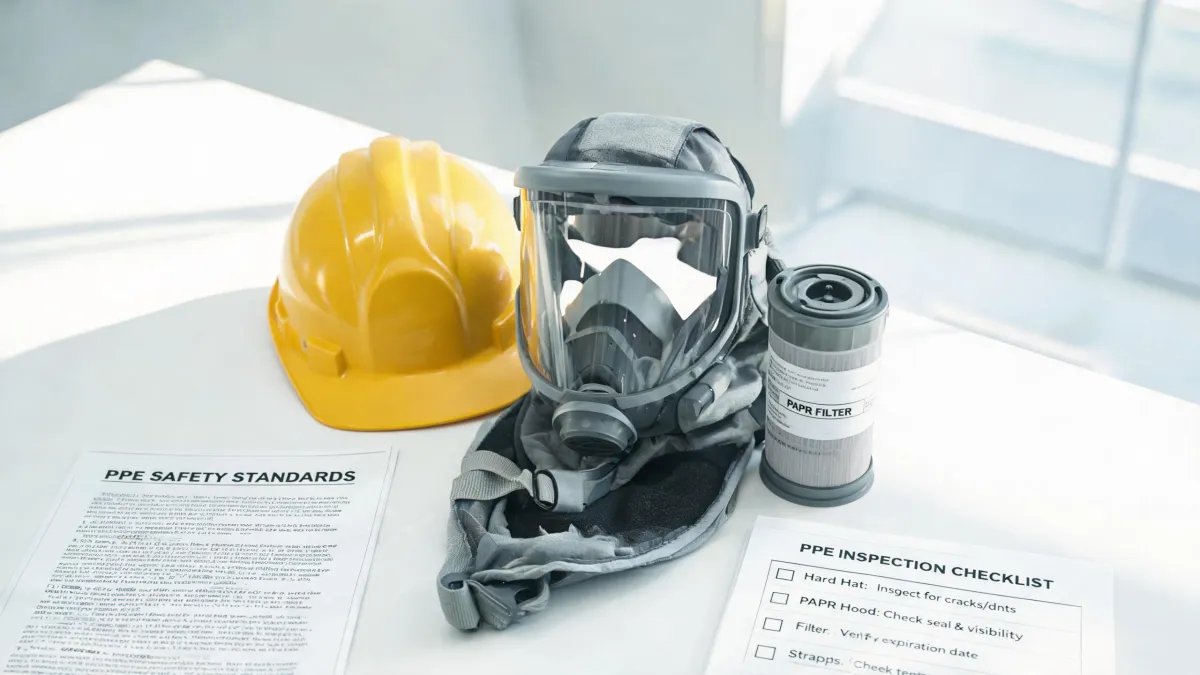
We had one client who invested heavily in a new Bullard PAPR system for a high-dust facility. The purchase was smooth. But after 9 months, three units were out of service because the pre-use checks (puff test, filter seal) were being skipped. The cost of those repairs ate into the supposed savings from the initial competitive bid.
To be fair, inspection isn't sexy. It takes time. But the consequences of skipping it are real. I get why a site manager might focus on the purchase—it feels productive. But in my opinion, that's where the real budget trap lies.
Comparison Dimension 2: The Product Spec Sheet vs. The Maintenance Log
The Spec Sheet: A Promise on Paper
When you spec out a PPE oil filter for a compressed air line respirator system, you're trusting the manufacturer's data. The filter has a stated lifespan, a NIOSH approval rating, and a maximum flow rate. That's the truth—on paper.
I only believed how fast that spec sheet could become irrelevant after ignoring a subtle warning in early 2024. We had a client call in a panic. Their safety goggles drawing showed a standard anti-fog coating, but in their high-humidity environment, the coating failed within two weeks on 30% of the units. The spec sheet said 'anti-fog.' The real-world experience said otherwise. The purchase didn't lie—but it didn't tell the whole story either.
The Maintenance Log: The Ground Truth
The maintenance log tells the story of what has actually failed, how often the how to check fire extinguisher expiry date form was unsigned, and how many hard harnesses were replaced due to UV damage rather than impact. That log is your actual cost.
In an average year, for one large construction site, we saw that 5% of hard hats needed replacement during the year due to physical damage (drops, scrapes, cracks). That's 5% more than the initial purchase budget accounted for. When I compared our internal data for sites that had a strict monthly log versus those that didn't, the unlogged sites experienced 40% more equipment failures. That's not a statistical anomaly—that's a stewardship gap.
Comparison Dimension 3: The Compliance Certificate vs. The Training Record
The Certificate: The Quick Win
It is easy to file a certificate of compliance. It proves the product was made to a standard. Many procurement teams stop there. "We bought the right stuff. We are compliant."
The Training Record: The Hard Work
The training record shows if anyone on the site actually knows how to use the equipment—or, more crucially, how to check it. A Bullard hard hat with a cracked suspension won't protect a worker who doesn't know what to look for. A fire extinguisher that expired 6 months ago is just a red decoration if no one has been trained on how to check fire extinguisher expiry date.
I once lost a contract in 2022 because we tried to save $200 a week on a standard inspection service instead of paying for a trained safety tech. The client's safety auditor found three expired extinguishers in the warehouse. The auditor didn't ask about the purchase. They asked for the training and inspection records. We didn't have them. The consequence was a $15,000 loss of contract. That $200 savings turned into a $15,000 problem when we couldn't prove competency.
That's when I implemented our 'Proof of Life' policy—no PPE is considered operational until there is a training record to match the purchase receipt.
So, What Should You Compare Next?
Stop comparing two different brand hard hats. Start comparing the one product against its own lifecycle.
- If you are a site manager: Run the comparison between your equipment purchase log and your inspection log for last month. How many items did you buy that were never checked? That number is your leak.
- If you are a procurement officer: Compare the cost of the 'value' product versus the cost of the technical support and training provided by a premium vendor like Bullard. A free training session on how to fit a Bullard hard hat sweatband might save you 10x its cost in reduced injury claims.
- If you are an HSE professional: Compare your 'How to check fire extinguisher expiry date' sign-offs against the actual fire risk assessment. Having the right equipment is step one. Having a trained team that inspects it is step two—and that is where the actual safety lives.
The lesson from over a decade of sourcing safety gear is that the product itself is rarely the weak link. The system around it is. Buy the best equipment you can justify. But spend even more effort building the system to look after it. When I compare the cost of a single Bullard PAPR helmet to the cost of one lost-time respiratory injury, the price of the product becomes irrelevant. The only number that matters is the one on the inspection log.