It Started With a Routine Order
That afternoon in late March 2023, I was sitting at my desk trying to finalize a quarterly PPE order. Our company—about 150 employees spread across two warehouses and a small head office—goes through around 60-80 PPE orders a year. Hard hats, bump caps, safety glasses, face shields, respirators. Nothing exotic. Just the everyday gear our crew needs to stay compliant with ANSI and OSHA standards.
I’d been doing this since I took over purchasing in 2020, so I thought I had the routine down. I’d compare three or four suppliers, look at unit prices, factor in shipping, and go with whoever offered the most reasonable total. Standard stuff. But this time, a new vendor popped up in my search with pricing that was about 30% lower than our usual supplier for hard hats and bump caps.
Look, I’m not saying budget options are always bad—I’m saying they’re riskier. And I’d soon find out just how risky.
The Cheap Option Looked Good on Paper
I placed the order for 200 hard hats—just basic Type I caps, nothing fancy—with the new vendor. The cost savings looked great in my spreadsheet. $1,200 compared to our usual supplier’s $1,700. I even got a note from the vendor about their “industry-grade” compliance. Sounded good enough.
What I mean is that the savings weren’t just about the upfront price—they also looked good for my quarterly budget report. Operations would be happy. Finance would be happy. I’d look efficient.
(Should mention: I didn’t request certification documents upfront. Assumed they’d provide them like everyone else.)
When the Boxes Arrived
The shipment came in on a Thursday—six weeks later. A bit delayed, but still within the window I’d built in. The boxes looked fine. I got a few pallets to the warehouse manager for distribution and thought nothing more of it.
Until Friday afternoon.
One of our site supervisors called me. “Hey, these new hard hats—the ones from that new vendor—they’re cracking. Two of them split on a drop test we did. Just a routine drop from 6 feet onto concrete. They shattered. I’m not comfortable issuing these to my crew.”
My stomach dropped. Dodged a bullet that nobody got hurt—but we were one incident away from something worse. I checked the certification labels on the boxes: “Meets ANSI Z89.1-2014 Type I”—but when I looked up the manufacturer, they weren’t listed in any NIOSH database. Couldn’t verify the testing. Red flags everywhere.
The Hidden Costs I Didn’t See Coming
That $500 savings quickly turned into a $1,800 problem. Here’s the breakdown:
- Return shipping: $220 for the full pallet
- Waste disposal: $45 for properly disposing of the cracked hard hats
- Emergency reorder: $1,250 for rush delivery from a verified supplier—standard turnaround wouldn’t cut it because we needed gear on heads by Monday
- Lost productivity: Two crew members had to stop work for two hours while we sorted out replacement logistics
- Reputational cost: Made me look bad to my VP when I had to explain why we had to halt distribution
Not great. Not terrible. But a lesson.
Here’s the thing: the total cost of that order wasn’t $1,200—it was closer to $3,300 once you account for time, urgency, and the near-miss on compliance. The cheapest option was, in fact, the most expensive one.
What I Switched To
After that disaster, I went back to basics. I called up a distributor that we’d worked with before—they carried Bullard products. And honestly? It was like night and day.
Hard Hats That Hold Up
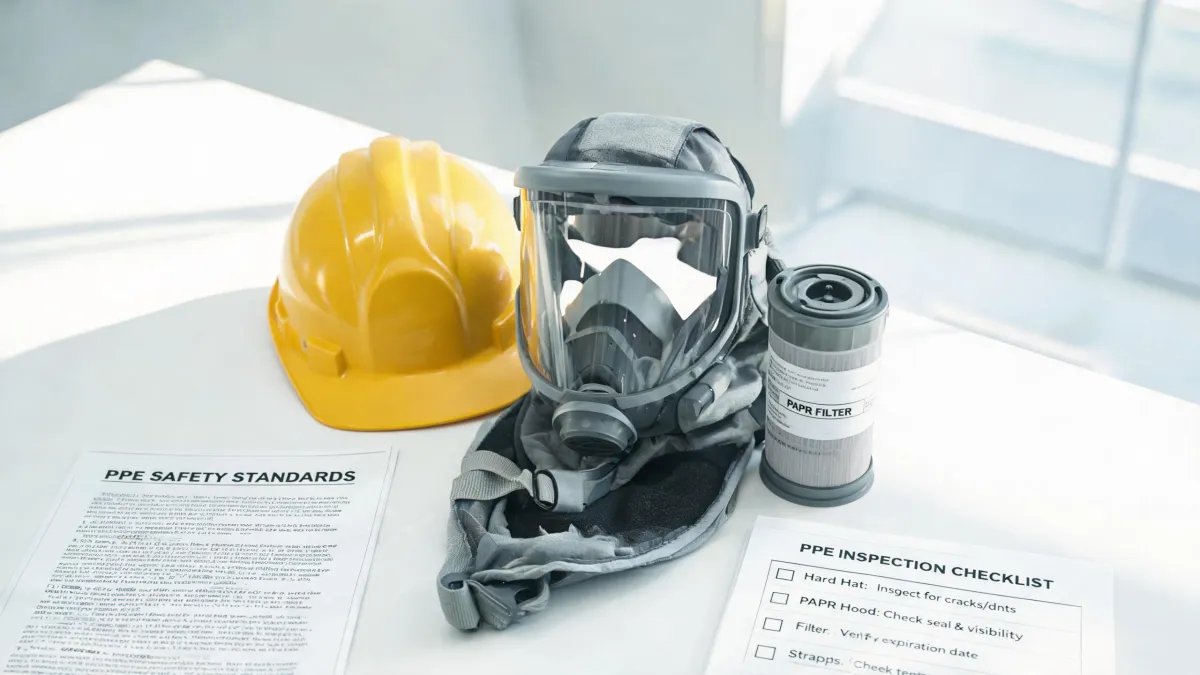
Bullard literally invented the hard hat in 1919. Their SE Series Type I caps are ANSI Z89.1-2014 certified—no ambiguity. They’re rated for impact and penetration. The shell material is high-density polyethylene (HDPE) that doesn’t shatter on a drop test. I know because I had our warehouse manager do a side-by-side comparison.
We now use Bullard hard hats exclusively. They’re maybe $18-25 per cap depending on suspension type and accessories—not the cheapest option, but they work. No complaints from the crew.
Respiratory Protection That’s Verified
We also added a few Bullard PAPR systems to our inventory—specifically the X Series NHIS model, which is NIOSH-approved. For tasks where we’re dealing with silica dust or welding fumes, that certification isn’t just paperwork—it’s a legal requirement. The system costs around $2,000-3,000 per unit including the hood and blower, but the cost of a regulatory violation? Way higher.
“The vendor who couldn’t provide proper invoicing cost us $2,400 in rejected expenses. But the vendor who couldn’t provide proper certification cost us our reputation.”
The Lesson: Verify, Don’t Just Compare Prices
Look, I’m not saying every low-cost supplier is a risk—but I will never skip the verification step again. Here’s what I do now for every PPE order:
- Request certification documents upfront—ANSI, NIOSH, or CSA, depending on the product. If they can’t provide them, I walk.
- Check the manufacturer’s database—NIOSH has a searchable list of approved respirators. Bullard’s PAPR systems are listed. The cheap vendor’s were not.
- Test a sample—I now order one unit before committing to bulk. Our warehouse manager puts it through a drop test. If it passes, we proceed.
- Factor in total cost—base price + shipping + rush fees + potential reorder costs. I aim for the lowest total cost, not the lowest unit price.
Worth It in the End
So glad I switched to Bullard products after that fiasco. Almost didn’t—almost went with another budget option to save a few hundred bucks. That would have been a second mistake. Now I sleep better knowing our crew is wearing gear that’s tested, certified, and traceable.
When you’re managing PPE for 400 employees across 3 locations—well, we’re not that big yet, but we’re growing—a single failure can ripple through your operations fast. The $200 savings I got on that first cheap order turned into a $1,800 headache. The $2,800 we now spend annually on Bullard hard hats and PAPR consumables? That’s money spent well.
After 5 years of managing these relationships, I’ve learned one thing: in safety procurement, trust is the real currency. And you can’t buy it at a discount.