-
What is a "Bullard fence"?
-
Is the Bullard EVA PAPR HEPA filter worth the price?
-
Should I get a Lincoln welding helmet or a Bullard?
-
What fire extinguisher should I keep in my car?
-
How do you use a fire extinguisher correctly?
-
Why pay more for certified PPE when the cheaper stuff looks the same?
-
How do I know I'm getting genuine Bullard products?
Every week, I review incoming PPE orders before they reach customers—roughly 200 unique items a month, and I've rejected about 7% of first deliveries in 2025 so far. Most rejections aren't over obvious damage. They're over spec mismatches that nobody would notice until the gear was already in service.
In that process, certain questions come up again and again from buyers and safety managers. These are the answers I actually give, with the checks behind them.
What is a "Bullard fence"?
Honestly? We see this search a couple of times a month, and it's almost always someone who's confused. Bullard—the company that invented the hard hat in 1919—doesn't manufacture fencing. If you're looking at a listing that says "Bullard fence," it's either a mislabeled third-party product or a different company entirely (there's a fence installer in Bullard, Texas that shares the name).
What Bullard does make is head, face, and respiratory protection: hard hats, bump caps, face shields, welding helmet shells, and powered air-purifying respirators. I can only speak to what we stock and verify. If you're actually shopping for perimeter guarding or security fencing, you're in the wrong product category. And if you're after Bullard PPE, the confusion matters, because mislabeled and counterfeit listings are out there.
Is the Bullard EVA PAPR HEPA filter worth the price?
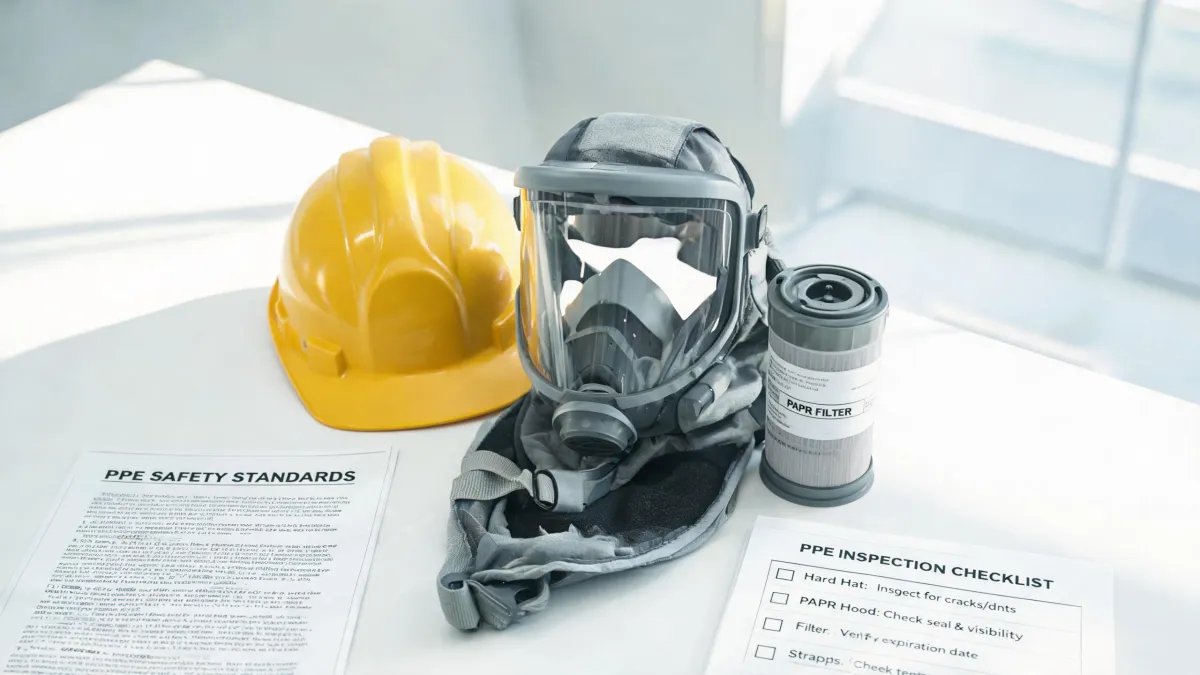
This is the question I get most often, and it's the one I have the strongest opinion on. The Bullard EVA is a powered air-purifying respirator for industrial use, and its HEPA filter is part of a NIOSH-approved system. That approval isn't granted to the filter by itself—it's granted to the complete respirator assembly.
In 2024, we received a batch of third-party filters that the packaging claimed were "compatible" with Bullard EVA units. Our verification checks showed the gaskets didn't seat properly against the blower—measurable air leakage at the interface. We rejected the whole batch. The vendor said they were "within industry standard." That didn't matter, because the standard that counts here is NIOSH approval for the system.
The upside of buying those third-party filters was saving maybe $14 per filter. The risk was a failed fit-test and contaminated units in a customer's respiratory program. I wouldn't make that trade again.
Replacement filters cost more than generic ones, and I won't pretend they don't. But we schedule replacements based on hours of use, and our Q3 2024 audit showed consistent performance when users actually tracked them.
Should I get a Lincoln welding helmet or a Bullard?
Both are legitimate products, and Lincoln Electric builds a solid welding helmet—I don't dispute that. The question is what else you're protecting beyond the face.
A standalone Lincoln welding helmet gives you shade control, a good lens, and comfortable headgear. That's an excellent fit when welding is the only hazard on the job. Where Bullard comes in is integration: Bullard welding protection attaches to hard hat shells and can be paired with the EVA PAPR or a supplied-air respiratory system. That gives a welder head impact protection plus an assigned protection factor you simply can't get from a passive welding helmet.
If you're doing occasional fabrication work in a clean bay, the standalone helmet is fine. If you're working overhead, in confined spaces, or in atmospheres with airborne contaminants, the integrated system is the safer call. We stock both and use both depending on the task.
What fire extinguisher should I keep in my car?
A car fire extinguisher is one of those purchases you forget about until you need it in about 30 seconds. Here's the shortcut I give everyone: get a 2.5- or 5-pound ABC dry chemical extinguisher and a vehicle mount. ABC covers the three classes you'll actually deal with in a car—ordinary combustibles, flammable liquids (fuel), and electrical fires.
Check the pressure gauge monthly. I know that sounds obvious, but we had a customer bring in an extinguisher that had been sitting at zero for over a year because nobody ever checked it. The gauge is right there. Make it part of your inspection routine.
Mount it where the driver can reach it without unbuckling—under the driver's seat or in a door pocket works. And if you've never actually discharged a real extinguisher, you don't know how the powder disperses or how the kickback feels. That's why practice units exist. Bullard builds digital fire extinguisher trainers that simulate discharge without the mess, and they're worth running your crew through.
How do you use a fire extinguisher correctly?
The acronym is P.A.S.S.:
- Pull the pin
- Aim at the base of the fire
- Squeeze the handle
- Sweep side to side
The most common mistake is aiming at the flames. If you've ever done this wrong, you know the sinking feeling of watching the fire ignore you. Aim at the base, where the fuel is, and you'll see progress immediately. If the fire doesn't go out in the first few seconds, or if it's larger than a trash can, get out and call the fire department. A 5-pound ABC unit is rated for small fires, not a fully engulfed vehicle.
Per NFPA 10, extinguishers also need periodic maintenance checks. That includes the one in your car, not just the ones on the plant wall. Verify current requirements at nfpa.org, since codes get updated.
Why pay more for certified PPE when the cheaper stuff looks the same?
Because "looks the same" is exactly how you get burned. This is where I've changed my own mind over the years. Bad spec doesn't fail on day one. It fails on day 400, on a Saturday, on a job site where everyone's already tired.
In March 2024, we paid about $90 to expedite a replacement PAPR filter order for a customer. The alternative was a project shutdown at roughly $6,000 per day. That $90 bought certainty, and when a deadline is on the line, certainty is basically the entire point.
NIOSH approval, ANSI/ISEA Z89.1 certification for hard hats, proper labeling, a manufacturer that controls its supply chain—these aren't frills. They're what make a claim verifiable. When you've got a deadline and an OSHA inspection coming, the cost of "probably fine" is higher than the cost of "certified." I can only speak to industrial use in the United States, but that logic has held up in every audit we've done since 2022.
How do I know I'm getting genuine Bullard products?
We didn't have a formal verification process for incoming goods until 2022. The third time a suspicious batch showed up in our warehouse, I finally built a checklist. Now every shipment gets checked against three things:
- Authorized distributor status—buy from a reputable supplier, not just the lowest listing.
- Product markings and labeling—NIOSH approval numbers on respirator components, ANSI/ISEA marks on head protection.
- Traceability—genuine Bullard products carry lot codes you can verify.
If the price is suspiciously low, there's a reason. In 2023, we saw "deal" hard hats come through that failed basic impact testing in our own drop test. The savings wasn't savings; it was a liability.
Product and certification details current as of July 2025. Verify current specifications at the manufacturer or regulatory source before ordering.