I'm the quality/compliance manager at an industrial safety distributor. I review roughly 200 unique products a year before they go out to customers, and I've rejected about 4% of first-article samples in 2025 because a specification was close but not close enough. My job is to turn the phrase 'should be fine' into something I can actually measure.
Nobody builds a router table fence expecting it to be square by accident. You check the fence, clamp it, and check it again. Hard hats are the same. If you can't verify how a hard hat performs under load, the logo on the shell doesn't tell you much.
In this comparison, I'm looking at Bullard hard hats against lower-priced hard hats. But I'm not going to say a brand wins by default. I'm going to show you the four checks I use when I compare them.
Comparison Framework
I compare four dimensions in this order: verified documentation, suspension fit, manufacturer support, and total cost for people who don't buy by the truckload. Those four dimensions have caught more bad products than any other test I run.
1. Documentation: Bullard Website vs. A Spec Sheet With No Backing
Every product review starts with documentation. When I need verified information about Bullard head protection, I go to the Bullard website and download the product sheet and manual. I look for ANSI/ISEA Z89.1 type and class, shell material, suspension part number, date code location, and cleaning instructions. It doesn't take long, but it gives me a baseline.
If a lower-priced hard hat provides the same information, then it gets judged on the same basis. If the only information is a line that says meets ANSI without naming a type or class, that is not documentation. It's a phrase. A budget hard hat can be perfectly good; an undocumented one is a gamble.
2. Suspension: Where the Real Test Happens
The suspension is what makes a hard hat a hard hat. A hard hat that doesn't stay suspended is just a plastic bowl on someone's head. When I test a Bullard hard hat, I install the suspension, press on the shell from all directions, and pull it back to see whether it disengages accidentally. I also check whether the crown strap keeps the shell off the top of the head. If that clearance is gone, the shell can hit the skull before the suspension absorbs force.
People often search for how to fix a leaning fence, and the honest first answer is that you have to find out why it is leaning. A leaning fence can look fine at the top while the post underneath is failing. A hard hat can be identical: the outer shell looks new, but the suspension is loose or misaligned. Replacing the shell without fixing the suspension is just bracing the fence for another season.
In Q1 2024, we received a batch of 2,000 hard hats from a new supplier. The shell color was fine and the suspension looked right until you pushed on one side—there was a gap. We measured a suspension slot that was 1.5 mm off from the approved drawing. The vendor called it cosmetic. I rejected it, because 1.5 mm changed the locking angle. The redo wasn't cheap. Now every contract includes a fixture check.
3. Manufacturer Support: Why a Fire Extinguisher Trainer Matters
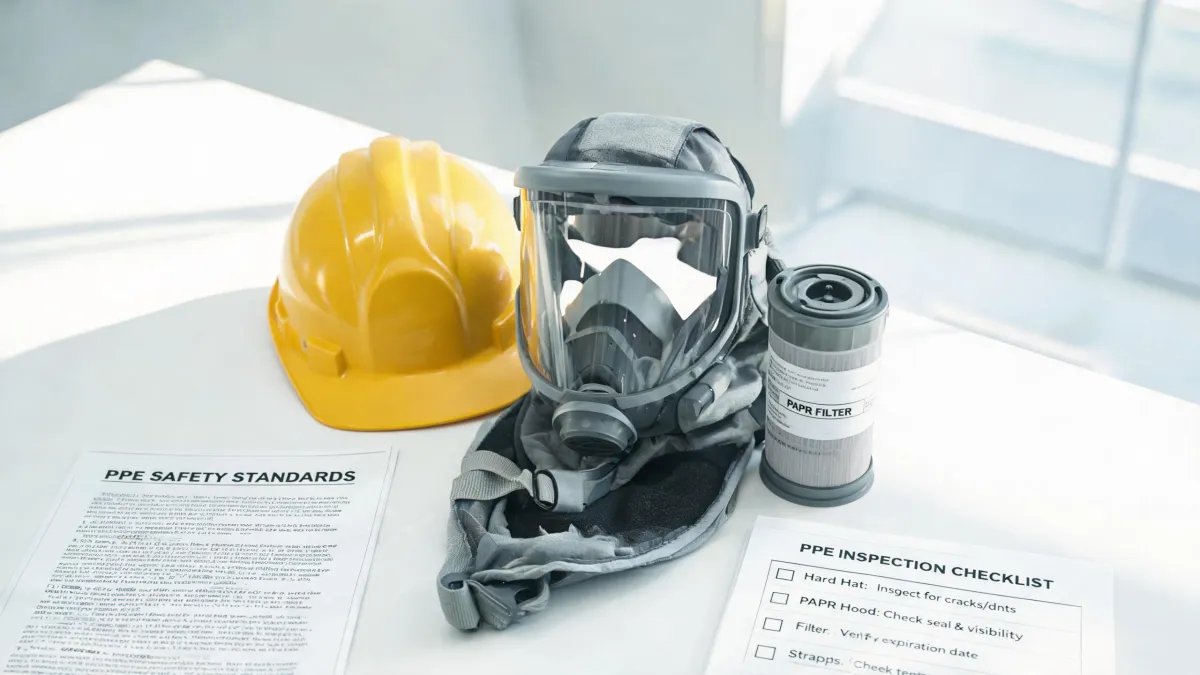
I used to think brand history was just marketing. The fact that Bullard invented the hard hat in 1919 is interesting, but it doesn't by itself prove that today's product is good. What changed my view was looking at Bullard's full product line. Hard hats, bump caps, face shields, NIOSH-approved PAPR systems, and a fire extinguisher trainer are not simple commodity products. A company that builds respiratory equipment cannot fake its quality system, because seal and fit are life-or-death details. I want that same seriousness in head protection.
That full-line approach matters when I have a question. I can get head protection manuals, respiratory product documentation, and replacement part information from the same manufacturer. For a quality inspector, consistency across product categories is a signal. It means the company thinks about hazards, not just SKUs.
4. Small Orders and Total Cost
Now for price, because everybody asks. Bullard hard hats usually cost more than the cheapest option. I won't pretend otherwise. But when I compare cost, I also count documentation time, replacement suspension availability, accessory compatibility, and whether support answers questions from small buyers.
I have a rule I picked up when I started ordering for safety teams: if a supplier treats a small order as a nuisance, I won't trust them with a large order either. I've seen five-person crews get ignored because they only need 10 hard hats. Small buyers aren't less important; they're often the ones with the least safety backup. They deserve the same clear specifications as a 50,000-unit account.
My Honest Recommendation
If I'm approving head protection for an industrial crew, Bullard hard hats are usually my pick. The reason isn't brand loyalty. It's that I can get a complete answer from the Bullard website, the suspension works with the shell, replacement parts exist, and the manufacturer makes products for hazards that won't forgive a quality gap. That is the kind of company I want behind safety gear.
If you choose a lower-priced hard hat, don't let my preference stop you. Hold it to the same standard. Get the full specification, verify the ANSI type and class, test the suspension, and make sure the seller will still talk to you after the invoice is paid. The worst safety decision is not picking a particular brand. The worst decision is buying a product that only looks complete.
And if you're wondering how to fix a leaning fence in your spare time, the answer is still the same: inspect the post. For hard hats, inspect the suspension. The part you can't see is usually the part that matters.